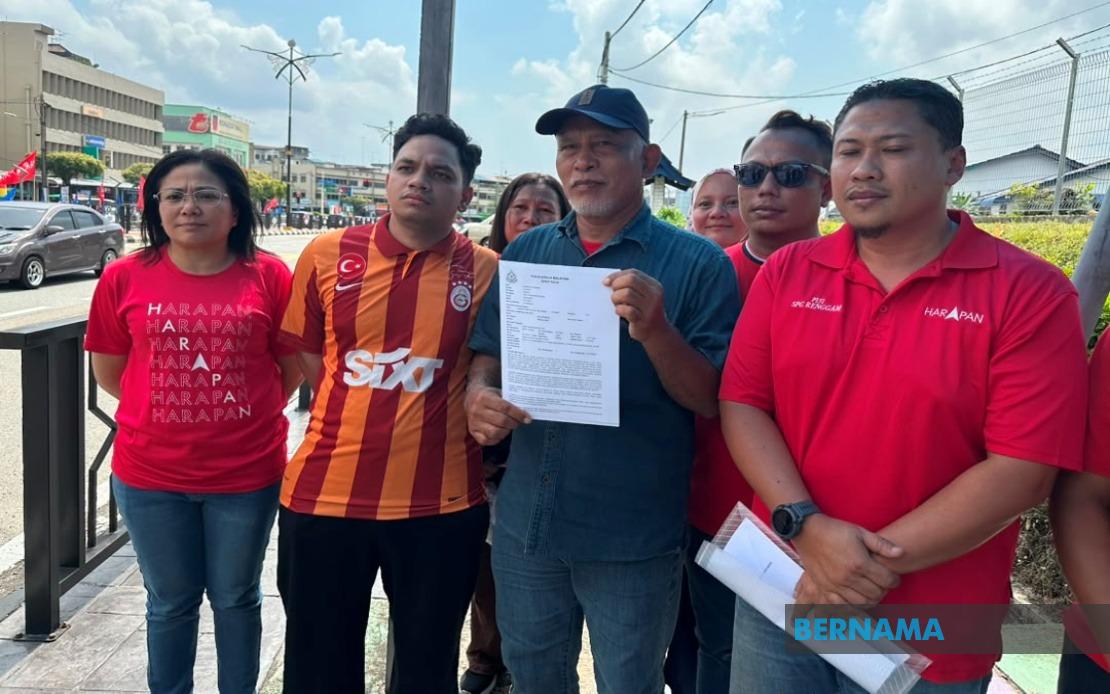
A representative backing the Pakatan Harapan candidate contesting the Machap state seat has filed a formal police complaint against Johor Menteri Besar Datuk Onn Hafiz Ghazi, accusing him of orchestrating the participation of vocational education students in politically charged activities designed to boost support for ruling coalition candidates during the current state election campaign.
Khiru Nasir Rohani, who serves as deputy division chief for Simpang Renggam Amanah, submitted the report at Simpang Renggam district police headquarters, marking an escalation of tensions during the election period. The accusation centres on what Khiru Nasir characterises as a coordinated scheme to redirect students from technical and vocational training institutions toward campaign events that ostensibly served educational purposes but functioned primarily as partisan political rallies.
The core allegation involves the mobilisation of TVET students to attend a programme held in Kluang on July 4. According to Khiru Nasir's account, this event was subsequently repurposed as a platform for open campaigning in support of Barisan Nasional candidates seeking election to the state assembly. The distinction between genuine educational activities and partisan political engagement remains legally significant under Malaysian election law, which maintains strict boundaries between government resource usage and campaigning operations.
Khiru Nasir contends that the alleged conduct violates multiple provisions within the Election Offences Act 1954, particularly those addressing undue influence and the misuse of official position for electoral advantage. The legislation also extends protections against the politicisation of educational institutions during campaign periods, establishing clear legal frameworks that prevent state resources and compulsory student participation from being leveraged for partisan gain. Such restrictions exist to protect the integrity of electoral contests by ensuring that state machinery remains neutral throughout the voting period.
The complaint arrives during a consequential electoral moment for Johor, with 172 candidates competing across 56 state assembly constituencies in an election scheduled for Saturday. The timing suggests heightened scrutiny of campaign practices, as various political factions position themselves for victory. The state election carries significance beyond Johor itself, potentially influencing broader political dynamics within the ruling Perikatan Nasional federal coalition and affecting calculations among opposition blocs.
Khiru Nasir has called upon three key investigative bodies—the Royal Malaysian Police, the Malaysian Anti-Corruption Commission, and the Election Commission—to jointly examine the allegations and determine whether legal breaches occurred. This multi-agency approach underscores the seriousness with which the complaint frames the conduct, suggesting potential criminality rather than mere campaign impropriety. The combination of police involvement, anti-corruption scrutiny, and electoral commission review reflects concerns about whether state power and educational institutions were appropriately deployed during the campaign season.
The incident illustrates persistent tensions surrounding campaign conduct in Malaysian elections, particularly regarding the capacity of state machinery to influence outcomes through institutional leverage. Opposition parties have consistently raised concerns about the inherent advantages available to ruling coalitions, particularly their ability to access government resources, educational institutions, and public sector employees for mobilisation purposes. These structural inequalities in campaign environments remain contentious within Malaysia's electoral discourse.
The allegation also raises broader questions about student autonomy and institutional independence within Malaysia's vocational education sector. If the accusations prove substantiated, they would suggest that educational institutions subordinated their pedagogical missions to electoral objectives and potentially compromised student choice regarding political participation. Such dynamics can undermine the credibility of vocational training programmes by conflating educational authority with partisan political interests.
For Johor's education sector and vocational training institutions, the complaint creates pressure to clarify the voluntary versus compulsory nature of student participation in publicly held events during campaign periods. Institutional leadership will likely face scrutiny regarding their safeguarding of educational neutrality and student autonomy. The complaint effectively signals that opposition parties will contest campaign practices alleged to breach electoral law, potentially establishing accountability mechanisms beyond informal political criticism.
The investigation process itself carries political implications extending beyond individual culpability determinations. Both ruling and opposition camps monitor how enforcement agencies respond to electoral complaints, interpreting investigative outcomes as signals about the state's commitment to impartial election administration. The credibility of Malaysia's democratic institutions depends partly on consistent application of electoral regulations regardless of which political faction faces investigation.
Government responses to such allegations typically distinguish between legitimate civic mobilisation and improper coercion, though that boundary frequently becomes contested terrain. The Menteri Besar's office will likely issue statements characterising the event as routine outreach to stakeholders within the education sector, emphasising the voluntary nature of participation and the educational content of the programme. How investigative bodies ultimately assess these competing narratives will influence perceptions of electoral fairness during this consequential state election cycle.

