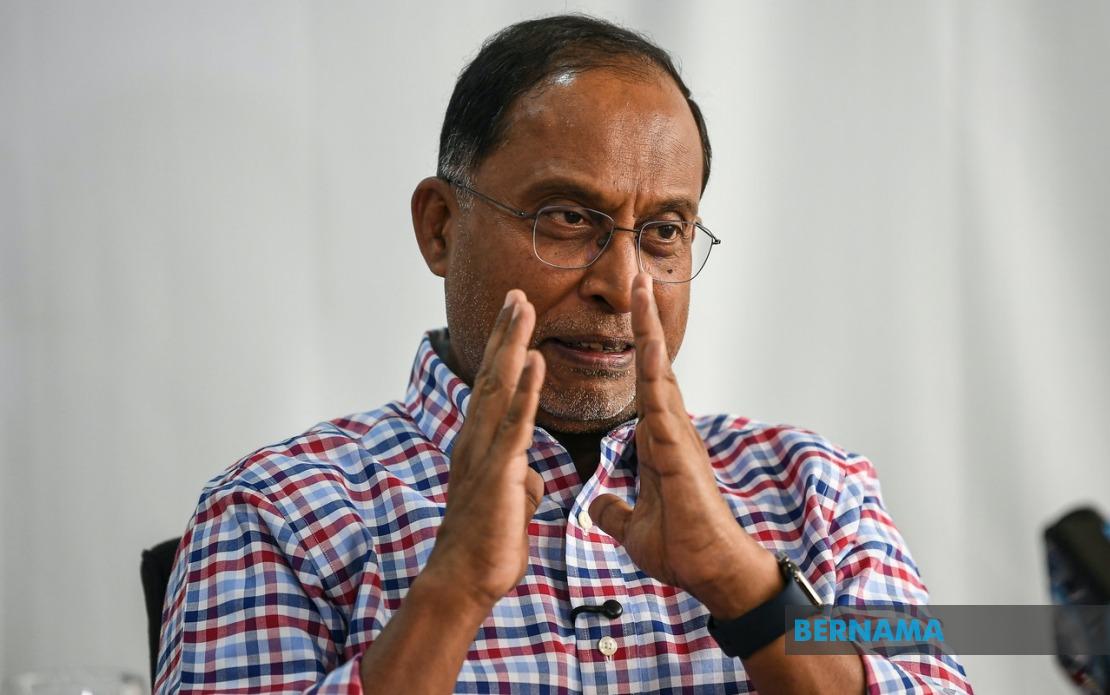
Malaysia's Higher Education Minister Datuk Seri Dr Zambry Abd Kadir has pushed back firmly against recent allegations suggesting that between 30,000 and 60,000 students secured admission to public universities through irregular means. In a statement addressing the controversy, Zambry characterised such claims as serious accusations capable of fundamentally undermining confidence in the nation's higher education system. The allegations, he argued, do more than simply question administrative procedures—they threaten to shake the foundational trust that parents, prospective students, and the broader public place in Malaysia's university sector.
The minister emphasised that claims of improper entry not only damage the reputations of the institutions themselves but also foster a damaging perception that legitimate educational opportunities have been diverted for personal financial benefit. This narrative, he cautioned, carries particular weight during admission cycles when families are actively evaluating options for their children's tertiary education. The timing of such allegations, combined with their scale, has the potential to create anxiety among current applicants and parents who may question whether the system genuinely rewards merit and meets stated eligibility standards.
Zambry stressed that Malaysia's public university admission framework operates according to transparent principles centred on measurable academic achievement and compliance with established requirements. He positioned this as evidence that the system itself is built on meritocratic foundations rather than susceptible to the kind of large-scale manipulation the allegations suggest. However, rather than dismissing the accusations outright, the minister called on those making such claims to substantiate their assertions with concrete evidence, verifiable data, and clearly explained methodology. This demand reflects an apparent acknowledgement that without proper investigation, public doubt may linger regardless of the system's actual integrity.
The minister's response included a notable institutional action: several public universities have filed police reports to enable formal investigation into the allegations. Zambry characterised this step not as an attempt to silence criticism or curtail freedom of expression, but rather as a necessary mechanism to move beyond accusation toward factual resolution through established legal channels. This framing suggests the government views the allegations as sufficiently serious to warrant formal investigation, while simultaneously positioning such investigation as consistent with democratic principles rather than contrary to them.
Zambry also articulated a distinction between legitimate academic debate and unfounded public accusations. He argued that serious discussion of higher education policy must be grounded in facts, data, and credible evidence rather than speculation or unverified claims. This position reflects broader global conversations about misinformation and the responsibility of those making public allegations, particularly when those claims could influence educational choices affecting thousands of families. The minister's insistence on evidence-based discourse signals that Malaysian authorities view academic integrity as encompassing not just institutional standards but also the quality of public discussion about education itself.
Crucially, Zambry emphasised that freedom of speech does not constitute immunity from accountability when speakers fail to substantiate their assertions. This framing carries implications for how Malaysia's education sector engages with criticism and controversy going forward. By distinguishing between protected speech and baseless accusations, the government is articulating a position that transparency and accountability should flow in both directions—universities must demonstrate their integrity through open systems, while critics must demonstrate theirs through rigorous evidence.
The Ministry of Higher Education has signalled openness to constructive criticism aimed at genuine system improvement, indicating that the government recognises scope for enhancing the university admission framework. However, this receptiveness comes with clear conditions: criticism must be substantive and good-faith rather than inflammatory or speculative. This stance suggests the ministry views the current moment as a potential inflection point for higher education discourse in Malaysia, where productive reform-oriented discussion could be undermined by excessive unsubstantiated allegations.
For Malaysian parents and students, the controversy raises important questions about how to evaluate the credibility of claims regarding institutional integrity. The allegations' specificity—naming a numerical range of affected students—makes them testable through proper investigation, which may explain why authorities have opted for formal police inquiries rather than purely administrative responses. Successful investigation could either vindicate the system or reveal genuine vulnerabilities requiring remediation.
The broader context for Malaysia involves ongoing efforts to position the country as a regional education hub attracting international students. Claims of systemic irregularity in admissions could undermine these aspirations by signalling to prospective international students and their families that the quality assurance mechanisms protecting educational standards may be compromised. This dimension gives the allegations significance extending beyond domestic education policy into Malaysia's international competitiveness and reputation.
Zambry's call for evidence-based discourse also reflects international best practices in higher education governance, where decisions affecting student outcomes should rest on transparent, auditable processes. The minister's emphasis on methodology and data collection aligns with how quality assurance systems function globally, suggesting Malaysia's education sector is benchmarking itself against international standards for institutional accountability and transparency.
Looking forward, the resolution of this controversy will likely depend on the outcomes of ongoing police investigations and any subsequent institutional audits. The allegations, whether ultimately substantiated or disproven, will probably accelerate discussions about enhancing admission system transparency and perhaps implementing additional oversight mechanisms. For a nation invested in building confidence in its higher education institutions, addressing these questions definitively through proper investigation appears to be the most constructive path forward.