The aspiration of a retired soldier to see his youngest daughter continue the family's military tradition came to an abrupt and devastating end yesterday when Private Siti Khadijah Sungip, 24, was killed during a grenade exercise at Hobart Camp in Gurun, Kedah. Her father, Sungip Jais, 65, who himself served with the Royal Artillery Regiment, had watched with pride as his daughter pursued a military career, only to lose her in a training accident that has shocked the armed forces and left her family struggling to comprehend the loss.
Siti Khadijah was the youngest of seven siblings and had harboured dreams of military service since childhood, inspired by her father's long career in uniform. After completing her Diploma in Civil Engineering at Mara Higher Skills College in Sri Gading, she made the deliberate choice to apply for the Malaysian Army, driven by a genuine passion for military life rather than necessity or circumstance. Her decision reflected not merely a professional choice but a deeply held commitment to honouring her family's legacy and contributing to the nation's defence. Those closest to her recalled her enthusiasm and determination during the initial stages of her military training journey.
What made Siti Khadijah's sacrifice particularly poignant was her personal commitment to family values. Rather than prioritising marriage and establishing her own household, she had consciously decided to postpone such life milestones to care for her aging parents. This devotion was characteristic of her, according to those who knew her well, and represented a generation of young Malaysians willing to balance personal ambitions with filial responsibility. Her father, speaking to reporters at his home in Taman Sri Lambak, Kluang, struggled to articulate his grief while acknowledging the depth of his daughter's conviction.
The fatal incident occurred during a routine training exercise on the morning of June 17, when a grenade explosion claimed the lives of two soldiers. In addition to Private Siti Khadijah, Corporal Norazmi Abu Bakar also perished from injuries sustained in the blast. Both were transported urgently to Sultan Abdul Halim Hospital in Sungai Petani but succumbed to their wounds en route. The circumstances surrounding the explosion have not been fully detailed, but the incident marks a sobering reminder of the inherent risks associated with military training operations involving explosive devices.
Siti Khadijah's brief military career, spanning just over a year, had already yielded recognition of her capabilities and dedication. In January, she received the Best Female Recruit (Academic) Award for her outstanding performance during basic military training at the Army Basic Training Centre in Port Dickson, Negeri Sembilan. This accolade demonstrated that she possessed not only the physical resilience required for military service but also the intellectual capability to excel in her chosen field. Born on September 19, 2002, in Kluang, she had undergone her initial training as a female recruit with Juliet Company before being posted to the Royal Army Engineers Regiment.
The last communication her family received from Siti Khadijah came late on the evening of June 15, when her elder sister, Siti Zaiha, 39, received a photograph via WhatsApp. The image, taken during a shooting practice session that Siti Khadijah had described as the most enjoyable aspect of her training, would become the final tangible memory the family possessed of her alive. In that message, she had mentioned that additional training was scheduled for the following day, with the grenade exercise set to commence around 8 am. That routine communication would be among her last interactions with her loved ones.
When the family received news of an accident shortly after 1 pm, the initial reaction was to hope it might be a minor incident or perhaps a road accident. The devastating reality emerged only after a second call confirmed that Siti Khadijah had been killed during the training exercise. For a family expecting her to return home safely, the sudden loss represented an incomprehensible tragedy. Siti Zaiha recalled that just a week before the incident, during the recent Aidiladha celebrations, her sister had appeared cheerful and relaxed, showing no indication of any forewarning or premonition of the fate that awaited her.
The circumstances of Siti Khadijah's death have raised important questions about safety protocols during grenade exercises and the training procedures at Malaysian military facilities. While training accidents are acknowledged as occupational hazards within military establishments worldwide, the loss of such a promising young soldier underscores the need for continuous evaluation of safety measures. The Malaysian Army has not yet released detailed findings regarding the specific factors that contributed to the explosion, but such investigations typically examine equipment maintenance, procedural compliance, supervision levels, and individual handling techniques.
For the broader military community and for Malaysian society more generally, Siti Khadijah's story represents a poignant example of the sacrifices made by those who choose to serve in uniform. Her commitment to her parents, her academic achievements, and her determination to follow in her father's footsteps mark her as emblematic of a generation of young professionals who view military service as a genuine calling rather than merely employment. The loss of such individuals ripples beyond their immediate families, affecting unit morale and reminding the public of the real human cost associated with national defence capabilities.
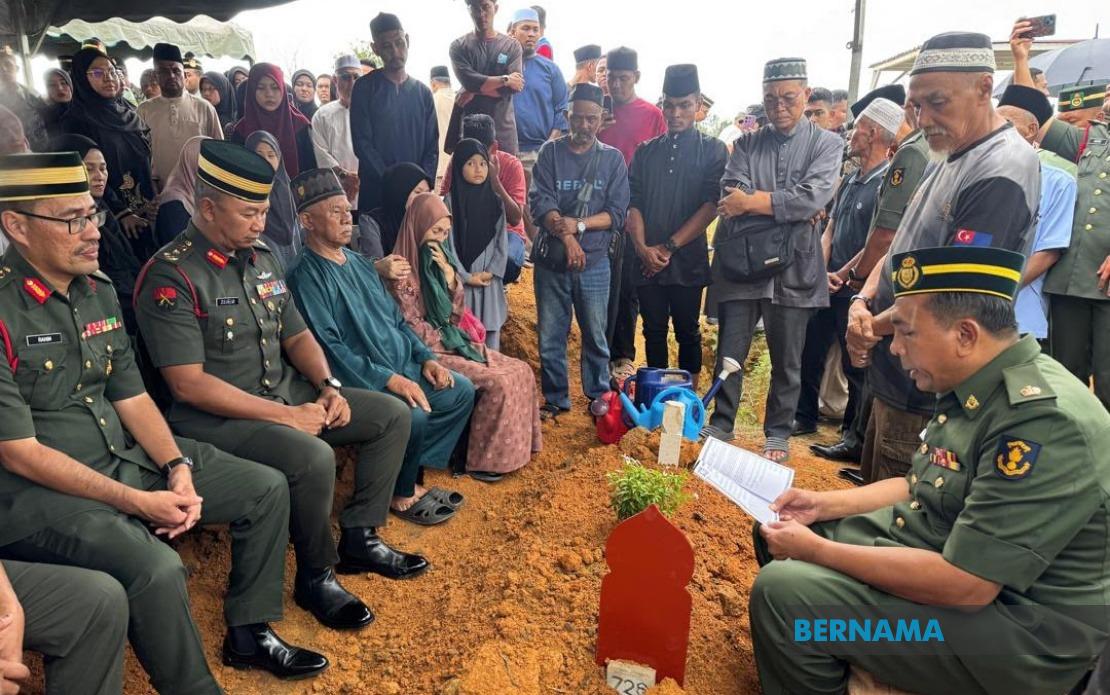
Siti Khadijah was laid to rest this afternoon at Taman Sri Lambak Islamic Cemetery in her hometown of Kluang, where her grieving father and family members gathered to bid farewell. Her father, Sungip Jais, who had proudly watched his daughter follow his own career path, now faces the profound grief of having outlived one of his children—a pain that transcends the usual burdens of aging. The family's tragedy underscores not only the personal dimensions of military service but also the broader obligation that society holds toward those who sacrifice their lives in the pursuit of national security and honour.