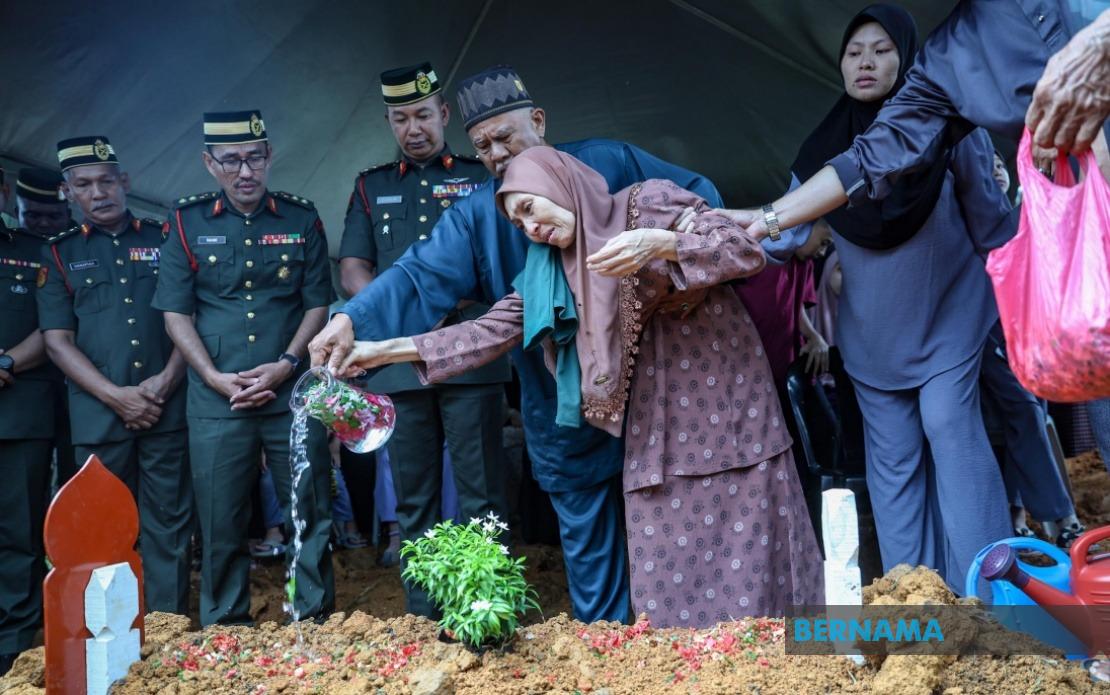
Private Siti Khadijah Sungip, a 24-year-old soldier serving with the First Squadron of the Royal Engineer Regiment, was laid to rest on June 17 at Taman Sri Lambak Muslim Cemetery in Kluang. The funeral came just over 24 hours after a devastating explosion during routine grenade throwing training at Hobart Camp in Gurun, Kedah claimed her life and that of a colleague. The burial service drew a substantial gathering of family, friends, and military personnel who came to honour the fallen soldier's memory at what observers described as an emotionally somber ceremony.
The fatal incident unfolded on the morning of June 16 at 10.57 am at the military training facility's target range. Private Siti Khadijah and Corporal Norazmi Abu Bakar, attached to the Sixth Battalion of the Royal Malay Regiment, were both undergoing routine grenade throwing instruction when the explosion occurred. Both personnel sustained critical injuries from the blast and were immediately evacuated to Sultan Abdul Halim Hospital in Sungai Petani, where they were pronounced dead upon arrival. The incident marks a sobering reminder of the inherent dangers associated with weapons training and has raised fresh questions about safety protocols at military installations across Malaysia.
Private Siti Khadijah's remains underwent post-mortem examination at Sultanah Bahiyah Hospital in Alor Setar, with the procedure completed by approximately 2.30 am on June 17. The body was then transported to her family residence in Taman Sri Lambak, arriving at 12.10 pm, accompanied by First Field Troop Leader Lieutenant Muhammad Lutfil Hadi Osman and four members of the Royal Engineer Regiment from Sangro Camp in Taiping, Perak. The formal funeral prayers took place at Darul Iman Mosque, led by Major Mohd Azlan Shah Abdul Razak from the TDM Field Engineering Institute, observing Islamic burial protocols.
A ceremonial element of the funeral involved the formal transfer of the Jalur Gemilang national flag to Private Siti Khadijah's next of kin. Brigadier General Datuk Zulhelmy Masdar, who commands the 7th Brigade at Mahkota Camp, officiated this symbolic gesture, presenting the flag to the deceased's father, Sungip Jais, 65. This tradition underscores the nation's recognition of military service and sacrifice, acknowledging the commitment made by soldiers and the grief borne by their families.
The death of Private Siti Khadijah represents a significant loss within Malaysia's military apparatus. As a female soldier serving in the engineering corps, she occupied a role that historically has seen limited female participation. Her service in this technical and often demanding specialisation reflects the increasingly diverse composition of the Malaysian Armed Forces, which has progressively opened combat and operational positions to women over recent decades. Her death therefore carries particular poignancy within the broader narrative of women's integration into military structures.
Training accidents within military establishments remain a persistent concern across Southeast Asia and globally. Grenade throwing exercises, while essential for combat readiness, inherently carry elevated risks due to the unpredictable nature of explosive devices and the complex procedural requirements involved. The incident at Hobart Camp will likely trigger a comprehensive review of safety measures, training supervision protocols, and emergency response procedures. Such reviews are standard practice following fatal military incidents and serve to identify potential weaknesses in existing safety frameworks.
The Malaysian Armed Forces has not yet issued detailed statements regarding the specific circumstances that led to the explosion, the exact nature of the malfunction, or whether procedural violations occurred. Preliminary indications suggest the explosion resulted from an accident during training rather than any intentional cause. A thorough investigation will be essential to determine whether equipment failure, operator error, supervision lapses, or other factors contributed to the tragedy. The findings from such investigations typically inform revised training protocols and safety guidelines across the entire military establishment.
For the families of both deceased soldiers, the aftermath of such incidents extends far beyond the funeral ceremony. They face the profound loss of loved ones while navigating the bureaucratic processes related to military casualties, including compensation claims, pension arrangements, and official recognition of service. Malaysia's military welfare system provides various forms of support to bereaved families, though the adequacy and responsiveness of these provisions have occasionally come under public scrutiny in the aftermath of similar incidents.
The Hobart Camp incident also resonates within broader discussions about military training standards and occupational safety across the region. Southeast Asian nations maintain varying standards for weapons training and facility management, with some military establishments operating under resource constraints that may impact safety infrastructure. Malaysia's relatively well-resourced armed forces maintain modern training facilities, yet no amount of investment can entirely eliminate risks inherent in handling explosive materials. The incident serves as a sobering reminder that even in well-established military systems, tragedy can strike during routine operations.
Moving forward, the focus will shift to the official investigation and any resulting policy adjustments. Military leadership faces pressure to demonstrate that lessons are being learned and that additional protective measures will be implemented to prevent similar occurrences. Public confidence in military training programs partly depends on the perception that institutions are responsive to accidents and committed to continuous safety improvements. The circumstances surrounding Private Siti Khadijah's death will likely feature in defence force reviews and may influence training methodologies across multiple military establishments.
The loss of Private Siti Khadijah and Corporal Norazmi Abu Bakar extends beyond their respective families and units to affect the broader military community. Soldiers across the Malaysian Armed Forces will reflect on the fragility of life and the genuine dangers that accompany military service, even during peacetime training exercises. Commemorations and memorials for fallen service members serve important functions in honouring sacrifice and maintaining institutional memory regarding the costs of military preparedness. The nation's security posture depends fundamentally on personnel willing to undertake training despite inherent risks, making the recognition of their sacrifice a crucial element of military culture.