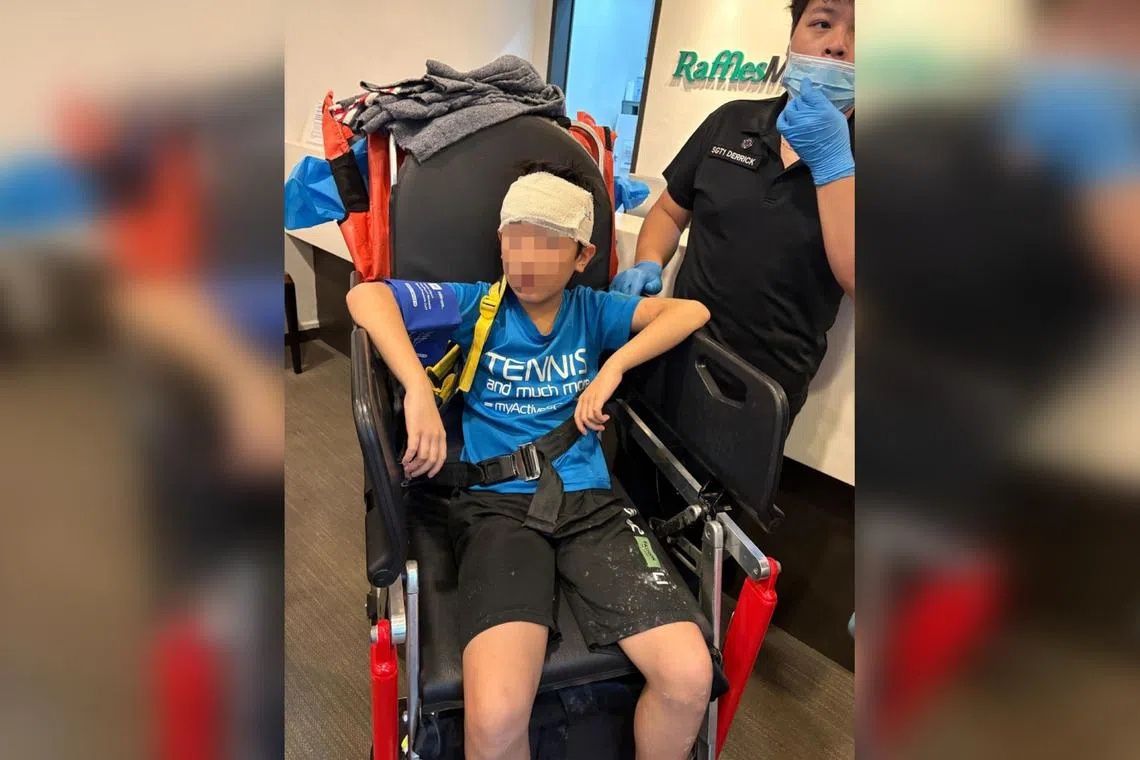
A young customer at a Sengkang foodcourt suffered injuries when a commercial signboard gave way without warning on Saturday morning, prompting emergency response and raising fresh questions about structural safety in high-traffic retail spaces across the region. The incident at Rivervale Mall's Food Junction outlet occurred at approximately 10.30am on June 20, when the Singapore Civil Defence Force received an emergency call and transported the injured child to KK Women's and Children's hospital for evaluation and treatment.
The sudden structural failure was captured on video by witnesses at the scene, with footage circulated on TikTok showing the collapsed signboard littering the ground across the entrance of the Food Junction establishment. The visible damage in the recordings revealed chunks of debris scattered near the main entry point, while portions of the ceiling remained suspended overhead, creating an unsettling contrast between the intact and compromised sections of the foodcourt infrastructure. Shoppers and staff in the vicinity maintained distance from the affected area as they processed what had transpired.
Food Junction, a established casual dining chain operating numerous outlets across the island, responded swiftly to contain the situation and address concerns from affected parties. A company representative acknowledged the occurrence and emphasized the immediate mobilization of internal teams to coordinate with both mall authorities and emergency personnel who arrived at the scene. The chain's primary focus shifted toward ensuring the injured customer received appropriate medical attention and support during the immediate aftermath of the accident.
Following hospital evaluation, the young visitor was discharged and returned home to recuperate, according to Food Junction's official statement. This relatively positive outcome underscored the importance of timely emergency response and professional medical intervention in mitigating the severity of such incidents. The child's recovery trajectory was characterized as stable, though the psychological impact of such a frightening experience cannot be overlooked in understanding the full consequences of the event.
The restaurant operator initiated a comprehensive investigation to determine the precise factors that contributed to the structural failure. This review process involved analyzing the signboard's installation, examining maintenance records, and assessing environmental conditions that might have accelerated deterioration. Food Junction committed to implementing reinforced safety measures in full compliance with relevant regulatory bodies and industry standards, signaling a commitment to preventing recurrence at any of its locations.
The ground-floor location of the affected Food Junction outlet within Rivervale Mall meant the incident affected a busy retail spine where families and workers regularly pass through during peak shopping and dining hours. The risk to multiple people during a Saturday morning underscored the potential severity had the collapse occurred during busier periods or affected a larger number of customers. Such incidents inevitably raise community awareness about the importance of routine structural inspections and maintenance protocols in commercial establishments where public safety depends on proper facility management.
Operations at the foodcourt resumed following the incident and cleanup procedures, allowing the Food Junction outlet to continue serving customers. The chain extended an apology to patrons for the disruption and expressed its commitment to maintaining safe environments across all its venues. This rapid resumption, while necessary for business continuity, also demonstrated that facility operators generally balance operational needs with thorough remediation of hazards before welcoming the public back into affected spaces.
The incident prompted outreach to Singapore's Building and Construction Authority, the regulatory body responsible for overseeing structural integrity and safety standards in built environments. The authority's involvement ensured independent verification of safety measures and compliance with building codes, providing assurance to the public that third-party oversight was being applied to the situation. Rivervale Mall management similarly engaged with the investigation process, reflecting their obligation to maintain safe premises for tenants and visitors alike.
For Malaysian readers and operators of retail establishments throughout Southeast Asia, the Singapore incident serves as a sobering reminder that infrastructure failures in high-traffic commercial spaces carry genuine risks despite ostensibly routine safety conditions. The region's rapid urbanization and the proliferation of shopping malls and foodcourts mean that maintenance standards and inspection protocols directly influence public safety outcomes. The incident underscores why regular audits of fixtures, signage, and suspended structures should be non-negotiable components of facility management protocols in any modern retail environment operating across Malaysia, Singapore, and the broader region.

