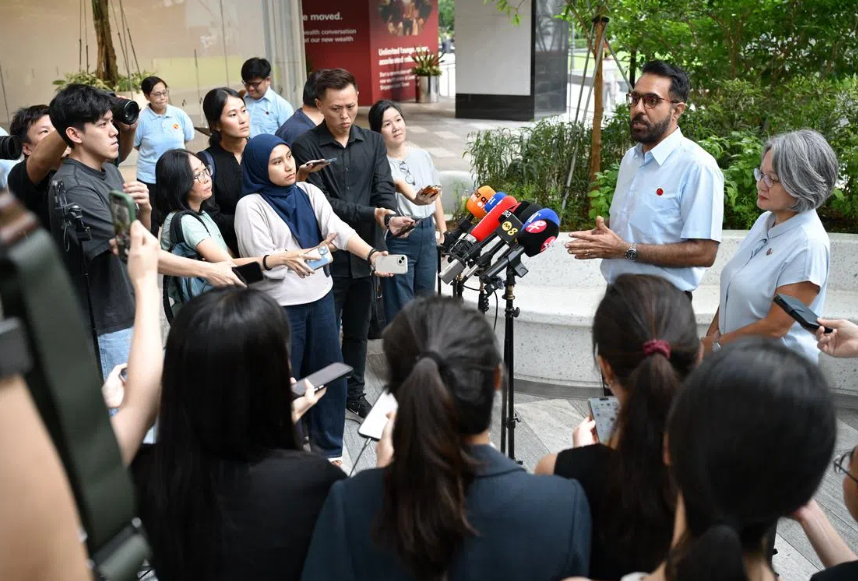
Singapore's Workers Party has firmly consolidated behind Pritam Singh following an internal leadership reckoning, with the opposition chief emerging from a marathon six-hour meeting with overwhelming backing from party cadres. Singh, who survived both a no-confidence vote and a contested biennial election on June 28, addressed waiting journalists with evident confidence, declaring the party "pretty united" based on the cadre ballot. The decisive result—82 of 106 voting members supporting his continued leadership—effectively closes a turbulent chapter that has dominated party dynamics since 2021, yet simultaneously raises uncomfortable questions about whether organisational survival has superseded moral clarity.
The challenge Singh faced was unprecedented in his tenure. Since assuming the secretary-general role in 2018, he had encountered no opposition during successive party elections, returning unopposed as the undisputed leader. This time, a dissident faction triggered the special cadres conference specifically to hold him accountable for his conviction on charges of lying to Parliament, a guilty verdict subsequently upheld by the High Court in December 2025. The unhappy cadres had also attempted to recruit a challenger to contest the leadership position, yet despite intensive lobbying efforts that continued until the week of the conferences themselves, no internal rival materialised willing to stand against the incumbent. The absence of a credible alternative candidate ultimately cemented Singh's path to re-election, even as the internal dissent signalled deeper anxieties within the party structure.
The conviction stemmed from Singh's role in the Raeesah Khan affair, a scandal that shook Singapore's opposition politics. Khan, the Workers Party MP for Sengkang GRC, had fabricated an account in Parliament of police mistreatment towards a sexual assault victim. When the fabrication unravelled, Parliament's Committee of Privileges determined that Singh bore responsibility for allowing Khan to sustain her false narrative rather than compelling immediate correction. While a party disciplinary panel concluded Singh had breached the Workers Party Constitution, the party's top leadership body issued merely a formal letter of reprimand—a sanction characterised by observers as notably lenient for such a serious transgression. Simultaneously, the party refused to nominate a replacement for Singh's parliamentary position as Leader of the Opposition despite being afforded the opportunity to do so, signalling early the direction internal opinion was trending.
The June 28 proceedings themselves reflected a notably subdued internal reckoning. Rather than the rigorous interrogation anticipated by Singh's critics, party sources indicated that while he faced questioning, several cadre members who spoke actually voiced support for him. The narrative of a dramatic leadership contest simply did not materialise. Instead, Singh's survival appears rooted in institutional loyalty, the party's desire to avoid the fractious internal divisions that have plagued rival opposition movements elsewhere in the region, and perhaps recognition that removing him mid-term would inflict damage from which the still-developing party might struggle to recover. The involvement of Low Thia Khiang, the venerated former party chief who architectected the modern Workers Party, proved particularly significant. When asked by journalists prior to the meetings, Low confirmed his continued backing of Singh, lending the weight of his considerable standing to the incumbent's position.
With the internal threat neutralised, the Workers Party can now redirect energy away from defensive posturing and towards expanding its parliamentary influence. The party chair, Sylvia Lim, acknowledged during post-election remarks that she has occupied her position for 23 years, hinting that leadership renewal represents a priority for organisational development. Singh's commanding re-election simultaneously reveals a concerning reality: the Workers Party possesses no alternative figure combining sufficient public prominence and deep legislative experience to mount a credible leadership challenge. That the cadre membership proved willing to tolerate the political liabilities attached to their convicted leader suggests either strong institutional discipline, faith in Singh's navigational abilities, or resignation to the absence of viable succession options.
The party's strategic calculation appears vindicated by electoral mathematics. When Singapore held general elections in May 2025, voters went to the polls with full knowledge of Singh's conviction at the lower court level. Rather than punishing the Workers Party for standing by their leader, voters instead rewarded them: the party not only consolidated its existing parliamentary seats but expanded its footprint by capturing two Non-Constituency MP positions. To many Workers Party activists and supporters, this outcome constitutes the ultimate vindication, proof that public opinion has effectively rendered the legal saga irrelevant to their electoral prospects. The swing suggests that sufficient numbers of Singapore voters either discount Singh's legal troubles or view them primarily through a political rather than principled lens.
Yet the very solidarity the Workers Party has demonstrated raises uncomfortable questions about whether institutional self-preservation has begun displacing principled governance. When Singh was asked directly to address critics characterising the party as being led by a "convicted liar," he demurred by directing questioners to his website and restating his previous parliamentary position. The response sidestepped rather than confronted the underlying tension: whether a party championing democratic accountability can justify retaining leadership that courts have found guilty of misleading Parliament. For a movement traditionally positioning itself as a conscience institution within Singapore's political landscape, the apparent subordination of principle to pragmatism represents a subtle but significant shift in identity.
The broader implication for the Workers Party's political trajectory concerns its capacity to attract middle-ground voters currently oscillating between supporting the governing People's Action Party and exploring opposition alternatives. The party's core support base, particularly among younger, more ideologically committed activists, may view Singh's retention as evidence of institutional steadfastness. However, swing voters and politically moderate households considering opposition representation for the first time might harbour reservations about backing a party whose leadership has been convicted of dishonesty, regardless of the conviction's specifics. Unlike the PAP, which faces intense public scrutiny, the Workers Party operates with somewhat less forensic voter examination, allowing internal contradictions to persist without immediate electoral penalty. Yet this advantage could prove temporary should middle-class voters begin demanding higher standards of accountability from all political actors.
The Workers Party's internal consolidation ultimately reflects a calculation that political survival trumps the risks of appearing to compromise on principle. Party leadership has judged that removing Singh would prove more damaging than retaining him, fragmenting the opposition at a moment when anti-PAP sentiment offers genuine opportunities for expansion. That calculation may prove correct in narrow electoral terms. The 2025 election results suggest voters either forgive Singh's transgression or regard it as insufficiently important to override other political considerations. Yet the episode leaves unresolved the question of whether an opposition party's legitimacy derives solely from electoral performance or whether it also depends on demonstrating principled governance even at institutional cost. The Workers Party's cadres have answered that question clearly, though whether broader Singapore society agrees remains to be tested.
Moving forward, the Workers Party faces the dual challenge of consolidating its expanded parliamentary presence while rehabilitating the public perception that internal principle remains paramount. Sylvia Lim's hints about imminent leadership renewal suggest the party recognises that generational transition could help reset this narrative. Singh's re-election provides breathing room for such transitions to occur deliberately rather than through crisis, while the Raeesah Khan saga's internal closure allows the party to redirect public communication towards substantive policy rather than defensive positioning. Yet the solidarity demonstrated on June 28 will inevitably inform how observers assess future Workers Party decisions about governance and accountability. The party has chosen institutional unity; the test now lies in demonstrating whether that choice was based on confidence in principled leadership or merely institutional convenience.

