Vietnamese law enforcement has widened its anti-corruption sweep in the agricultural sector, detaining four individuals including the country's deputy minister of agriculture and environment on suspicion of accepting bribes linked to the lucrative durian export trade. The high-profile arrest of Deputy Minister Hoang Trung signals the gravity with which Vietnamese authorities are treating systemic misconduct within their export certification apparatus, particularly as the nation fights to maintain its privileged access to Chinese markets.
Hoang Trung stands accused of abusing his ministerial authority through the issuance of unlawful policies, most notably the creation of irregular "sub-licences" designed to benefit connected commercial interests while generating substantial illegal profits from durian shipments destined for China. Authorities allege his actions caused extensive harm to the legitimate commercial rights of domestic growers and exporters, simultaneously inflicting what officials describe as "exceptionally" significant financial losses to the state treasury. The misconduct has cast a shadow over Vietnam's agricultural reputation at a moment when maintaining quality standards and regulatory credibility is essential to trade relations. Also detained is Nguyen Quang Hieu, deputy head of the department of crop production and plant protection, who faces identical allegations of improper conduct in the same sector.
Two additional ministry officials remain in custody for their suspected involvement in fabricating official documentation, suggesting a broader institutional problem rather than isolated wrongdoing. The parliamentary record shows that Hoang Trung was formally expelled from the Communist Party following his arrest, an administrative process that typically reflects the regime's intent to proceed with serious prosecutions. This party sanction represents a preliminary but significant step in the Vietnamese justice system's handling of major corruption cases, where political expulsion often precedes formal judicial proceedings.
The investigation has evolved substantially, now encompassing multiple governmental and private entities within the durian certification ecosystem. The Center for Testing, Certification and Quality Services, operating under agriculture ministry supervision, has emerged as a focal point of the inquiry alongside two private companies, NhoNho Technology Co. and Thuy Fruit Co., both of which appear to have benefited from the allegedly corrupt licensing arrangements. Evidence suggests a coordinated scheme in which fraudulent certifications facilitated exports while circumventing proper regulatory oversight, creating what amounts to a parallel approval system that served connected business interests rather than public welfare or fair competition.
This investigation represents an escalation in scope from prior phases, during which eight individuals with connections to the case were arrested last year according to Vietnamese news sources. The progression indicates that police inquiries have uncovered additional layers of complicity and broader networks of corrupt officials and commercial partners than initially suspected. Such recursive discoveries are typical in graft investigations where initial detentions lead to further evidence implicating higher-ranking officials and more extensive schemes.
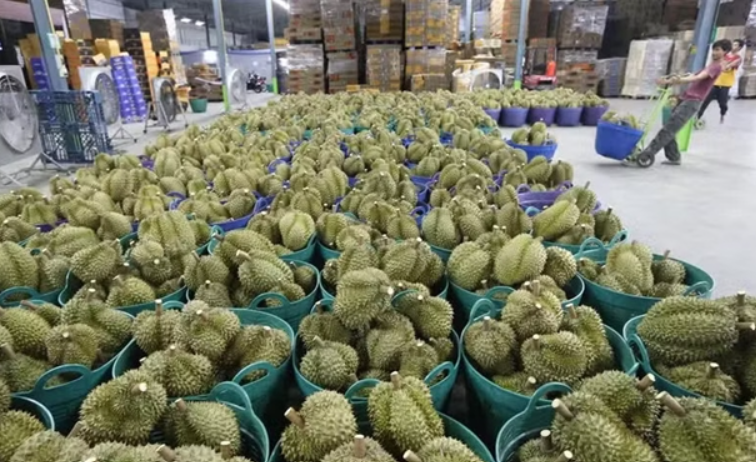
For Malaysia and the broader Southeast Asian region, Vietnam's durian export troubles carry immediate relevance. Vietnam has consolidated its position as the world's leading durian exporter to China, accounting for over 95 percent of Chinese durian imports during the 2021-2025 period. The country shipped more than three million tonnes of fresh durian and nearly 190,000 tonnes of frozen durian across this window, representing an agricultural export phenomenon of continental scale. Any disruption to Vietnam's certification procedures or damage to its regulatory standing could create supply gaps that competitors, including Thailand and potentially Malaysian exporters, might exploit to gain Chinese market share.
The scandal also underscores the regulatory vulnerabilities that emerge when a single destination country dominates export flows from an entire region. Vietnam's overwhelming dependence on Chinese durian purchases has created powerful incentives for regulatory capture, where commercial pressures override quality assurance mechanisms. Chinese authorities, already renowned for rigorous phytosanitary inspections and occasional import restrictions as diplomatic tools, may intensify scrutiny of Vietnamese shipments following these revelations, potentially disrupting the trade relationship that Vietnamese exporters and government officials have carefully cultivated.
For Malaysian policymakers observing from a country that also exports durian to China, though in substantially smaller volumes than Vietnam, the case illustrates the institutional strains that emerge when agricultural export values reach astronomical levels. Malaysia's durian industry should scrutinise its own certification procedures to ensure similar vulnerabilities do not enable corrupt licensing practices that could damage the nation's agricultural credibility if exposed. The reputational damage suffered by Vietnamese agriculture as a result of these allegations, which officials acknowledge has affected perceptions of the entire sector, demonstrates how institutional corruption can rapidly erode international confidence in national food systems.
The Ministry of Agriculture, alongside NhoNho Technology Co. and Thuy Fruit Co., declined to issue immediate responses to inquiries about the investigation, a silence that likely reflects legal advice given the scale and sensitivity of the proceedings. This reluctance to engage publicly is prudent but also suggests the entities involved recognise the severity of potential consequences, both commercial and legal. Vietnamese officials have positioned the investigation as evidence of their commitment to eliminating corruption, though critics might observe that the systemic nature of the alleged schemes indicates enforcement mechanisms functioned poorly until police intervention.
The Chinese government, as the ultimate destination of these exports and the nation holding leverage over Vietnamese agricultural sales, has not publicly commented on how these revelations might affect future certification procedures or import approval processes. China's response will ultimately determine whether Vietnamese exporters face temporary setbacks or more enduring market access complications. For a country deriving hundreds of millions of dollars annually from durian sales to China, such uncertainty represents a significant economic vulnerability that extends well beyond the handful of detained officials to encompass thousands of growers and export workers throughout the supply chain.

