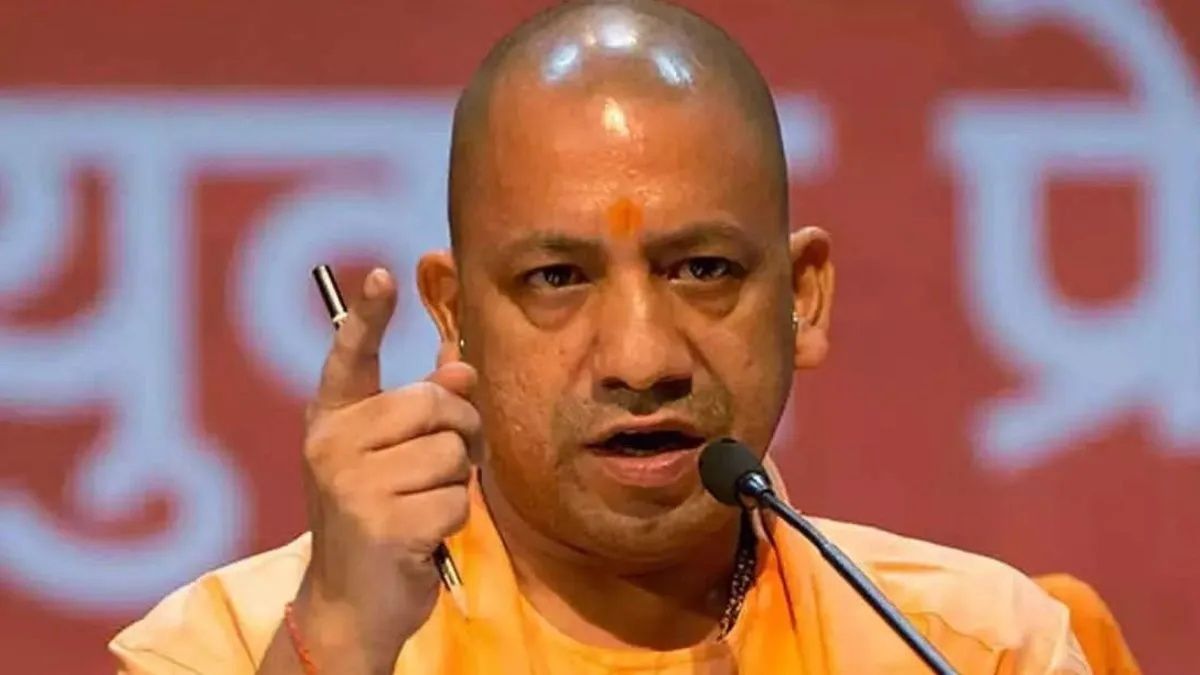
Uttar Pradesh Chief Minister Yogi Adityanath has declared a zero-tolerance approach to what he characterises as tampering with people's religious sentiments, following the registration of the first formal inquiry into a donation theft at the Ram Janmabhoomi Teerth Kshetra temple complex in Ayodhya. Addressing supporters at a public function in Deoria on Friday, the Chief Minister signalled that the state administration would act decisively based on findings from a Special Investigation Team, emphasising that no individual or group would receive preferential treatment in this matter.
The Chief Minister's comments come after authorities initiated proceedings based on a Special Investigation Team report into irregularities surrounding donations collected at the temple. Speaking at the foundation stone-laying ceremony for various development initiatives, Yogi Adityanath underscored his consistent messaging about Ayodhya's spiritual significance as a symbol of India's broader Hindu cultural heritage. His remarks reflected a hardened stance against what he perceives as attempts to discredit the temple or cast doubt on the integrity of donations collected from pilgrims and devotees visiting the newly constructed shrine.
Yogi Adityanath positioned the inquiry within a broader political narrative, drawing contrasts between his government's approach and the policies of predecessor administrations. He attributed the current investigation's commencement to his government's commitment to protecting religious sentiments, noting that swift action followed immediately upon receipt of the investigation team's report. The Chief Minister stressed the importance of distinguishing between factual evidence and unfounded allegations, calling upon political opponents to either present concrete proof or refrain from making accusations that he argues undermine public trust in religious institutions.
The Chief Minister's remarks appeared directed at the Indian National Congress and the Samajwadi Party, parties that have historically governed Uttar Pradesh. He characterised these parties as having harboured hostility toward Hindu religious practices and temple construction initiatives. Yogi Adityanath recalled historical instances he attributed to these administrations, including restrictions on religious processions and festivals, suggesting a pattern of antagonism toward Hindu observances. He invoked controversial incidents such as the Lar riot, framing these as consequences of policies implemented by predecessor governments that allegedly showed disrespect toward people's faith.
The Chief Minister's framing of the investigation represents an attempt to separate the donation case from partisan criticism, even as he weaponises the inquiry itself against political opponents. By emphasising that his government initiated proceedings transparently based on investigation findings, Yogi Adityanath seeks to portray his administration as defender of both religious integrity and institutional accountability. However, this positioning simultaneously allows him to critique rival parties, suggesting that their concerns about the donation irregularities reflect ulterior political motives rather than genuine commitment to transparency.
For Malaysian and broader Southeast Asian audiences, this episode illuminates the complex intersection of religious sentiment, political governance, and institutional oversight in contemporary India. The Ram Janmabhoomi temple represents far more than a place of worship; it embodies competing visions of Indian secularism, Hindu majoritarianism, and the proper relationship between religious institutions and state power. The donation case exemplifies how financial irregularities at major religious sites can become flashpoints for broader political contestation when handling and public accountability mechanisms are perceived as inadequate.
Yogi Adityanath's insistence that critics present evidence or remain silent reflects a governing approach that frames criticism itself as potentially delegitimising to religious faith. This stance raises important questions about institutional transparency and accountability in temple administration. Major religious sites across South and Southeast Asia typically manage substantial financial resources from devotees and donors, raising comparable questions about financial governance, audit procedures, and public disclosure standards. The Ram Janmabhoomi case demonstrates how disputes over these mechanisms can become deeply politicised when religious institutions operate with limited external oversight.
The Chief Minister's repeated references to historical grievances and characterisations of political opponents as irreligious represent an attempt to reframe what ostensibly concerns financial management as fundamentally a matter of protecting faith itself from malicious actors. This rhetorical strategy positions those demanding transparency as threats to religious sentiment rather than as advocates for proper institutional governance. The distinction matters significantly for understanding how religious nationalism in India increasingly frames accountability mechanisms as potential vehicles for delegitimising religious institutions and communities.
Yogi Adityanath's call for political opponents to cooperate with the Special Investigation Team while simultaneously criticising them extensively illustrates the tension between demands for institutional autonomy and for accountability. By appealing to Ram devotees not to allow their patience to be tested, the Chief Minister implicitly suggests that further scrutiny of the donation case might provoke communal tensions, a framing that potentially discourages rigorous investigation. This approach—weaponising religious sentiment to discourage oversight—represents a significant challenge for maintaining institutional credibility and public confidence in temple administration.
The Ram Janmabhoomi case carries implications beyond Ayodhya and even Uttar Pradesh. As major religious sites across India and Southeast Asia increasingly attract substantial pilgrim numbers and financial contributions, questions about donation management, financial transparency, and independent auditing mechanisms become increasingly urgent. The politicisation of these issues in the Indian context demonstrates how sensitive these questions have become when religious institutions intersect with majoritarian political movements and when oversight mechanisms become contested along partisan lines.
For temple administrations across the region, the Ayodhya case offers cautionary lessons about the importance of establishing credible, transparent financial governance systems before controversies emerge. Independent auditing, public disclosure of major donations, and clear administrative procedures can help insulate religious institutions from accusations of malfeasance while protecting them from becoming vehicles for political point-scoring. Conversely, resistance to transparency mechanisms—however rhetorically framed as protecting faith—ultimately undermines rather than strengthens public confidence in religious institutions' integrity.
Yogi Adityanath's governance style reflects a broader trend across South Asia wherein majority religious nationalism increasingly shapes how governments respond to questions about institutional accountability within religious organisations. The Chief Minister's framing suggests that protecting faith and ensuring financial transparency have become understood as conflicting priorities rather than mutually reinforcing objectives. This represents a significant departure from classical approaches to temple governance, which typically presumed that rigorous financial management and public accountability actually strengthened rather than threatened religious faith and institutional legitimacy.

