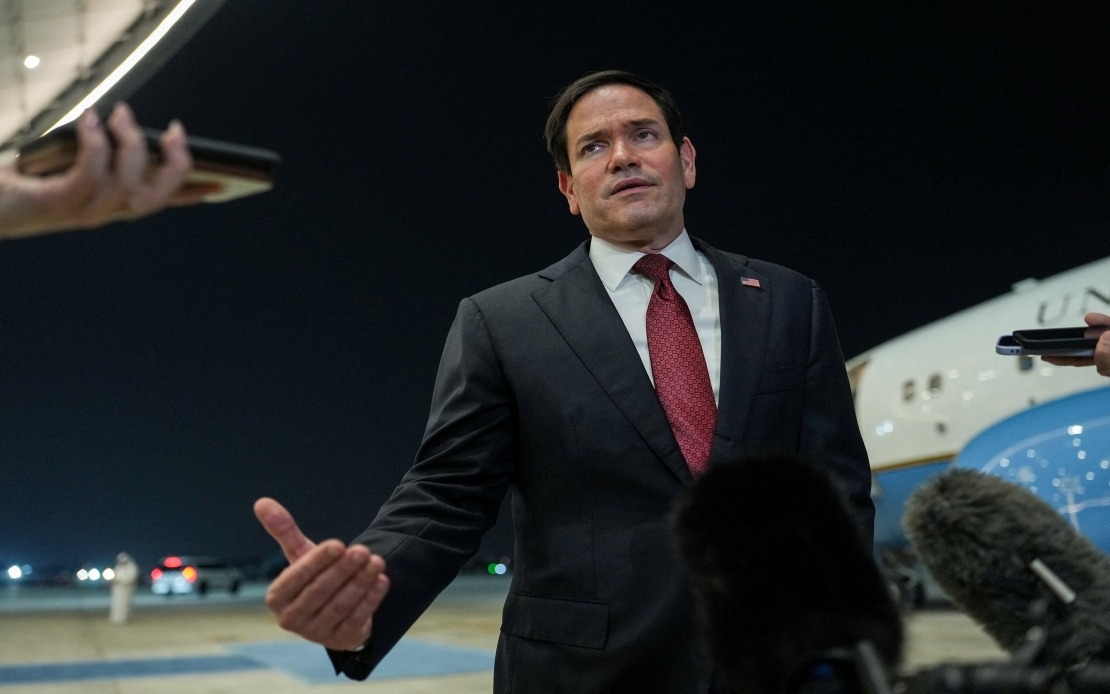
The United States has definitively stepped back from any financial commitment to Iran reconstruction efforts, according to Secretary of State Marco Rubio, who sought to dispel speculation about Washington's role in a potential multi-billion dollar investment scheme. Speaking to journalists on Tuesday, Rubio made clear that while various parties continue discussing the architecture of post-conflict economic assistance, the US treasury will play no part in such arrangements. His remarks came as intensive diplomatic negotiations between American and Iranian delegations continued to produce tangible results following a historic Sunday meeting in Switzerland.
Rubio's statement carries particular significance for Southeast Asian observers tracking the region's strategic realignment. The clarification suggests that any reconstruction fund remains purely theoretical at this stage, with fundamental questions about participating nations and financial mechanisms still unresolved. The secretary noted that determination of contributors represents future business, implying that current diplomatic efforts focus primarily on security and military arrangements rather than economic reconstruction details. This measured approach contrasts with speculation that emerged after President Donald Trump's administration initially dismissed reports of a proposed USD 300 billion package, signalling internal disagreement about the scope and feasibility of post-agreement commitments.
The diplomatic framework emerging from the Switzerland negotiations reveals a compartmentalized approach to resolving decades of US-Iran animosity. Rather than attempting comprehensive settlements across all disputed issues simultaneously, negotiators have prioritized military de-escalation and immediate security concerns. The remotely-signed memorandum reached last week established concrete timelines for reducing military tensions, including provisions for Washington to lift its naval blockade and for Tehran to restore commercial shipping through the strategically vital Strait of Hormuz. This step-by-step methodology reflects pragmatic recognition that rushing into sweeping agreements typically produces fragile outcomes vulnerable to domestic political backlash.
The nuclear question represents a particularly thorny component of this evolving arrangement. Rather than settling proliferation concerns within the main agreement, negotiators designated the Iranian nuclear programme as subject to separate discussions scheduled to conclude within 60 days. Iran's commitment to forswear nuclear weapons acquisition forms part of the current accord, yet the technical mechanisms for verification and compliance require detailed negotiation. This separation allows both parties to claim victory on immediate security matters while deferring contentious technical details that frequently derail international agreements. For Malaysia and other Southeast Asian nations concerned about regional stability and freedom of navigation, the Strait of Hormuz provisions offer tangible reassurance about maintaining uninterrupted energy supplies.
The composition of negotiating teams reflects the complex geopolitical architecture underlying these talks. American delegation leadership passed to an individual identified as Vance, suggesting coordination at senior levels of the Trump administration. Iran dispatched Parliamentary Speaker Mohammad Bagher Ghalibaf, elevating the talks beyond foreign ministry level and indicating Tehran's serious commitment to achieving substantive results. Qatar and Pakistan served as mediators, underscoring how regional powers increasingly broker agreements between major powers rather than merely receiving outcomes dictated by distant capitals. This distribution of diplomatic labour demonstrates how traditional Cold War-era negotiation patterns have yielded to more diffuse networks of influence and mediation.
Rubio's insistence that any Iranian economic development depends upon progress on undefined security matters suggests that reconstruction remains conditional leverage in ongoing negotiations. The secretary's comment that Iran possesses capacity to generate economic opportunities if permitted to do so implies that sanctions relief or selective engagement might accompany agreement implementation. However, such arrangements remain contingent upon Iran's compliance with security commitments and continued progress on disputed issues. This formulation keeps economic incentives available as negotiating tools while avoiding premature commitments that might prove politically problematic domestically.
The potential role of Gulf states in any reconstruction fund introduces additional complexity to regional dynamics. Gulf Cooperation Council members possess substantial sovereign wealth funds and demonstrated capacity for large infrastructure investments throughout the Middle East and South Asia. However, their participation in funding Iranian reconstruction would represent dramatic recalibration of regional relationships, requiring substantial political adjustments within Saudi Arabia, the United Arab Emirates, and other Gulf monarchies. Such involvement could simultaneously reduce Iranian economic desperation while creating mutual economic interests that complicate future conflict scenarios. For Malaysia, positioned as a non-aligned nation with economic ties throughout the region, these developments carry implications for trade patterns and investment flows across Asia.
The timeline established for nuclear negotiations—60 days from the remote signing—creates a compressed but manageable window for technical discussions. This specific deadline signals both parties' recognition that indefinite negotiations encourage backsliding and domestic political opposition. Iranian negotiators must satisfy hardliners concerned about Western intentions, while American officials face congressional scepticism about any arrangements perceived as insufficiently robust. The compressed timeline creates urgency conducive to compromise while avoiding the protracted negotiations that generate public fatigue and provide opportunities for spoilers to derail progress.
Rubio's careful language distinguishing between government investment and private sector involvement opens theoretical pathways for American businesses to participate in Iranian reconstruction without direct government involvement. Private equity firms, oil companies, and infrastructure investors might pursue opportunities once sanctions frameworks permit such engagement. This distinction between government and private sector participation has historical precedent in previous sanctions relief arrangements, where corporations rapidly moved into newly accessible markets once restrictions lifted. For Malaysian companies monitoring opportunities in Iran, understanding this distinction matters substantially when evaluating potential partnership arrangements and market entry strategies.
The broader implications of these negotiations extend beyond bilateral US-Iran relations into consequential questions about Middle Eastern stability and global energy security. Successful implementation of the current agreement could reduce regional tensions that have periodically threatened shipping lanes and inflamed sectarian conflicts across Iraq, Syria, and Yemen. Alternatively, failure to consolidate early gains through comprehensive resolution of remaining disputes would likely revert to confrontational patterns familiar throughout the past four decades. Malaysian policymakers must carefully track these developments, as regional instability directly threatens Southeast Asian prosperity through energy market disruptions and potential involvement of regional proxies in matters affecting navigation and commerce.

