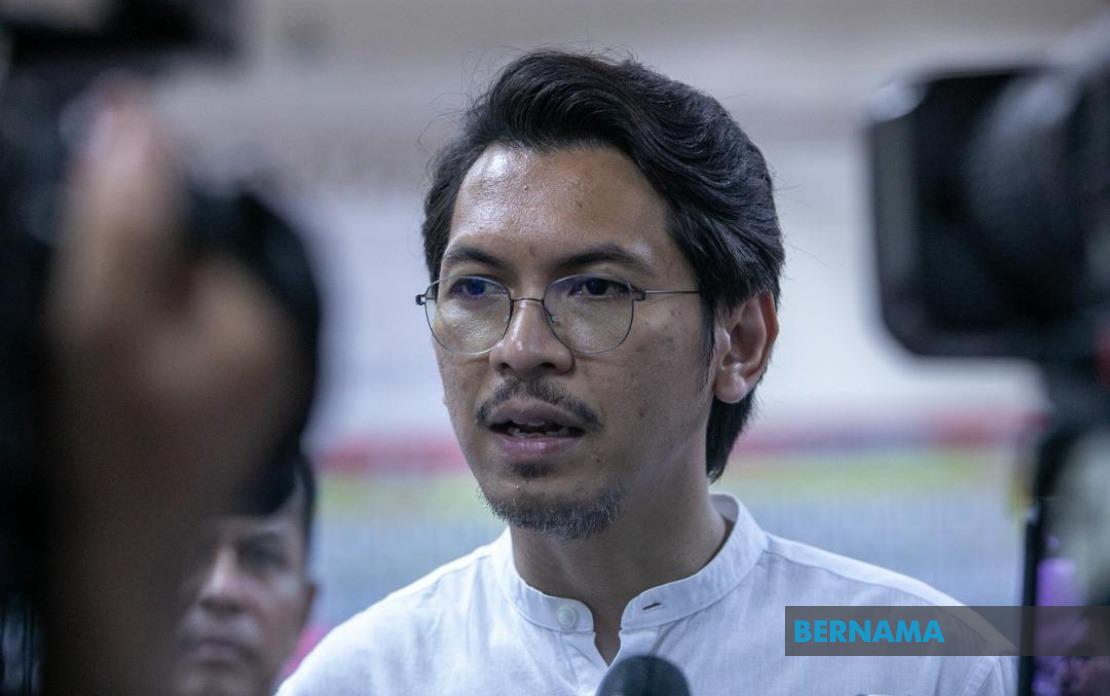
The memorandum of understanding being negotiated between the United States and Iran holds promise for easing pressure on global oil markets, according to Malaysia's Political Secretary to the Minister of Finance Muhammad Kamil Abdul Munim, though he cautioned that benefits will not materialise immediately. Speaking at a government appreciation ceremony in Kuala Kangsar on June 19, Abdul Munim outlined how the tentative peace framework could reshape energy economics across the region while acknowledging that achieving genuine price stability remains a more distant prospect.
The geopolitical breakthrough, if formalised within the agreed 60-day negotiation window, would remove one of the most significant disruptions to international commerce in recent years. The Strait of Hormuz, through which roughly one-third of seaborne traded oil passes globally, has been the flashpoint for escalating tensions that have throttled shipping routes and forced vessels to divert through longer, costlier paths. Abdul Munim welcomed the potential reopening of these critical maritime corridors, noting that normalising passage for both oil tankers and general merchant shipping would provide tangible relief to nations heavily dependent on stable energy imports, particularly in Southeast Asia where Malaysia occupies a strategic position in global trade networks.
Yet the path to affordable oil remains complicated by accumulated costs that will persist long after military tensions subside. Throughout the crisis period, shipping insurance premiums have surged, logistics expenses have escalated, and transport fees have climbed as companies price in geopolitical risk and rerouting requirements. These elevated overhead charges are unlikely to dissipate quickly once tensions ease, creating a lag between diplomatic breakthroughs and economic relief at the pump. Abdul Munim made clear that Malaysia cannot expect immediate price drops simply because the agreement framework exists; rather, market fundamentals must gradually normalise as confidence in safe passage returns and cost pressures ease naturally over several months.
Prime Minister Datuk Seri Anwar Ibrahim signalled optimism about the negotiation trajectory the previous day, expressing confidence that successful conclusion of the US-Iran talks could establish conditions for broader Middle Eastern stability. The 60-day deadline for reaching a final accord creates a defined timeline, though both the process and subsequent implementation involve considerable uncertainty. Anwar's cautious optimism reflects recognition that even partial de-escalation in the region could generate positive momentum for Malaysia and other trading nations heavily reliant on uninterrupted energy flows.
Meanwhile, the Malaysian government has not remained passive during the crisis. The administration has implemented protective measures specifically designed to insulate ordinary Malaysians from runaway energy costs. Most notably, subsidised RON95 petrol remains locked at RM1.99 per litre, a price point considerably below regional equivalents and global market rates. This policy stance distinguishes Malaysia from neighbouring countries that have allowed fuel costs to rise substantially, reflecting a deliberate government choice to absorb energy price volatility rather than pass it directly to consumers. Abdul Munim framed this as part of a broader inflation management strategy, suggesting that maintaining affordable fuel supports broader economic stability and protects household purchasing power during a period of global uncertainty.
The government's Economic Action Council will continue reviewing subsidy architecture over the next four to six months as the international situation stabilises, Abdul Munim indicated. This extended evaluation period reflects expectations that meaningful oil market normalisation will unfold gradually across the northern hemisphere winter and into the following spring. Rather than precipitously adjusting fuel subsidies or allowing prices to spike, the government intends to calibrate policy responses based on actual market developments, ensuring that Malaysian households and businesses are not blindsided by sudden cost increases during the transition period.
The targeted petrol subsidy programme known as BUDI MADANI RON95, which temporarily allocated 200 litres monthly per qualified recipient, similarly faces recalibration depending on market conditions. Abdul Munim stated that the government would reassess the initiative before deciding whether to expand, maintain, or reduce the allocation. This flexible approach acknowledges that subsidy programmes must balance fiscal sustainability against social protection, requiring periodic adjustment as underlying conditions shift. By maintaining discretionary authority over these quotas, policymakers preserve room to respond if global markets deteriorate or improve more rapidly than currently anticipated.
Beyond immediate energy concerns, Malaysia's diplomatic engagement with Russia represents a parallel strategy for managing long-term resource security. Prime Minister Anwar's planned official visit to Russia was characterised by Abdul Munim as a strategic initiative to deepen bilateral cooperation across trade, diplomatic, and energy dimensions. For a small trading nation like Malaysia, diversifying energy and resource partnerships represents prudent risk management, particularly given the unpredictability of Middle Eastern geopolitics. Russia possesses substantial economic capacity and energy reserves, making it a logical alternative supplier relationship to cultivate as Malaysia seeks to reduce dependence on any single sourcing region.
The broader context reveals Malaysia pursuing a sophisticated multi-track energy strategy. Rather than hoping passively that US-Iran negotiations succeed, the government simultaneously builds alternative partnerships, protects domestic consumers through targeted subsidies, and maintains fiscal flexibility through periodic programme reviews. This approach acknowledges that energy security cannot depend on any single agreement or region, particularly when Malaysia's economy remains tightly integrated into global supply chains. The convergence of near-term crisis management through subsidies and medium-term diversification through diplomatic engagement suggests policymakers recognise both the temporary nature of current disruptions and the structural imperative to build resilience into Malaysia's energy relationships.
The mathematics of energy economics means that even a successful US-Iran accord will not instantly restore pre-crisis conditions. Shipping insurance will gradually decline as risk assessments improve, routing decisions will slowly revert to optimal paths as confidence returns, and surplus transport costs will dissipate as market competition resumes. This normalisation process will probably consume the four to six month window that Abdul Munim identified, during which Malaysian policy will focus on preventing households and businesses from bearing the full adjustment burden. If the US-Iran talks collapse, conversely, the government's subsidy commitments and partnership diversification become even more critical to Malaysia's economic stability, suggesting that policy design already hedges against negotiation failure.
For Malaysian businesses and households, the significance of the peace agreement extends beyond symbolic relief. A functioning Strait of Hormuz means shorter shipping routes, lower insurance costs, and more predictable supply chains—benefits that cascade through manufacturing sectors, retail distribution networks, and transportation industries. Yet the delayed nature of these benefits means that economic policy must bridge the gap between diplomatic breakthrough and market normalisation, a role that existing subsidies and programme flexibility are designed to fulfil. Malaysia's response to potential resolution of the US-Iran dispute thus reflects mature understanding that geopolitical events rarely translate instantaneously into economic outcomes.

