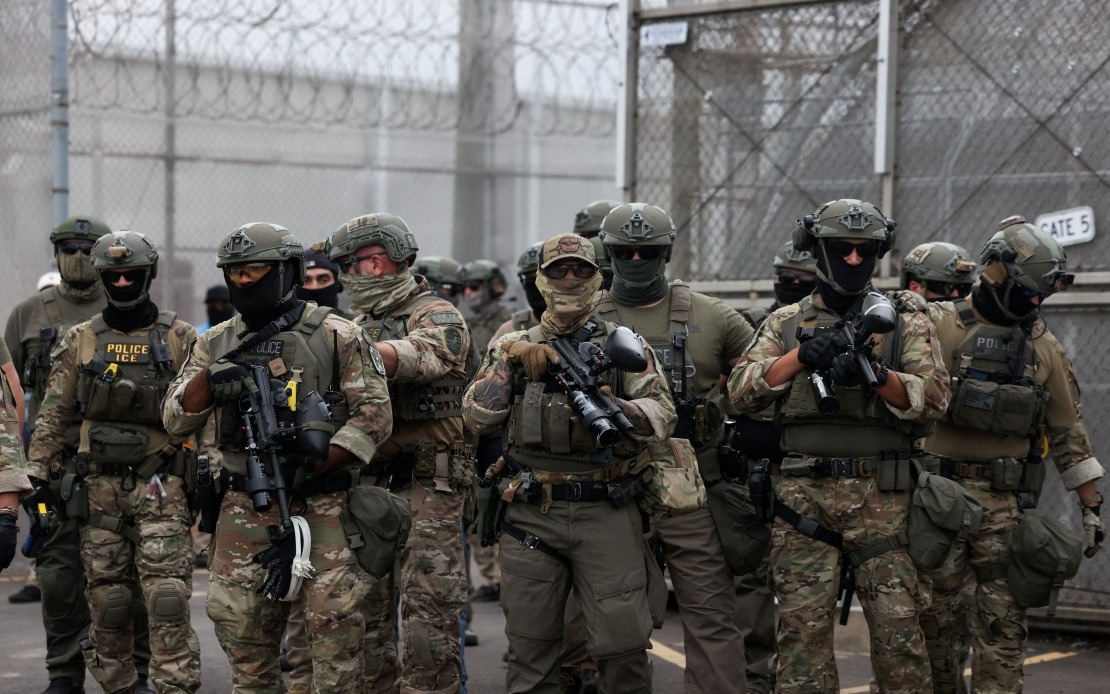
A federal judge in California has issued a nationwide injunction preventing United States Immigration and Customs Enforcement from conducting arrests within or near immigration courthouses, marking a significant legal setback for the Trump administration's aggressive deportation agenda. The ruling effectively halts what immigration advocates have characterised as a punitive enforcement tactic designed to intimidate migrants from seeking judicial review of their cases.
The practice of arresting migrants at courthouse locations had become increasingly common under the current administration, with ICE officers targeting individuals both during and outside scheduled deportation proceedings. Immigration courts across the United States serve as venues where migrants facing removal orders present their cases before judges, a process theoretically designed to ensure fair consideration of each individual's circumstances. The courthouse arrests represented a dramatic escalation in enforcement strategy that critics argued transformed judicial buildings into enforcement zones rather than spaces for legal proceedings.
ICE's approach underwent significant revision at the beginning of Trump's second term, when the agency introduced revised guidelines emphasising the operational advantages of courthouse enforcement actions. Internal documentation indicated that agency leadership viewed these arrests as an efficient mechanism for identifying and detaining undocumented migrants concentrated in one location. However, the federal judge found that the administration had failed to demonstrate adequate consideration of the policy's broader implications or provide legally sufficient justification for this procedural shift.
The judicial decision centres on procedural fairness and administrative law requirements. The presiding judge determined that ICE had not adequately addressed mounting evidence that courthouse arrests create a chilling effect on migrant participation in legal proceedings. When individuals facing deportation believe they face imminent arrest upon entering a courthouse, they are far more likely to forgo their scheduled hearings, thereby losing opportunities to present mitigating circumstances, seek stays of removal, or challenge the government's allegations. This dynamic fundamentally undermines the integrity of the immigration court system by preventing judges from hearing complete cases.
For Southeast Asian observers and Malaysian stakeholders, this American legal development carries particular significance. Malaysia hosts substantial populations of documented and undocumented migrants from across South and East Asia, individuals who navigate their own complex legal proceedings and immigration status determinations. The principle established by the California court—that enforcement agencies cannot weaponise the courthouse environment to chill legal participation—reflects principles of due process increasingly recognised across democratic jurisdictions. Should similar patterns emerge in regional enforcement practices, comparable legal challenges might follow.
The broader context of US immigration enforcement reveals deep tensions between security-focused policy objectives and constitutional protections. The Trump administration had positioned aggressive deportation operations as essential national security and public safety measures. However, civil liberties advocates and legal scholars consistently argue that procedural fairness requirements cannot be suspended merely to achieve enforcement efficiency. The federal judge's ruling affirms that constitutional protections apply regardless of the political urgency assigned to particular policy goals.
Immigration court backlogs in the United States have reached historic levels, with hundreds of thousands of cases pending adjudication across the country. When migrants decline to appear for scheduled hearings—whether from fear of arrest or other reasons—these backlogs intensify further. The courthouse arrest policy thus created a perverse incentive structure: enforcement actions designed to remove migrants ultimately prevented their cases from being resolved through proper legal channels, further strangling an already overburdened system.
The financial and human costs of this enforcement approach warrant consideration as well. Resources devoted to courthouse-based arrest operations might have been allocated to processing cases more efficiently through the existing legal system. Migrants removed through administrative procedures rather than judicial orders arguably represent enforcement outcomes that might have occurred through ordinary legal processes, suggesting that the aggressive tactic produced minimal net increase in deportations while substantially damaging public trust in institutional integrity.
Legal scholars have noted that the ruling applies specifically to ICE operations but raises broader questions about agency conduct in other enforcement contexts. If immigration authorities cannot arrest individuals at courthouses without adequate procedural justification, similar logic might extend to other government agencies and regulated environments where individuals might reasonably expect to participate in official proceedings without fear of concurrent enforcement actions. The decision thus potentially influences enforcement practices across multiple agencies and policy domains.
The Trump administration faces decisions about whether to appeal the ruling or modify its enforcement guidelines to satisfy the judge's concerns. Any appeal would likely emphasise national security considerations and border control imperatives, arguments the administration has consistently advanced in immigration litigation. However, the federal judge's reasoning—grounded in administrative law requirements rather than subjective policy preferences—suggests substantial legal obstacles to circumventing the decision through direct appeal.
For migrants currently detained or facing removal proceedings, the injunction provides immediate practical relief. Individuals can now attend immigration hearings with reduced fear that their appearance will trigger immediate arrest. This restoration of access to judicial proceedings represents a meaningful protection of rights, even as ongoing administrative deportations continue through other enforcement mechanisms. The ruling does not prevent ICE from conducting arrests elsewhere or through other investigative methods; it specifically addresses the problematic courthouse environment.
The implications for regional migration patterns merit attention from Malaysian policymakers and immigration authorities. As the United States tightens its immigration enforcement posture, some migrants may redirect migration intentions toward Southeast Asian economies or alter their movement patterns. Additionally, enforcement practices that undermine due process protections risk generating international criticism and complicating diplomatic relationships. The US ruling demonstrates that democratic societies ultimately cannot sustain enforcement systems that fundamentally contradict procedural fairness principles, regardless of short-term political pressures.

