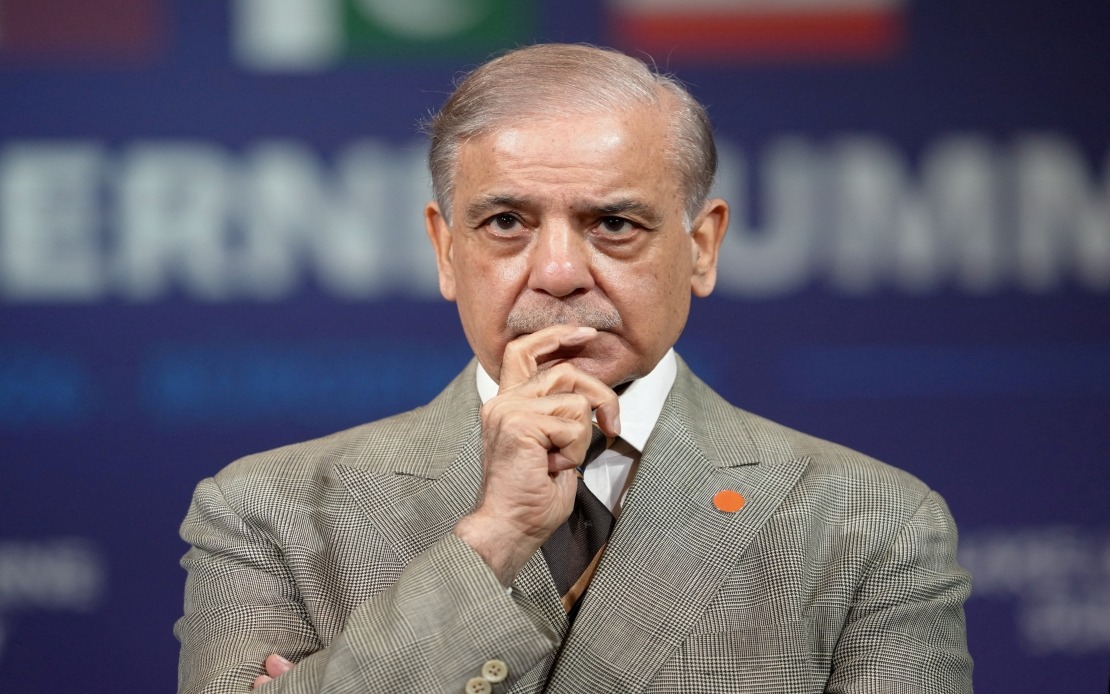
Pakistan's Prime Minister Shehbaz Sharif has announced a significant diplomatic breakthrough, revealing that the United States and Iran have established a 60-day window to finalize negotiations on their most contentious issues. Speaking to lawmakers in the National Assembly in Karachi on Tuesday, Sharif outlined an ambitious technical-level engagement aimed at transforming preliminary understandings into a durable, long-term accord between the two adversarial nations.
The framework underpinning these negotiations is the Islamabad Memorandum of Understanding, which Washington and Tehran formally signed on June 17, with Pakistan serving as an official mediator. Sharif emphasized that this MoU represents the foundation upon which deeper discussions will proceed, noting that technical teams from both sides will tackle three critical domains: the nuclear programme, frozen Iranian assets held in various international accounts, and ballistic missile capabilities. The Pakistani premier expressed cautious optimism that the preliminary agreement could crystallize into a comprehensive, lasting settlement within the stated timeframe.
The announcement reflects tangible progress from high-level talks conducted in Burgenstock, Switzerland, earlier this week. Those discussions, which concluded on Monday morning, produced what Pakistani and international observers have characterized as historic agreements on procedural mechanisms designed to advance the negotiation process. The multilateral mediation effort, shepherded jointly by Pakistan and Qatar, appears to have established sufficient common ground for both parties to commit to further substantive engagement on previously intractable questions.
However, complicating the optimistic public messaging from Islamabad is a contrasting statement from Iran's Foreign Ministry. Spokesman Esmaeil Baghaei asserted on Tuesday that ballistic missile capabilities were never placed on the negotiating table during the Switzerland talks, contradicting implications in Sharif's remarks. This divergence in narrative—whether intentional or reflecting genuine misalignment—underscores the fragility of consensus between Washington and Tehran, even at preliminary stages. The disagreement over what topics are legitimately subject to negotiation raises questions about whether the 60-day deadline represents a realistic horizon for comprehensive settlement or merely an aspirational target.
Further complicating matters is Iran's explicit refusal to permit International Atomic Energy Agency inspectors access to nuclear facilities that were targeted during recent military strikes attributed to the United States and Israel. Baghaei's categorical rejection of expanded IAEA monitoring at these sensitive sites directly conflicts with international non-proliferation norms and Washington's likely baseline demands. This stance suggests that despite optimistic messaging from Islamabad, fundamental positions remain far apart on verification mechanisms—arguably the most technically and diplomatically demanding component of any nuclear agreement.
The question of frozen Iranian assets carries profound implications for the negotiations' trajectory. These reserves, held internationally following sanctions regimes, represent billions of dollars crucial to Iran's economic stabilization. Unfreezing such assets would constitute a major concession from the Western perspective, yet Iran views asset recovery as a fundamental precondition for any agreement. The next 60 days will determine whether negotiators can construct a phased approach linking asset releases to verifiable Iranian compliance on nuclear matters, or whether this dimension becomes a stumbling block.
For Southeast Asian observers, particularly Malaysia, these developments warrant close attention. The region has substantial economic interests in Middle Eastern stability and is vulnerable to disruptions in energy markets stemming from escalated US-Iran tensions. Any breakthrough in these negotiations could stabilize oil prices and reduce geopolitical volatility affecting regional trade. Conversely, failure to achieve agreement within the 60-day window might trigger renewed sanctions, military confrontations, or proxy conflicts that would reverberate through global markets and shipping lanes critical to ASEAN commerce.
Pakistan's prominent mediation role also reflects Islamabad's broader strategic positioning within South Asian geopolitics and its influence within Islamic diplomacy. By hosting and facilitating these negotiations, Pakistan seeks to demonstrate its indispensability as a regional power capable of managing great-power conflicts. Success would elevate Pakistan's diplomatic standing; failure might expose limitations in Islamabad's sway over either Washington or Tehran. The next two months will test whether Pakistan's mediation capacity translates into substantive diplomatic gains.
The 60-day timeline is notably compressed for negotiations of this magnitude. Historical precedent suggests that nuclear-related agreements typically require extended periods of technical verification, legal drafting, and parliamentary approval. The accelerated schedule may reflect political pressure from multiple quarters: the Biden administration's desire to demonstrate foreign policy achievements, Iran's economic desperation, and international pressure for stabilization. Whether this pace permits adequate scrutiny and robust verification mechanisms remains an open question that will shape the agreement's durability and enforceability.
The coming weeks will reveal whether the preliminary agreements reached in Switzerland represent genuine convergence or merely cosmetic steps obscuring persistent disagreements. Both the US and Iran have substantial domestic political audiences with strong views on these negotiations, constraining negotiators' flexibility. Meanwhile, the apparent divergence between Pakistani and Iranian characterizations of what has been negotiated suggests that interpreting these preliminary agreements requires skepticism regarding public declarations from any party. The technical negotiations commencing immediately will determine whether the optimism expressed in Islamabad reflects realistic prospects or premature celebration.

