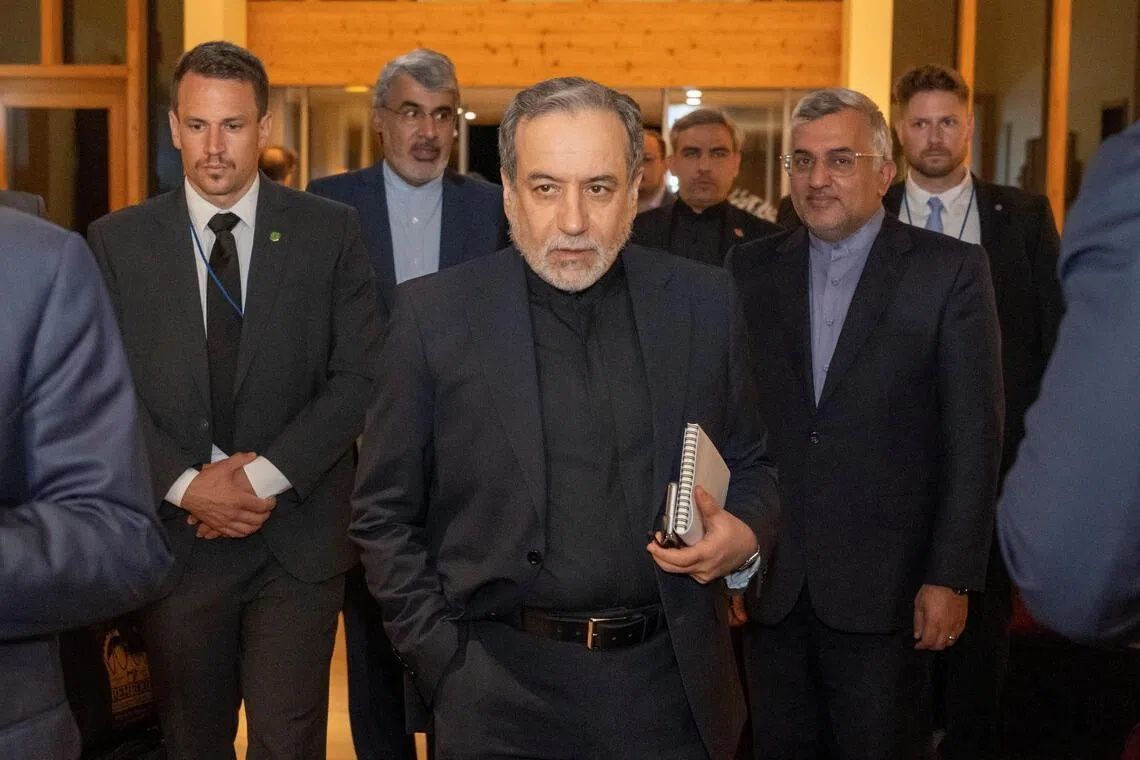
Diplomatic efforts to end the prolonged conflict between the United States and Iran have formally commenced at an exclusive Swiss resort perched high in the Alps. Vice President JD Vance arrived at the Buergenstock resort on Sunday morning to lead the American delegation, while Iranian chief negotiator Mohammad Baqer Qalibaf headed the Iranian side. The meetings represent the most significant face-to-face engagement between the two nations since their military confrontation began nearly four months ago, with both capitals hoping to translate a preliminary ceasefire agreement signed on Wednesday by Presidents Donald Trump and Masoud Pezeshkian into a durable settlement.
The palatial Buergenstock property, owned by Qatar and accessible only via a winding mountain road fortified with multiple security checkpoints, has been chosen as neutral ground where negotiations are expected to unfold over several days. Accompanying Vance are notable Trump administration figures including envoys Steve Witkoff and Jared Kushner, the president's son-in-law, signalling Washington's commitment to achieving concrete results. The Iranian delegation encompasses not merely diplomatic personnel but also senior security officials, central bank representatives, and energy sector advisers, suggesting Tehran intends to address multiple dimensions of the relationship simultaneously. Pakistan's Prime Minister Shehbaz Sharif and army chief Field Marshal Syed Asim Munir have journeyed to the resort to participate as brokers, having orchestrated the preliminary agreement that paved the way for these talks.
Critical to understanding the delicate nature of these negotiations is the precarious situation surrounding the Strait of Hormuz, one of the world's most strategically vital maritime passages. Before February 28, when American and Israeli military operations intensified dramatically, the waterway processed roughly one-fifth of the planet's oil supply. On Saturday, hours before talks began, Iran's Revolutionary Guards Corps announced that the strait had been closed in retaliation for Israeli military strikes affecting Lebanese territory. However, the American military immediately contradicted this claim, asserting that commercial vessels continued normal transit operations throughout the disputed period. The contradiction between Tehran's declaratory position and observable maritime reality underscores the propaganda dimension now embedded within these negotiations, with each side seeking to project strength to domestic audiences while pursuing substantive agreements with counterparts.
The energy implications of this standoff are profound for regional stability and global markets. American Central Command documented that 55 merchant vessels successfully navigated the strait on Saturday alone, transporting more than 17 million barrels of petroleum destined for international markets. Yet Tehran's insistence that the waterway remains closed, regardless of actual traffic flows, reflects Iranian determination to maintain pressure on Western economies and demonstrate resolve to its internal constituencies. The Revolutionary Guards' warning that vessels approaching the strait would face unspecified risks appears designed to create uncertainty rather than implement a genuine blockade, a distinction likely lost on many observers monitoring geopolitical tension.
President Trump has explicitly guaranteed that no tolls or fees will be imposed on shipping transiting the Strait of Hormuz during the initial 60-day ceasefire period or subsequently, provided peace negotiations succeed. However, Trump's public statements hint at potential American imposition of transit fees should talks collapse, framing such charges as compensation for what he characterizes as American stewardship of Middle Eastern security arrangements. This rhetorical positioning—claiming credit as the region's guardian while threatening economic penalties for non-compliance—reflects an evolved American strategy that blends negotiation with barely disguised coercion.
The ceasefire encompassing Lebanon represents another flashpoint where rhetoric and reality diverge sharply. Though an agreement ostensibly took effect, Israeli and Hezbollah forces exchanged fire on Saturday, with Lebanese civil defence officials reporting 20 fatalities from Israeli strikes. Israel characterizes these operations as necessary responses to Hezbollah provocations and insists it remains unbound by the broader ceasefire framework because it is not a formal party to the US-Iran agreement. The Israeli military has informed the government it will maintain occupation of Lebanese territory it currently controls while defending against perceived threats, a position that directly contradicts Lebanese and Iranian interpretations of ceasefire obligations. Mohammad Mokhber, adviser to Iran's Supreme Leader Ayatollah Mojtaba Khamenei, has explicitly stated that Iran considers the agreement incomplete and non-binding until Israel demonstrates compliance with all 14 points, particularly cessation of military operations on all fronts.
The Lebanese dimension carries particular weight because agreement on a Lebanon ceasefire was positioned as a prerequisite for substantive negotiations on Iran's nuclear programme and broader bilateral relations. Yet the continued military exchanges, despite ostensible truce arrangements, suggest that local actors—particularly Hezbollah and the Israeli military—possess significant autonomy from diplomatic channels controlled by their respective capitals. Lebanon's health ministry documents Israeli operations have killed 4,057 people since March 2, though the precise breakdown between civilians and combatants remains unspecified, complicating assessments of proportionality and compliance with international humanitarian law.
Israeli public opinion presents an additional constraint on negotiating flexibility. A Hebrew University survey of Israeli citizens reveals that approximately 92 percent believe Iran has benefited more than Israel from the military campaign, while only 8 percent perceive Israeli victory. More significantly for Israeli Prime Minister Benjamin Netanyahu's political position, nearly 90 percent of respondents stated that military objectives remain unachieved, and fewer than 30 percent credit Netanyahu's assertions regarding major accomplishments. This profound public dissatisfaction may pressure the Israeli government toward more aggressive postures during the Swiss negotiations, as compromises perceived as insufficient could trigger serious domestic political consequences.
Iran's negotiating posture reflects determination to extract tangible concessions while maintaining domestic credibility. Iranian Oil Minister Mohsen Paknejad has signalled that Western adherence to the spirit of the ceasefire agreement could unlock substantial economic opportunities and investment contracts, suggesting Tehran is prepared to offer commercial incentives contingent on political compliance. Simultaneously, Foreign Ministry spokesperson Esmaeil Baghaei has emphasized that Iran will insist upon fulfilment of all commitments, citing historical instances where international agreements have been abandoned or poorly implemented by other signatories. This dual approach—combining carrots and sticks—reflects Iranian experience with American administrations and international agreements more broadly.
For Malaysia and broader Southeast Asia, these negotiations carry significant implications for regional energy security and geopolitical alignment. The Strait of Hormuz closure, whether genuine or rhetorical, directly affects petroleum supplies to economies across East Asia, where most countries depend heavily on Middle Eastern oil imports. Disruptions to Persian Gulf energy flows would cascade through regional supply chains and inflate domestic fuel and electricity costs, affecting everything from manufacturing competitiveness to household budgets. Additionally, the outcome of US-Iran negotiations may reshape Washington's strategic attention and resource allocation in the Indo-Pacific, potentially affecting American commitment to regional security arrangements.
The stakes embedded within these Swiss negotiations extend beyond bilateral US-Iranian relations to encompass fundamental questions about international law, nuclear non-proliferation, regional military balances, and the future of American strategy in the Middle East. Success would require Iranian acceptance of constraints on nuclear enrichment capabilities, American acknowledgment of legitimate Iranian security interests, Israeli recognition of boundaries to its military operations, and Lebanese restoration of state authority over territory and militias. Failure might trigger renewed military escalation, further disruption to global energy supplies, and deepening polarization between regional and international actors. The coming days at Buergenstock will test whether sustained diplomatic engagement can resolve conflicts that military superiority has proven unable to settle conclusively.

