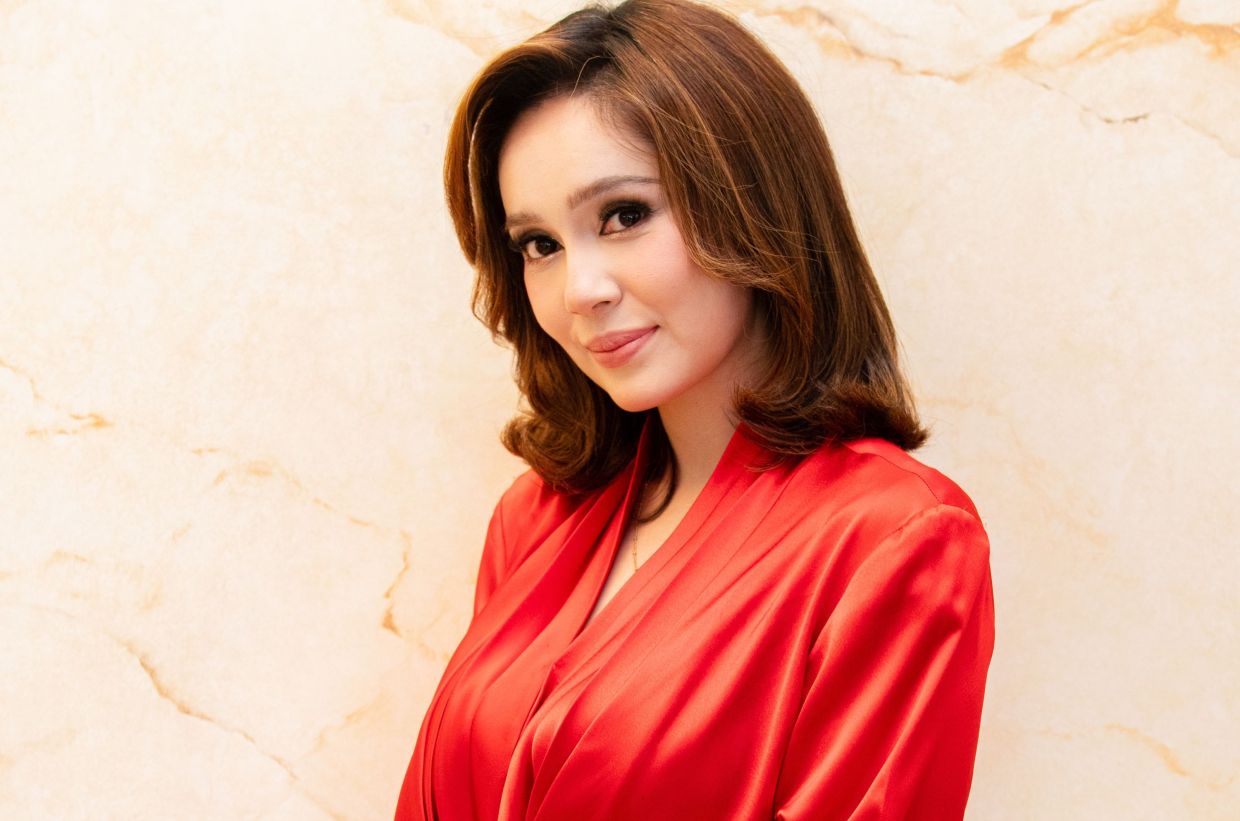
Malaysian actress Uqasha Senrose has opened up about her experience collaborating with fellow actor Aliff Aziz on a new series, pushing back against potential criticism following Aliff's much-publicised marriage scandal that unfolded earlier this year. The pair star in a 12-episode drama centred on the complexities of polygamous relationships, a project that has already generated considerable attention given the real-life turbulence surrounding one of its leads.
Aliff's personal difficulties came to public attention in March 2024 when he became embroiled in a khalwat controversy—allegations of close association contrary to Islamic law. The incident triggered a cascade of consequences that culminated in his highly visible divorce from Malaysian singer-actress Bella Astillah, with whom he shares two children. The unravelling of his marriage played out across media platforms and social networks, making it a watershed moment in Malaysian entertainment discourse and raising questions about how the industry should navigate such situations.
When asked about her willingness to work alongside Aliff despite these circumstances, Uqasha demonstrated a measured and compassionate perspective. She articulated a philosophy of non-judgment, acknowledging her own fallibility and past mistakes. Her approach reflects a growing maturity in how some within the entertainment industry are choosing to separate personal conduct from professional capability. Rather than adopting a punitive stance, Uqasha framed the collaboration through the lens of workplace ethics and mutual respect, suggesting that redemption and continued participation in one's livelihood remain important considerations.
Uqasha's account of the filming process itself presents a straightforward professional dynamic. She reported that Aliff maintained composure and dedication throughout production, fulfilling his responsibilities without incident or disruption. Crucially, she emphasised that she never experienced discomfort or hesitation in sharing scenes with him, and that his presence on set did not compromise her sense of safety or professional environment. This perspective carries particular weight in an industry increasingly sensitive to workplace conduct and interpersonal boundaries.
Her stance on preserving someone's economic opportunity—expressed through the Malay concept of rezeki—adds a cultural dimension to her reasoning. By framing the project as work for both parties, Uqasha positioned the collaboration as a matter of livelihood rather than endorsement. This distinction allows for professional separation between an individual's private life and their capacity to earn through their craft, a nuance that resonates in societies where income security remains paramount.
Irony permeates Uqasha's position, as she herself has recently navigated significant personal upheaval. She initiated divorce proceedings against ex-husband and fellow actor Kamal Adli in October 2025, with their marriage officially dissolved in January 2026. During those legal proceedings, she made serious allegations of domestic abuse, claims that Kamal disputed. The pair share a daughter, and the separation represented a difficult chapter in her own life, occurring against a backdrop of intense public scrutiny that accompanies celebrity divorces in Malaysia.
Despite—or perhaps because of—her own marital struggles, Uqasha has made deliberate choices about how she approaches her craft. When discussing her role as Azura in the polygamy-centred drama, she was explicit about maintaining boundaries between autobiography and performance. She resisted the temptation to draw upon her personal divorce experience or pain as emotional fuel for the character, recognising that such an approach could compromise both her wellbeing and the integrity of the portrayal.
The character of Azura occupies a demanding emotional terrain. The role requires Uqasha to navigate intense scenes heavy with anguish, featuring multiple moments where she must convey heartbreak and vulnerability. In one particularly challenging sequence, her character endures physical aggression, being struck and forcibly moved. These visceral demands extend beyond typical dramatic work, requiring her to access genuine emotional reserves while maintaining professional detachment from her own lived experience.
Despite her efforts to compartmentalise, Uqasha acknowledged that the filming process took a tangible psychological toll. The character's journey—featuring cycles of recovery, hope, and renewed adversity—resonated on some level despite her determination to keep Uqasha separate from Azura. She observed that witnessing Azura's repeated disappointments, the pattern of overcoming past hurt only to face fresh complications, created legitimate emotional strain during production.
What attracted Uqasha to the project was its moral complexity. She articulated appreciation for the series' refusal to paint characters in simplistic terms of good and evil. This nuanced approach to storytelling—where benevolent facades may conceal darker motivations, and seemingly callous behaviour may stem from comprehensible pain—reflects a maturity in contemporary Malaysian television drama. For Uqasha, this philosophical depth made the emotionally demanding role more artistically justified.
Reflecting on her current position, Uqasha disclosed a reorientation of her priorities toward personal wellbeing and maternal responsibility. She emphasised that her focus has shifted inward, prioritising her own contentment, professional fulfilment, and her relationship with her daughter. This recalibration suggests a deliberate rejection of external validation or media narratives, instead grounding herself in immediate family and creative satisfaction.
Uqasha framed her recent difficulties as pedagogical experiences, each trial contributing to personal development and emotional maturation. The transition to motherhood, in particular, has fundamentally altered her perspective, instilling an acute awareness of responsibilities that transcend individual desires or ego. This philosophical stance—treating hardship as character-building rather than merely destructive—underpins her ability to work alongside Aliff without rancour or hesitation, and to invest emotionally in complex dramatic work even while managing personal complexity.
Her narrative ultimately presents a portrait of an entertainer attempting to navigate the colliding demands of personal crisis, professional opportunity, and artistic integrity. In choosing to work with Aliff, to engage deeply with challenging material, and to refocus on family and self-care, Uqasha demonstrates a pragmatic philosophy that distinguishes between judging persons and evaluating professional arrangements—a distinction increasingly important in Malaysia's evolving entertainment landscape.

