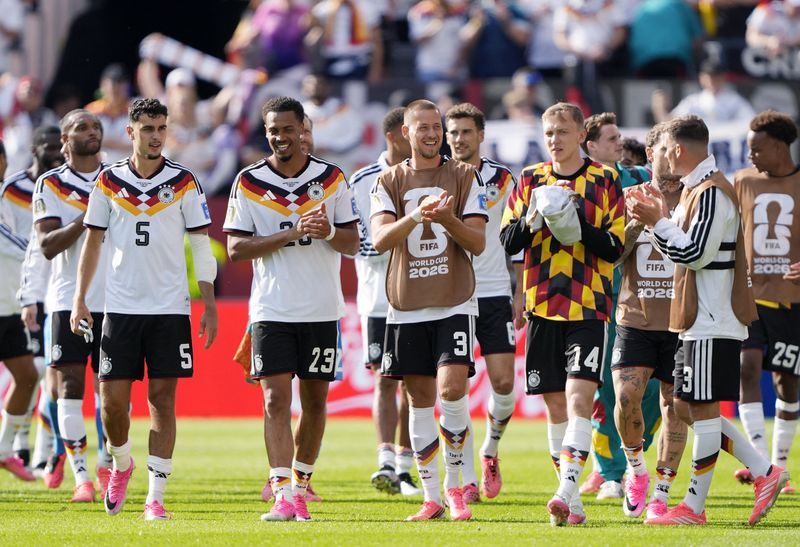
Deniz Undav's clinical finishing off the bench proved decisive as Germany mounted a dramatic second-half comeback to defeat Ivory Coast 2-1 at the World Cup in Toronto on Saturday, guaranteeing their advancement to the knockout rounds. The victory represented a significant turning point for Julian Nagelsmann's squad, who had endured a frustrating opening period marked by disallowed goals and missed opportunities before the substitute's intervention rescued their campaign.
The match unfolded as an intriguing tactical contest between Germany's methodical possession-based approach and Ivory Coast's more direct, attacking style. Playing before a crowd bolstered by over 100,000 people of German ancestry in the Toronto audience, the Germans dominated large stretches of possession yet found themselves repeatedly thwarted by the officials' whistle. Their frustration mounted when midfielder Aleksandar Pavlovic appeared to have opened the scoring from a corner in the 25th minute, only for the referee to adjudge a foul on goalkeeper Yahia Fofana in the challenge, a decision that drew audible protests from the partisan German supporters.
Ivory Coast capitalised on Germany's setback to seize the lead through midfielder Franck Kessie, who converted a rebound in the opening period after a move initiated by Yan Diomande's bursting run down the left flank. The goal extended Ivory Coast's remarkable scoring streak to seven consecutive matches at the tournament, the longest such sequence in their World Cup history. The West Africans' attacking prowess had been evident throughout, with their dynamic forward play creating genuine problems for the German defence during an entertaining first half that showcased the contrasting philosophies of both teams.
Germany's frustration deepened when they thought they had equalised only to see another effort ruled out. This time, Jamal Musiala was penalised for a foul on Odilon Kossounou during the build-up, denying the Germans what appeared a legitimate goal. The sequence of controversial decisions left Nagelsmann's side facing the prospect of exiting the tournament early, a scenario unthinkable for a nation that had claimed the World Cup crown in 2014. The psychological pressure of needing to overturn the deficit against a well-organised opponent added intensity to a match that had already captured the attention of neutrals through its compelling ebb and flow.
The introduction of Undav transformed Germany's attacking threat in the second half, with the versatile forward's fresh legs and precise finishing providing the catalyst for their comeback. He levelled the match in the 68th minute with a controlled volley that demonstrated his technical quality, before striking again with a more composed finish after receiving the ball on the turn. His second goal showcased composure under pressure as he managed to swivel and fire past Fofana, who had proven largely helpless in the face of Undav's clinical execution. The striker's two-goal haul extended an impressive recent run of nine goals across his last eight matches, testament to a period of outstanding form.
The turnaround reflected not merely individual brilliance but Germany's collective ability to maintain tactical discipline and patience despite early frustrations. Their intricate passing patterns, which had yielded limited reward in the opening period, finally unlocked Ivory Coast's defensive shape as fatigue and the rhythm of the match shifted in their favour. The West Africans, who had competed admirably and created dangerous moments themselves, could not sustain their initial intensity, and Germany's experience in managing pressure situations ultimately proved decisive.
Ivory Coast fashioned a late opportunity to level the match when Simon Adingra found space in the German box, but the forward's hesitation proved costly as he was unable to get a clear shot away. Germany responded swiftly, countering down the field with Nathaniel Brown forcing another save from Fofana as the Germans sought to secure the victory conclusively in the match's closing stages. The frantic finale underscored the competitive quality of the contest and Ivory Coast's continued threat despite their eventual defeat.
With this result, Germany now leads Group E with six points following two matches and has secured passage to the last 32. Ivory Coast remains on three points after their two encounters, positioning themselves precariously as they prepare for critical remaining fixtures. Germany will conclude their group-stage obligations against Ecuador on Thursday in New Jersey, whilst Ivory Coast face Curacao in Philadelphia, matches that will determine whether either nation can improve their tournament position.
The victory holds particular significance for German football, which had endured a disappointing recent World Cup campaign and faced questions about the team's depth and tactical flexibility. Undav's impact from the bench suggests that Nagelsmann possesses attacking options capable of altering matches at crucial moments, a quality that could prove invaluable as the tournament progresses. For Ivory Coast, the defeat highlighted the razor-thin margins at this level, where momentary lapses in concentration or finishing can prove fatal against experienced opponents. Their continued ability to score goals provides encouragement for their remaining matches, yet defensive vulnerabilities exposed in Toronto will require addressing if they harbour realistic ambitions of progressing further.

