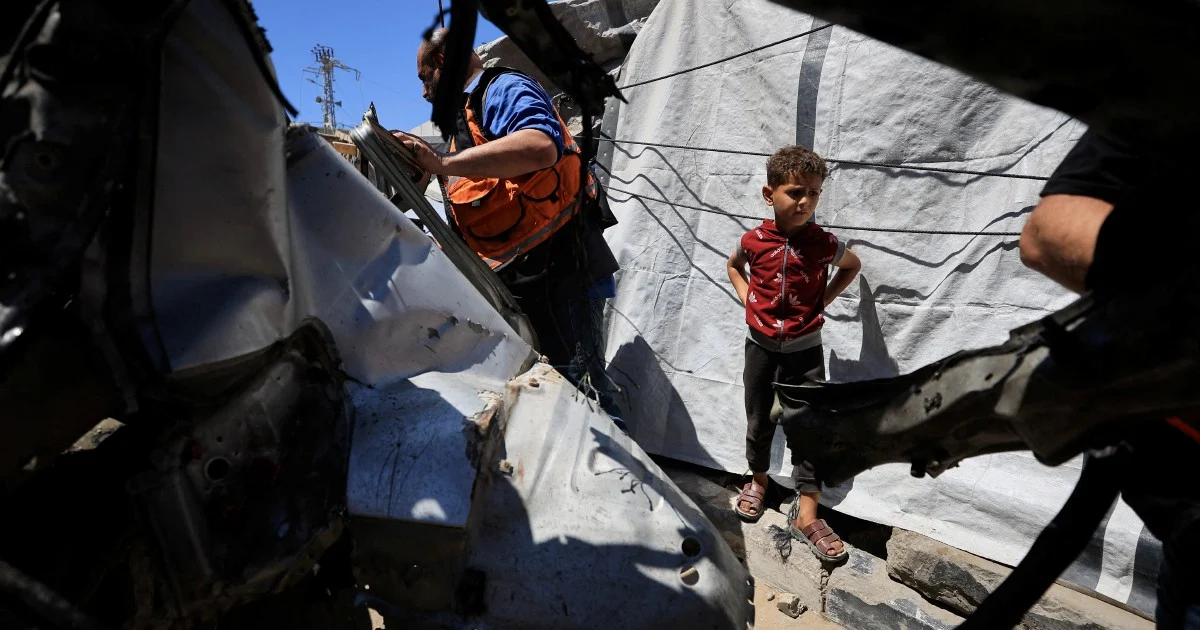
A team of United Nations investigators presented damning findings on Tuesday, alleging that Israel is engaged in the deliberate targeting of Palestinian children as a systematic aspect of what they characterize as an ongoing genocide in the Gaza Strip. The investigators released their report in Geneva, where the UN Human Rights Council maintains its investigative mechanisms into conflicts worldwide. The accusations represent a serious escalation in rhetoric from the international body and have triggered sharp rebuttals from Israeli officials and government representatives.
The investigative panel argued that the targeting of Palestinian children cannot be understood in isolation as a byproduct of armed conflict, but rather constitutes a deliberate pattern central to Israel's military operations in Gaza. According to the UN team's assessment, the prevalence and consistency of harm inflicted upon minors suggests intentionality rather than collateral damage. The investigators contended that this targeting pattern forms a foundational element of what they describe as genocide—a charge that carries significant legal and moral weight within international law frameworks.
The findings emerge from months of inquiry into conditions in Gaza, where armed conflict between Israel and Palestinian militant organizations has created a humanitarian catastrophe. The UN investigation encompasses documentation of incidents, testimony from survivors and witnesses, and analysis of military tactics and their outcomes. The investigators accessed available data on casualties, displacement, and destruction across civilian infrastructure, building a comprehensive record of the conflict's impact on the population.
Israel's government has categorically rejected the UN investigators' conclusions, dismissing them as biased and fundamentally flawed. Israeli officials have consistently argued that their military operations target militant organizations and military infrastructure, with any civilian casualties constituting regrettable but unintended consequences of urban warfare in densely populated areas. Israel maintains that it adheres to international humanitarian law and takes precautions to minimize civilian harm.
The timing of the UN report reflects growing international pressure on Israel to account for the scale of civilian casualties in Gaza. Multiple international bodies, human rights organizations, and countries have raised concerns about proportionality and necessity in military operations. For Southeast Asian nations including Malaysia, the report adds to a broader pattern of documented accounts that have shaped regional perspectives on the conflict.
The distinction between deliberate targeting and inadvertent civilian casualties represents a crucial legal and moral dividing line in international humanitarian law. The UN investigators' assertion that targeting is deliberate rather than incidental carries implications for potential accountability mechanisms, including investigation by the International Criminal Court. Such a determination could trigger formal inquiries and, theoretically, lead to charges against military and political leaders.
The report addresses a particularly sensitive dimension of the conflict: the impact on children. Documented cases of Palestinian minors killed or injured in Gaza have featured prominently in international media coverage and advocacy efforts. The UN team's conclusion that such harm follows a pattern rather than occurring randomly fundamentally alters the narrative around the conflict's humanitarian dimension.
The investigation raises questions about the nature of modern urban conflict and the feasibility of civilian protection in densely populated areas where militant organizations operate among residential populations. However, the UN's characterization of targeted harm to children as systematic challenges the notion that such casualties are inevitable features of warfare. The investigators appear to have concluded that specific choices regarding targeting and weapon deployment disproportionately endanger minors.
Regional responses to the UN report reflect broader divisions over the Gaza conflict. Many nations in Southeast Asia have expressed solidarity with Palestinian civilians and concern about humanitarian conditions. Malaysia, in particular, has maintained a consistent position emphasizing Palestinian rights and criticizing what it characterizes as disproportionate use of force. The UN report provides additional documentation that regional governments can reference in international forums.
The credibility and methodology of UN investigative panels remain contested, particularly when they examine conflicts involving powerful nations. Israel argues that such bodies contain inherent biases and lack access to complete military information necessary for accurate assessment. International observers remain divided on whether UN mechanisms possess sufficient independence and rigor to produce reliable conclusions.
The genocide allegation requires that investigators demonstrate not merely that mass killing has occurred, but that a specific intent exists to destroy a particular group, in whole or in part. The UN team's inclusion of child targeting as evidence of genocidal intent represents a significant interpretive stance that goes beyond documenting casualties to inferring purpose and design.
Looking forward, the report will likely influence discussions within the International Criminal Court, where preliminary examinations of the situation in Palestine remain ongoing. The investigation also contributes to the growing international record regarding the conflict, which may shape diplomatic initiatives, aid policy, and international legal proceedings in coming years. For Malaysia and other Southeast Asian nations, the documentation provides material for continued advocacy regarding civilian protection and accountability in international forums.

