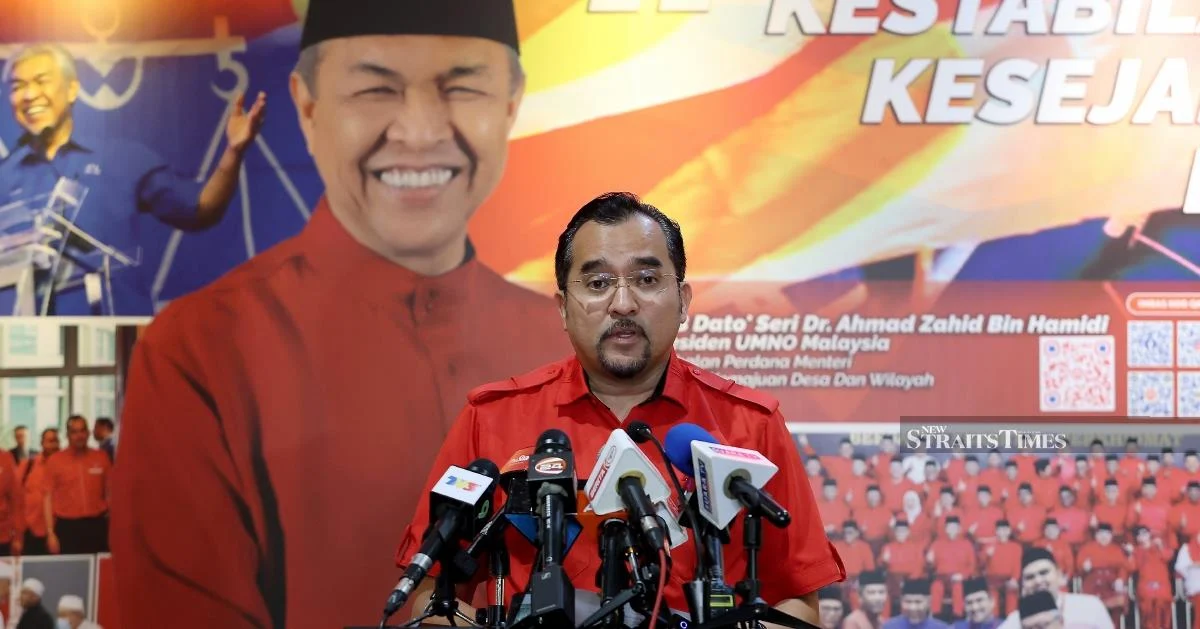
Datuk Dr Asyraf Wajdi Dusuki, the secretary-general of Umno, has declared that the party's election campaigns across Johor and Negri Sembilan will maintain a positive and substantive direction. Rather than engaging in character attacks or negative campaigning, the Umno-led coalition intends to present concrete proposals for how party representatives can improve the lives of voters in these two states. The commitment signals an attempt by the Malay-Muslim party to distinguish itself from potentially acrimonious political competition in an increasingly fractious electoral landscape.
The timing of Asyraf's statement carries significance given the volatility within Malaysia's political ecosystem. State elections across different regions have become increasingly competitive, with multiple coalitions vying for voter support through varying strategies. By publicly anchoring Umno's approach to policy substance, the party appears conscious of public sentiment against divisive messaging. This positioning is particularly important in Johor, Malaysia's second-most-populous state and a traditional stronghold where Umno's dominance has been tested in recent years.
Umno's historical relationship with Johor holds particular weight. The state has been central to the party's political identity and electoral fortunes, though recent developments have complicated this picture. The promise to avoid mudslinging suggests internal party discussions about how best to reconnect with voters who may have drifted toward alternative political offerings or grown disillusioned with conventional campaigns. A policy-focused approach theoretically allows Umno to highlight governance records and future developmental plans rather than engaging rivals on personal grounds.
Negri Sembilan represents a different context entirely. This smaller state has undergone significant political shifts in recent years, with various coalitions experiencing fluctuating support levels. A constructive campaign strategy here could serve Umno's efforts to rebuild credibility among centrist and pragmatic voters who prioritize competent administration over rhetorical conflict. The state's mixed urban-rural composition means that localised policy messaging addressing specific community concerns could prove more effective than broad-based attacks.
The broader implications of Umno's pledge extend beyond these two states. Malaysia's political landscape has suffered from sustained voter fatigue arising from constant political drama and personal recriminations across party lines. Citizens increasingly demand their leaders focus on substantive issues including economic management, public services, and development projects. By taking the high road, Umno potentially creates a contrast with opposition parties, though such claims require validation through actual campaign conduct. The party's credibility on this commitment will ultimately depend on whether its grassroots machinery and candidates adhere to these principles throughout the campaign period.
The statement also reflects pressure on Umno to project stability and maturity as the undisputed leader within its coalition. In a competitive political environment where multiple coalitions possess significant resources and campaign infrastructure, perception of dignified conduct can influence voter behaviour, particularly among swing constituencies and first-time voters. Policy-driven campaigns also allow Umno to make substantive claims about its track record and future agenda without the complications that arise when campaigns descend into personality-driven disputes.
For Malaysian voters in both states, a policy-focused election would theoretically provide clearer information about what each party intends to deliver. This permits more informed decision-making based on actual proposals rather than emotional reactions to alleged misconduct by rivals. However, maintaining this standard requires discipline across party hierarchies and consistent messaging from all party representatives, a challenge that has occasionally proven difficult for large political organisations in Malaysia's fractious electoral environment.
Umno's emphasis on helping people through policy offerings speaks to fundamental questions about governance priorities. Development projects, education and healthcare improvements, economic opportunities, and infrastructure investment represent core areas where state governments exercise meaningful influence. By centering campaigns on these domains rather than adversarial positioning, Umno can potentially generate positive momentum around its vision for these states' futures. The effectiveness of this approach ultimately depends on whether voters perceive the proposals as credible and aligned with their actual needs.
The commitment to avoiding mudslinging also carries implications for coalition partners and broader political relationships. Umno's conduct in these campaigns may establish precedents that influence how other parties within the coalition, and potentially opposition parties, conduct their own efforts. If Umno successfully maintains a policy-focused approach, it could contribute to a broader elevation of campaign standards that benefits the democratic process as a whole. Conversely, lapses in adhering to these principles could undermine the credibility of such pledges across the political spectrum.