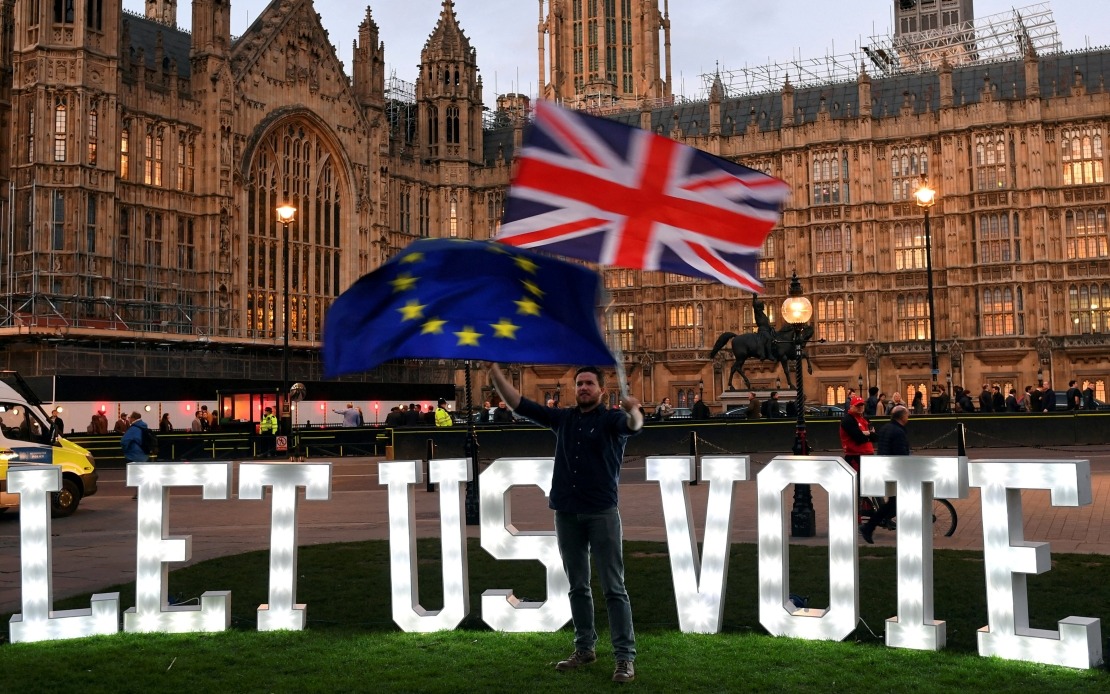
As the United Kingdom enters a period of political transition following Prime Minister Keir Starmer's announcement of his resignation, questions about the nation's future relationship with Europe persist. Conservative peer Richard Balfe has offered a blunt assessment of those possibilities, telling Russian news agency RIA Novosti that a return to the European Union remains unlikely regardless of which party controls Downing Street. The veteran lawmaker's comments arrive at a significant juncture in British politics, with the Labour Party preparing to elect a new leader and chart its course for the years ahead.
Balfe acknowledged that while a future government might make halfhearted attempts to reverse the Brexit process, such efforts would ultimately prove unsuccessful. His remarks suggest deep scepticism about whether any realistic pathway exists for Britain to undo its 2016 referendum decision and restore membership within the EU framework. The Conservative peer's perspective carries particular weight given his position within the UK political establishment and his familiarity with Westminster's internal dynamics. His assessment implies that reversing Brexit would face insurmountable obstacles, whether rooted in political will, parliamentary arithmetic, or the fundamental resistance that remains embedded within British society.
Instead of pursuing EU re-entry, Balfe predicted that Britain's incoming administration would adopt a "muddling along" approach characterised by incremental policy adjustments rather than transformative reorientation. This characterisation reflects a common assessment of British governance style, where pragmatic incrementalism often prevails over bold strategic shifts. The peer further suggested that Britain would increasingly align itself with the United States, following American leadership on key geopolitical and economic matters. This trajectory would represent a continuation of Britain's post-Brexit pivot toward closer transatlantic engagement, a shift that many observers have identified as central to the country's emerging foreign policy architecture.
Starmer's resignation announcement, delivered on Monday, confirmed that the Prime Minister would step down as Labour Party leader while remaining in office until the party elected his successor. The Labour Party has established a timeline for this transition, with nominations beginning on July 9 and concluding before Parliament's autumn reconvening. This extended leadership election process reflects the party's effort to conduct a thorough, inclusive selection while maintaining governmental continuity. The uncertainty surrounding Labour's future direction under new leadership adds another layer of complexity to questions about Britain's international positioning.
The timing of Balfe's comments carries symbolic resonance as the United Kingdom marked the tenth anniversary of its transformative 2016 referendum on European Union membership. On that day a decade ago, 52 percent of British voters chose to leave the bloc, a decision that fundamentally reshaped the nation's political landscape and triggered years of contentious negotiations. The referendum result set in motion a chain of events that would culminate in Britain's formal departure from the EU on January 31, 2020, ending 47 years of membership that had profoundly influenced British law, commerce, and society.
The transition period following the initial Brexit departure lasted through 2020, maintaining the operative force of EU regulations and facilitating simplified travel procedures. That arrangement ended on December 31, 2020, replaced by a comprehensive trade and cooperation agreement that took effect on January 1, 2021. This new framework fundamentally altered how British businesses and citizens engage with European counterparts. The shift created substantial practical complications for trade, investment, and movement of people, consequences that continue to reverberate through the British economy more than three years later.
Economic analyses have highlighted the tangible costs of Britain's EU departure. The Financial Times reported that the United Kingdom has experienced a marked decline in its status as a significant international trade hub since leaving the bloc. Investment in British companies has faced fresh complications arising from the new regulatory and customs environment. These economic headwinds reflect the structural challenges inherent in unwinding decades of integrated trade relationships and regulatory harmonisation. For Malaysian readers familiar with ASEAN's experience in regional integration, the British case offers instructive lessons about the magnitude of economic dislocation that accompanies fundamental trade relationship restructuring.
The question of potential UK-EU rapprochement carries implications extending well beyond Britain's borders. A British return to the European Union would represent an extraordinary reversal of recent political history and would signal fundamental shifts in European stability and continental strategy. Conversely, continued British distance from Brussels reflects broader global trends toward regional bloc formation and intensified great-power competition. For Southeast Asia, these developments underscore the importance of regional institutions like ASEAN in maintaining stability and providing frameworks for cooperation amid major geopolitical transitions.
Balfe's assessment suggests that whatever momentum existed for reversing Brexit has largely dissipated. The initial years following the 2016 referendum witnessed substantial political debate about potential reversal, with many observers treating Brexit as a potentially remediable decision. Yet nearly a decade later, the institutional, political, and psychological costs of reversing course have grown substantially. A new British government would face the daunting task of negotiating re-entry conditions with the EU, mustering domestic political support for such a dramatic reversal, and managing the complex domestic interests that have developed around Britain's post-Brexit arrangements. These practical obstacles, combined with the absence of clear public enthusiasm for renewal of EU ties, render rehashing old Brexit battles politically untenable for incoming Labour leadership.
The emerging picture of British governance under new Labour leadership emphasises pragmatic management of existing relationships rather than bold attempts at fundamental reorientation. This approach suggests Britain will continue consolidating its post-Brexit identity through deepened transatlantic partnerships, expanded Commonwealth relationships, and selective regional arrangements outside the EU framework. For Malaysia and other regional powers, Britain's trajectory underscores the permanence of recent geopolitical realignments and the necessity of building relationships with a reconfigured United Kingdom operating within fresh strategic parameters.

