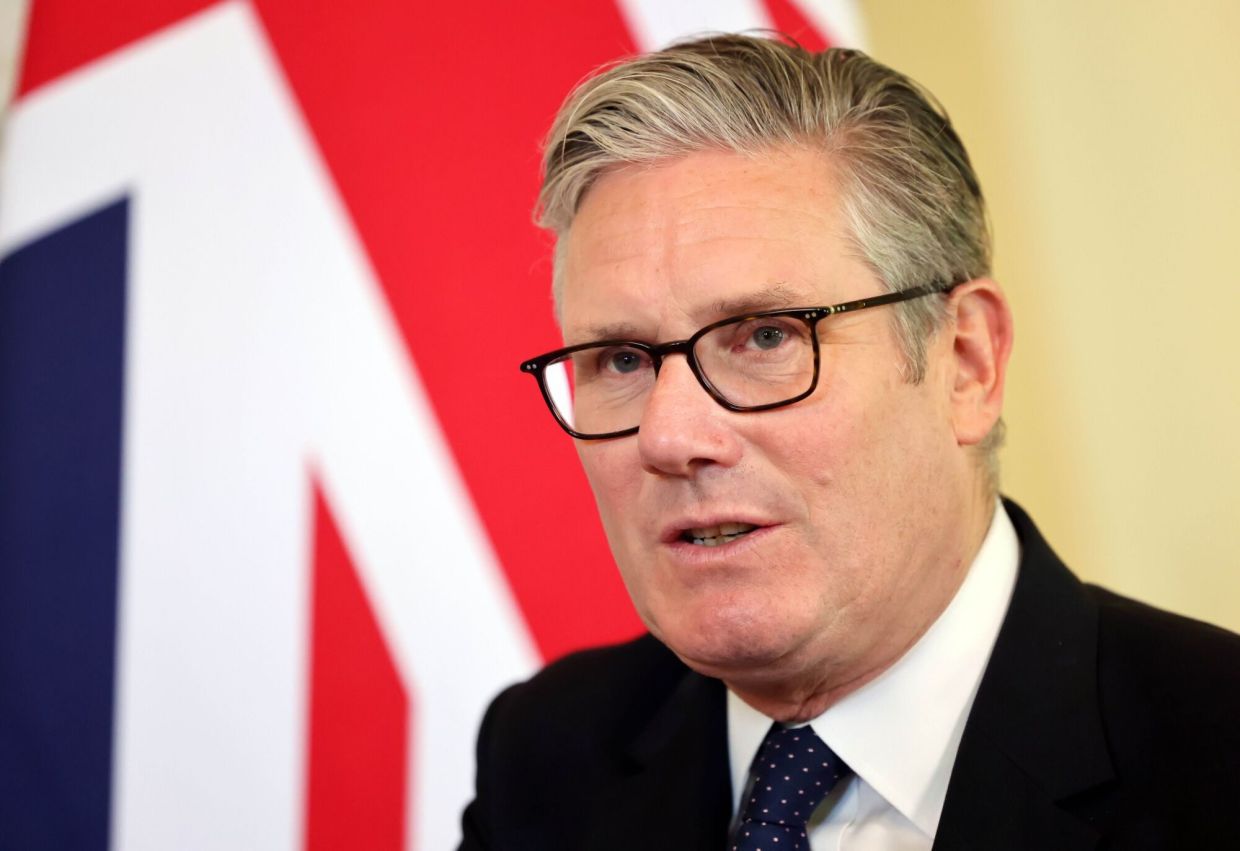
Prime Minister Keir Starmer is preparing to unveil a comprehensive package of digital restrictions intended to safeguard British teenagers from online harms, marking a defining moment in his tenure as he navigates mounting political pressures. The announcement, scheduled for Monday morning, will establish a blanket prohibition on children under 16 accessing major social media platforms, accompanied by additional measures encompassing evening restrictions for older adolescents and strict governance frameworks for artificial intelligence chatbots. This policy intervention comes before Starmer departs for the Group of Seven conference at Évian-les-Bains, where he must address considerable diplomatic awkwardness stemming from last week's sudden departure of his defence secretary and lingering questions regarding the adequacy of Britain's military funding commitments.
The proposed legislation represents a more aggressive regulatory stance than what currently exists in comparable democracies. Australia implemented its social media restrictions for minors only last year, yet informed observers suggest the UK framework will extend considerably further in its scope and enforcement mechanisms. Beyond the age-based ban itself, the government intends to introduce evening curfews applicable to teenagers above the restricted age threshold and impose stringent operational requirements on conversational AI systems accessible to younger users. This layered approach indicates Starmer's determination to position Britain at the forefront of youth digital protection policy, even as implementation challenges loom large.
Public sentiment strongly favours the restrictions despite acknowledged difficulties in enforcing such prohibitions across international digital platforms. The British electorate has consistently demonstrated support for measures limiting teenage social media exposure, suggesting Starmer's announcement resonates with voter concerns about algorithmic harms, mental health deterioration, and developmental disruption among adolescents. The popularity of the policy provides political insulation to some extent, yet implementation realities remain formidable given the borderless nature of internet services and the technical sophistication required to verify ages reliably across platforms operated by multinational corporations.
Starmer framed the initiative in moral terms during a late Sunday statement, declaring that the decision fundamentally addresses "whose side we're on: families across the country, or a status quo that isn't working." This rhetorical framing attempts to position the government as acting in teenagers' interests against entrenched corporate interests, a narrative that appeals to voters concerned about unchecked technology sector influence over young people's lives. The statement's timing and language suggest a broader political strategy to consolidate public backing before facing internal party challenges in the coming weeks.
Yet the announcement has already attracted criticism from unexpected quarters. Ian Russell, whose teenage daughter died by suicide in 2017 after encountering disturbing online material, expressed serious concerns to the BBC about whether Starmer had expedited the policy for political advantage rather than genuine policy development. Russell's intervention carries particular weight given his high-profile advocacy for digital safety reforms, and his suggestion that the ban constitutes a rushed decision risks undermining the government's claims to have developed thoughtful legislation. The accusation implies that electoral considerations may have superseded proper consultation and deliberation.
Government insiders acknowledge that the timeline raises legitimate questions about thoroughness and democratic process. A formal public consultation on youth digital protection mechanisms concluded only three weeks prior, an extraordinarily compressed period for digesting feedback and refining complex regulatory frameworks. Several members of Starmer's cabinet harbour doubts about whether rushing toward a comprehensive under-16 ban represented the most prudent course, particularly given the compressed consultation window. These internal reservations, disclosed by sources close to decision-making processes, reveal tensions between political expediency and administrative rigour within government ranks.
Opposition figures have seized upon these timing concerns to mount attacks on the government's credibility. The Liberal Democrats characterised the initiative as "rushing through a half-baked policy just to secure a political legacy," suggesting that electoral calculation rather than evidence-based policymaking motivated the announcement. This criticism gains additional sting given the extraordinary political context Starmer currently navigates, with his premiership facing unexpected turbulence from internal revolts and external challenges.
The confluence of political pressures surrounding this announcement reflects the precarious position Starmer currently occupies. Andy Burnham, who represents a potential rival faction within Labour, is widely anticipated to win a parliamentary seat in Thursday's Makerfield by-election, with prospects of subsequently challenging Starmer for party leadership if he defeats the Reform UK candidate. The prospect of a summer leadership contest looms over Westminster, with Starmer's policy announcements potentially viewed through a lens of leadership consolidation rather than straightforward governance. This dynamic infuses the social media ban announcement with additional political weight beyond its substantive merits.
The government has simultaneously confronted severe defence portfolio disruptions. John Healey, serving as defence secretary, resigned last week explicitly citing Starmer's failure to secure adequate military budget increases in response to deteriorating international security conditions, particularly concerning Russian activities. Additionally, junior defence minister Al Carns and two ministerial aides departed simultaneously, indicating broader dissatisfaction within the defence establishment. Healey's public resignation statement effectively challenged the Prime Minister's commitment to defence spending pledges made to NATO allies, creating an impression of governmental disarray precisely when Starmer needs to project strength and competence at the G7 gathering.
Efforts to resolve the defence spending impasse appear to be continuing actively behind closed doors. Culture Secretary Lisa Nandy provided Sunday comments suggesting that the government had "not finished" exploring budgetary reallocation possibilities across other departments to accommodate heightened defence requirements. Her statement that "negotiation is happening as we speak" implies Starmer has instructed officials to identify additional resources for military spending without requiring parliamentary approval for supplementary legislation. Successfully locating these funds would substantially strengthen Starmer's position with international allies and potentially validate his governance credentials before the G7 summit.
However, securing increased defence spending through internal reallocation carries considerable political risk. Should Starmer substantially increase military allocations following Healey's very public resignation, opponents will characterise the move as capitulation and another policy reversal, reinforcing perceptions of a Prime Minister struggling to maintain control. This dilemma illustrates Starmer's current predicament: he requires substantive accomplishments to demonstrate leadership authority, yet the circumstances surrounding major policy decisions increasingly appear reactive to internal rebellion rather than proactive strategic vision. The social media announcement and G7 attendance represent attempts to regain initiative, though the political calendar and internal party dynamics suggest the window for successfully repositioning his premiership may be rapidly narrowing.
For Southeast Asian policymakers, the British approach offers instructive lessons about both the political appeal and implementation complexities of youth digital protection measures. Malaysia and other regional governments have contemplated similar restrictions, yet the Starmer experience demonstrates that populist policies, however well-intentioned, require substantially longer development periods and more rigorous consultation processes to ensure effective implementation and sustained public confidence. The contrast between public enthusiasm for restrictions and genuine enforcement challenges reflects a pattern likely to replicate across democracies, suggesting that regional policymakers should anticipate similar gaps between aspiration and execution when designing their own digital protection frameworks.

