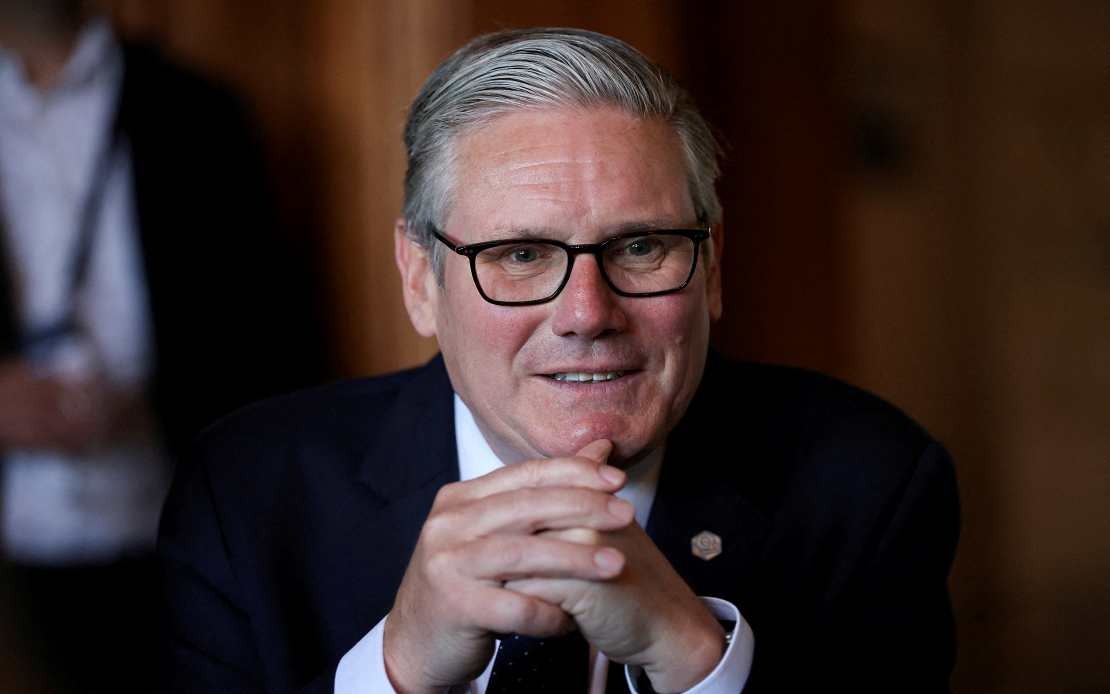
British Prime Minister Keir Starmer appears poised to make a significant announcement imminently, with preparations underway at Downing Street as speakers are being installed ahead of a formal statement. The unexpected development marks a dramatic turn in the political fortunes of the UK's Labour leader, who assumed office following the party's decisive election victory just weeks earlier. The timing of the announcement suggests that developments have moved rapidly over the weekend, with multiple international and domestic news sources reporting on the unfolding situation.
Reports from Turkish news agency Anadolu Ajansi indicate that the British prime minister faces mounting pressure tied to his government's handling of two key policy areas: immigration and energy. These represent significant challenges that have generated considerable domestic controversy and appear to have created tensions within both the government and the broader Labour Party. The focus on these particular portfolios suggests that implementation difficulties and public dissatisfaction with departmental performance may have contributed to the current political crisis at the heart of British governance.
The BBC reported over the weekend that Starmer is considering setting out a formal timetable for his departure, potentially as early as Monday. This trajectory indicates that discussions among senior government figures have already progressed beyond general concerns to concrete planning around the mechanics and timeline of a leadership transition. The speed with which such discussions have materialised demonstrates the volatile nature of the current political environment in Westminster and the rapid erosion of support that the prime minister may be experiencing.
Government insiders quoted in various reports suggest that the mood within the administration has shifted considerably, with several officials now accepting that Starmer's position has become untenable. This consensus among ministerial ranks is particularly significant because it suggests the resignation decision may not be solely Starmer's own choice but rather a recognition of broader pressure from within the Labour Party and government. When experienced politicians and advisors within the machinery of state begin discussing transition planning, it typically signals that senior figures have already made their peace with a change at the top.
The implications of such a development extend beyond the immediate British political sphere and carry relevance for the wider Commonwealth and international relations. Malaysia and other Southeast Asian nations maintain important bilateral relationships with the United Kingdom, encompassing trade, defence partnerships, and educational exchanges. Leadership transitions at the highest levels of government can create periods of uncertainty regarding policy continuity and the priorities that new administrations will pursue in their international engagements.
For Malaysian observers of British politics, the stability of the UK government matters in practical terms. Trade negotiations, defence cooperation agreements, and student exchange programmes all depend on coherent policy direction from London. A period of leadership uncertainty, even if resolved relatively quickly, can create delays in decision-making and complicate the negotiation of new agreements. The British government's approach to regional security issues in Southeast Asia and broader Indo-Pacific strategy may also be affected by internal political turbulence.
The circumstances surrounding Starmer's apparent difficulties with immigration and energy policy are instructive for other nations grappling with similar challenges. Both issues have proven politically toxic across multiple democracies in recent years, with governments of different ideological stripes struggling to craft policies that satisfy both public opinion and practical governance requirements. The British experience suggests that even governments elected with substantial mandates may find these two areas particularly resistant to swift resolution.
The role of major news organizations in breaking and developing this story underscores how leadership crises in major democracies unfold in the contemporary media landscape. International news agencies, state broadcasters, and global networks all compete to report on developments as they occur, creating a real-time narrative that can itself influence political actors and their calculations. The fact that such reports are emanating from multiple credible sources suggests the situation reflects genuine political developments rather than speculation or rumour.
For Southeast Asian governments and observers, the British situation provides a case study in how quickly political circumstances can change. The transition from an election victory to leadership uncertainty within weeks demonstrates the contingent nature of political authority and the importance of maintaining coherent policy direction and managing internal party dynamics. As the region watches developments in London, the outcome may inform thinking about governance challenges and the resilience required to maintain political stability during periods of policy implementation and public adjustment.

