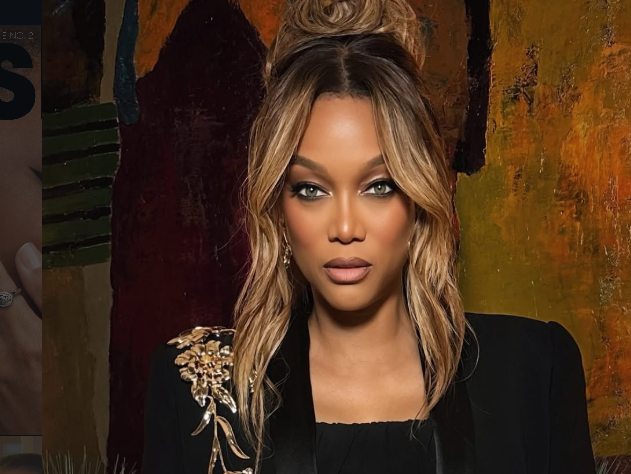
Tyra Banks has initiated legal action against Netflix, accusing the streaming platform and the directors of its docuseries about her groundbreaking reality competition show of defamation through what she characterises as manipulative editorial practices. The lawsuit, filed on Saturday in Los Angeles federal court, targets Netflix alongside directors Daniel Sivan and Mor Loushy, as well as production company EverWonder Studio, with Banks seeking both monetary damages and an injunction preventing the use of her likeness in promotional materials connected to the documentary's accompanying soundtrack album.
At the heart of Banks' legal complaint lies an allegation that the docuseries employed "selective editing, deliberate omission, and surgical manipulation of continuous footage" to construct a false narrative. According to her legal team, the edited version implies that Banks was aware of a sexual assault incident involving a contestant, allegedly exploited the victim's trauma for ratings purposes, and subsequently feigned amnesia when confronted about the matter during interviews. The lawsuit contends that this portrayal fundamentally misrepresents what transpired during filming and deliberately obscures crucial context that would exonerate the defendant.
Central to Banks' defence strategy is her claim that she was never informed about the specific sexual assault allegation prior to the interview or given an opportunity to address the accusations before the documentary's release on February 16. Her legal representation argues that the editing techniques employed by the production team created a false impression of evasion, when in fact Banks simply lacked knowledge of what she was ostensibly being asked about. This distinction carries significant weight in the lawsuit, as it establishes that the defamatory content arose not from her conduct but from deliberate production choices.
The case highlights broader concerns about editorial transparency and journalistic ethics in documentary filmmaking, particularly when subjects are not afforded adequate opportunity to respond to allegations before public dissemination. Banks' lawyers emphasise that she received access to the completed docuseries merely one day before its release, leaving insufficient time for meaningful review. Furthermore, they note that Netflix and EverWonder refused her subsequent requests in March for access to the full, unedited interview footage—a denial that Banks' legal team views as obstructive and indicative of intent to prevent her from obtaining evidence supporting her defence.
"America's Next Top Model," which launched in 2003 and ran for twenty-four seasons, has undergone significant critical reassessment in recent years. The programme faced mounting scrutiny over allegations of body shaming practices, psychological manipulation of contestants, and problematic photoshoot concepts that many observers now regard as harmful and insensitive. Banks herself has publicly acknowledged the validity of some criticisms, stating that the show contained "insensitive" moments and "some really off choices." This recognition of past missteps contrasts sharply with how the lawsuit characterises her treatment in the Netflix documentary.
A particularly contentious aspect of the lawsuit concerns the involvement of other former judges from the show who purportedly consulted on the docuseries' editorial direction. Banks' legal team contends that at least one consultant harbours personal grievances against her. Had Banks been aware of these individuals' involvement in shaping the documentary's narrative arc and her own exclusion from similar consultative roles, the lawsuit argues, she would have recognised the potential for bias and declined to participate in interviews. This allegation suggests a predetermined narrative framework designed to place Banks in an unfavourable light.
The immediate consequences for Banks extend beyond legal proceedings and corporate disputes. Since the documentary's release, public backlash has been swift and substantial, with particular impact on her commercial interests. Her ice cream shop SMiZE & DREAM, located in Sydney, Australia, has become a target for review bombing on Google, demonstrating how documentary narratives can translate into real-world commercial harm for subjects when they circulate unchallenged. This tangible business impact reinforces Banks' argument that the alleged defamation caused measurable damages.
Banks' legal strategy encompasses not merely the claim of defamation but also the broader narrative that she attempted to resolve matters directly with Netflix and the production team before pursuing litigation. Her lawyers emphasise that these resolution efforts were rebuffed, forcing her to seek judicial intervention. This framing positions the lawsuit as a defensive necessity rather than an aggressive manoeuvre—an attempt to reclaim her voice after being, as her legal team argues, silenced through editorial omission.
For Malaysian and Southeast Asian audiences, this lawsuit illustrates significant questions about content creation accountability, particularly as streaming platforms increasingly commission documentary content about international figures and historical events. The case underscores the importance of transparent editorial processes, adequate subject review periods, and balanced representation of all parties involved in documentary narratives. As regional production companies increasingly partner with international streamers, understanding these legal and ethical frameworks becomes essential for local content creators navigating the evolving landscape of documentary filmmaking.
The dispute also reflects broader industry conversations about power dynamics between established media platforms and individual creators, even those as prominent as Banks. Although she created and hosted the original show, her leverage in controlling how her legacy is portrayed through new documentary work appears limited without explicit contractual protections. This dynamic has implications for how other pioneering television personalities and creators negotiate with major streaming services regarding documentary projects about their work.
The lawsuit remains ongoing, with Netflix and EverWonder Studio yet to provide formal responses to the specific allegations. The case is likely to generate significant attention within entertainment law circles, potentially establishing precedents regarding documentary editing practices and the responsibilities of streaming platforms towards interview subjects. Banks' willingness to pursue litigation despite potential reputational costs demonstrates the seriousness with which she views the alleged misrepresentation of her statements and character.
Ultimately, this legal confrontation invites reflection on the documentary form itself and the power inherent in editorial decision-making. Whether through omission of exculpatory material or selective presentation of footage, production teams wield substantial influence over how narratives are constructed and received by audiences. Banks' lawsuit contests the notion that such editorial choices are immune from legal scrutiny when they demonstrably alter meaning and mislead viewers about fundamental aspects of depicted events.