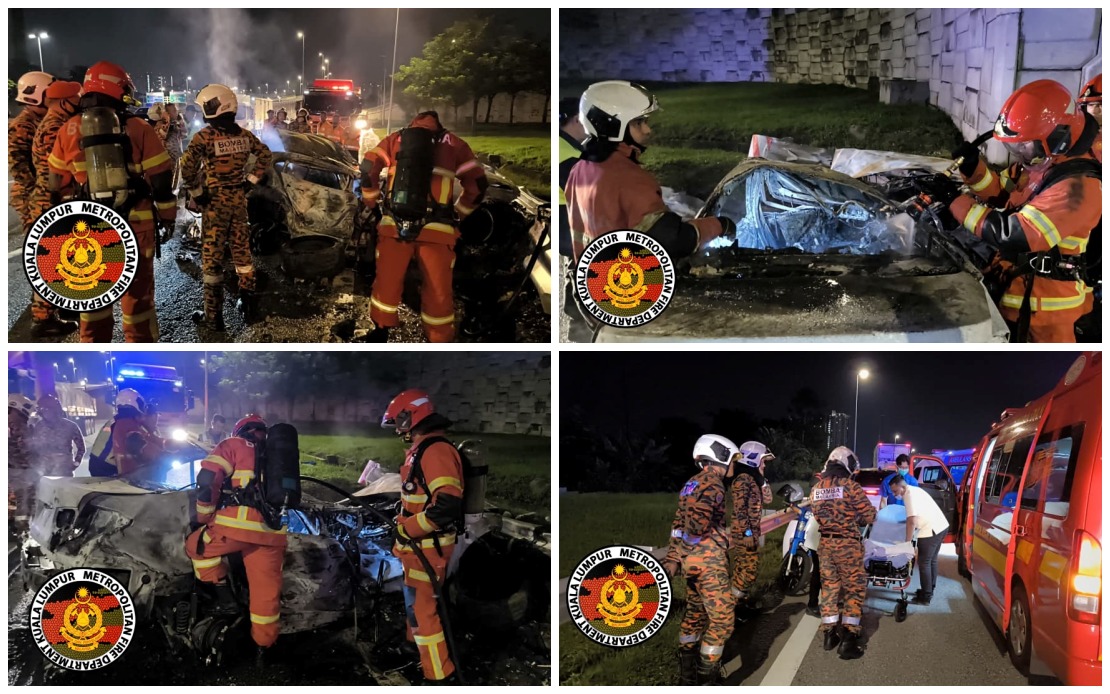
A devastating traffic accident on the Duta-Ulu Kelang Expressway in Kuala Lumpur claimed two lives early Thursday morning when a BMW sedan veered out of control, struck a barrier, and erupted into flames. The tragedy unfolded on the Jalan Kuching exit ramp, leaving investigators to piece together how a routine drive transformed into a fatal incident. One passenger managed to escape with minor injuries, but two young men perished in the burning vehicle, highlighting the catastrophic consequences that can result from momentary lapses on Malaysia's busy highway network.
According to Kuala Lumpur Traffic Investigation and Enforcement Department chief ACP Mohd Zamzuri Mohd Isa, the BMW 328i Sport was heading from Jalan Duta towards Selayang when the driver apparently exceeded safe speeds for the section. As the vehicle approached the exit ramp, the driver lost command of the automobile, causing it to skid violently across lanes before colliding with the left road divider with tremendous force. The impact proved catastrophic—the collision ruptured fuel systems and ignited a fierce blaze that consumed the vehicle within moments. Both fatalities were discovered at the crash site, their bodies trapped within the burning wreckage.
The two deceased were identified as Malaysian nationals pursuing higher education abroad and domestically. The driver, a 22-year-old male, was enrolled at Queensland University of Technology in Australia, while the 21-year-old front passenger attended Sunway University in Malaysia. Their deaths underscore a sobering reality facing Malaysian families: young people studying away from home face unfamiliar road conditions and pressures that can lead to tragic outcomes. The circumstances of this particular incident—young drivers, possibly unfamiliar with local expressway conditions, travelling at excessive speed—mirror patterns seen in other fatal accidents involving university students navigating Malaysia's transportation infrastructure.
The sole survivor, a 20-year-old male student from Singapore, sustained only superficial injuries despite the severity of the collision and subsequent fire. Emergency responders transported him to Kuala Lumpur Hospital, where medical staff assessed and treated his wounds. His escape with minimal harm stands in stark contrast to the fates of his companions, a grim reminder of how survival in high-impact crashes often hinges on random factors—seat position, timing, and pure chance—rather than predictable outcomes.
Police investigations have proceeded on multiple fronts to establish the precise sequence of events leading to the crash. Positive identification of the charred remains poses a significant forensic challenge; authorities announced that DNA analysis will be employed to confirm the identities of both victims. This technical approach reflects modern forensic capabilities but also underscores the severity of the fire damage sustained by the vehicle and its occupants. Investigators have also begun a systematic review of closed-circuit television recordings from cameras monitoring the expressway corridor, hoping that recorded footage will capture the moments preceding the collision and provide insights into vehicle speed, driver behavior, and any contributing factors.
The survivor's statement to police constitutes another crucial investigative element. While he sustained only minor injuries, his account of events immediately before the crash—whether the driver appeared alert, whether weather or traffic conditions played a role, whether conversation or distraction might have contributed—could illuminate the accident's root causes. Traffic police have commenced a formal investigation under Section 41(1) of the Road Transport Act 1987, the legal framework governing serious vehicle-related incidents on Malaysian roads. This section addresses dangerous driving offences, and the circumstances here—excessive speed leading to loss of control and fatal consequences—fall squarely within its purview.
The DUKE expressway, a vital transportation artery connecting Kuala Lumpur's northern and southern zones, regularly carries thousands of vehicles daily. The Jalan Kuching exit ramp where this tragedy occurred serves high-traffic volumes, particularly during peak periods. Accidents at exit ramps present particular hazards, as drivers must adjust speed and trajectory simultaneously while managing transitions between expressway and arterial road conditions. The location's history and accident statistics remain relevant; understanding whether this particular ramp has witnessed elevated accident rates could inform road safety interventions.
Authorities have appealed to the public for assistance, soliciting dashcam footage and eyewitness accounts from drivers who may have been in the vicinity when the collision occurred. Such footage often provides invaluable corroborating evidence, capturing vehicle movements, speed estimation markers, and environmental conditions that official investigations alone cannot fully reconstruct. The request reflects standard investigative protocol but also speaks to the reality that expressway accidents rarely occur without witnesses—yet those witnesses often drive away without recognizing the gravity of what they have observed.
This incident arrives amid ongoing national conversations about expressway safety, speed management, and young driver accountability. Malaysia has implemented various traffic safety campaigns targeting university-age drivers, recognizing that this demographic experiences disproportionately high accident involvement rates. Contributing factors often include inexperience, confidence exceeding actual driving ability, peer pressure, and insufficient familiarity with specific road networks. Educational interventions and enforcement strategies have shown mixed success, and tragedies like this one continue to demonstrate the inadequacy of current prevention mechanisms.
For Queensland University of Technology and Sunway University, the incident represents a profound institutional loss. Both institutions will likely issue statements acknowledging the deaths and offering condolences to bereaved families. Universities bearing responsibility for student welfare abroad face difficult questions following such tragedies—whether current support systems sufficiently address the risks Malaysian students encounter on foreign and domestic roads, and whether additional safety guidance could have altered this particular outcome.
The Singaporean survivor's presence in the vehicle adds a regional dimension to the incident. Tripartite cooperation between Malaysian, Australian, and Singaporean authorities may develop as the investigation progresses, particularly if questions arise regarding vehicle condition, maintenance, or safety specifications. Cross-border student mobility and tourism ensure that expressway accidents frequently involve foreign nationals, complicating investigations and highlighting the shared responsibility Southeast Asian nations bear for transportation safety standards.

