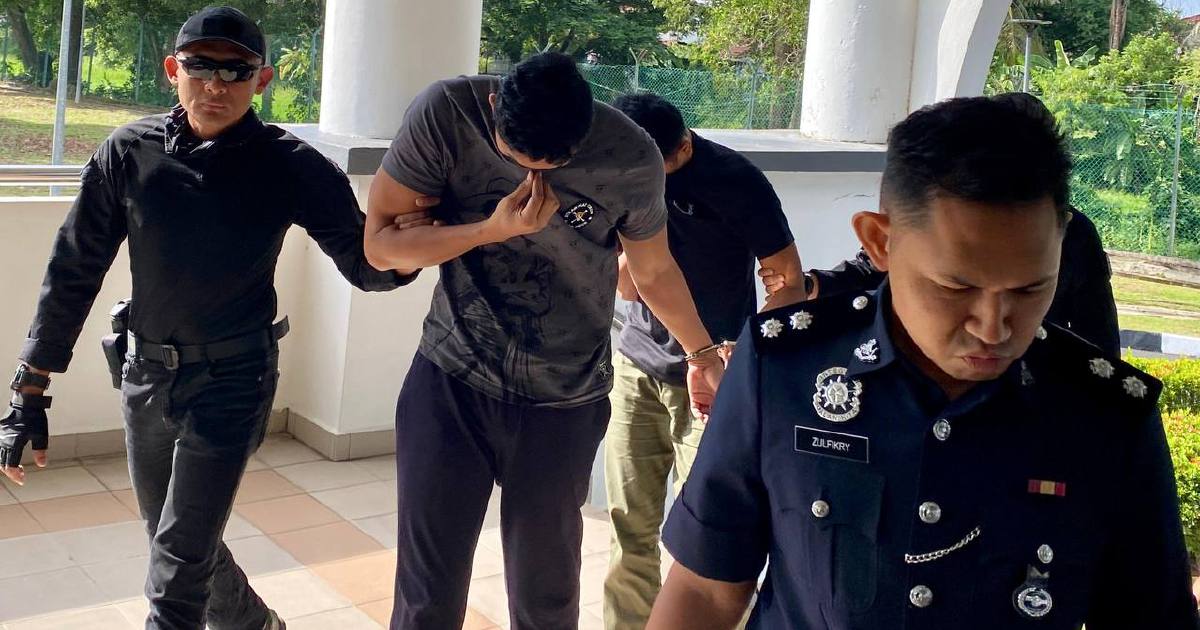
Human trafficking involving military personnel has emerged as a serious enforcement challenge in Malaysia's border regions. Two uniformed soldiers appeared in the Sessions Court at Alor Star today to face charges connected to the smuggling of three Myanmar nationals into Malaysian territory through the Malaysia-Thailand border crossing last month.
The involvement of armed forces personnel in migrant smuggling operations represents a troubling dimension of the country's broader human trafficking problem. Such cases underscore the vulnerabilities that persist at terrestrial border checkpoints despite increased vigilance and technological monitoring systems. The allegation suggests that organised networks moving undocumented migrants are willing to exploit inside knowledge and operational access that military staff possess.
Myanmar has long been a source nation for irregular migrants seeking entry to Malaysia and other Southeast Asian countries. Economic hardship, limited employment opportunities, and the ongoing political instability following the 2021 military coup have pushed vulnerable populations towards dangerous border crossings. The three individuals whose alleged smuggling prompted today's charges represent a fraction of the thousands who attempt clandestine entry each year across shared borders in the region.
The Malaysia-Thailand border, stretching over 600 kilometres from Perlis in the north to Johor in the south, has become an increasingly congested migration corridor. Both countries have deployed substantial resources to secure their common frontier, yet porous terrain and remote crossing points continue to facilitate illicit movement of persons. The arrest of serving military personnel suggests that enforcement agencies now suspect systematic exploitation of security infrastructure.
For Malaysia, military involvement in smuggling operations raises questions about institutional discipline and recruitment screening within the armed forces. The discovery of such cases typically prompts internal investigations and tighter monitoring of personnel engaged in border duties. However, the financial incentives offered by trafficking networks—which can amount to several thousand ringgit per person smuggled—create persistent temptation, particularly among lower-ranking soldiers with modest salaries.
The Sessions Court jurisdiction indicates that these charges carry substantial potential penalties. Malaysia's anti-trafficking legislation provides for imprisonment terms and monetary fines designed to deter participation in human movement schemes. The prosecution of uniformed personnel carries symbolic weight within enforcement circles, signalling that no sector of society operates beyond accountability for migrant smuggling.
Myanmar nationals represent the largest foreign population held in Malaysian detention facilities pending deportation. Their precarious legal status makes them prey for exploitative employers and smuggling networks promising safe passage and employment. Many enter Malaysia expecting to work in construction, agriculture, or domestic service, only to find themselves locked in debt bondage or other forms of labour exploitation. The formal documentation of their illegal entry through military-assisted smuggling—as alleged in today's court appearance—provides evidence of how trafficking chains operate across the region.
Regional cooperation has intensified in response to escalating migrant smuggling. Malaysia, Thailand, and Myanmar collaborate through bilateral and multilateral frameworks to share intelligence and coordinate enforcement operations. However, gaps persist between policy coordination at government level and ground-level implementation by field personnel. Cases involving military smuggling networks sometimes indicate coordination failures or insufficient vetting of personnel assigned to sensitive border posts.
The financial dimensions of migrant smuggling have attracted increasingly sophisticated criminal organisations. Triads and other transnational crime syndicates now operate smuggling routes as profit centres within broader illegal enterprises encompassing drug trafficking and arms smuggling. The involvement of military personnel suggests these networks have developed infiltration strategies targeting authorities, transforming border security personnel into unwitting or compromised facilitators.
For Malaysian society, the proliferation of such cases reinforces concerns about irregular migration's linkage to labour exploitation and human rights violations. The government has implemented stricter visa regimes and increased penalties for employers engaging undocumented workers. Nevertheless, demand for cheap migrant labour in sectors including agriculture and construction continues driving irregular entry through border smuggling networks.
The court proceedings against these two soldiers will likely generate detailed testimony regarding recruitment of military personnel, payment structures, and logistics of border crossing operations. Such evidence provides law enforcement with actionable intelligence for disrupting the networks that employ military insiders. Future charges against other participants in the same smuggling chain appear probable as investigators pursue leads emerging from today's court appearance.
Beyond Malaysia's borders, this case reflects tensions endemic throughout Southeast Asia between security imperatives and migration pressures. Thailand, Myanmar, and Laos all grapple with comparable challenges as economically disadvantaged populations seek regional mobility. The prosecution approach adopted in Malaysian courts—holding uniformed personnel criminally accountable—has become a necessary component of enforcement strategy across the region.
Stakeholders including labour rights organisations and migrant advocate groups observe that effective smuggling prevention requires complementary initiatives addressing root causes of irregular migration. Enhanced economic opportunities and political stability in Myanmar would reduce outflow pressures, whilst Malaysia's formalisation of migrant work pathways could redirect some irregular movement into regulated channels. Until such structural factors shift substantially, military and civilian enforcement personnel will continue encountering smuggling operations at border checkpoints.