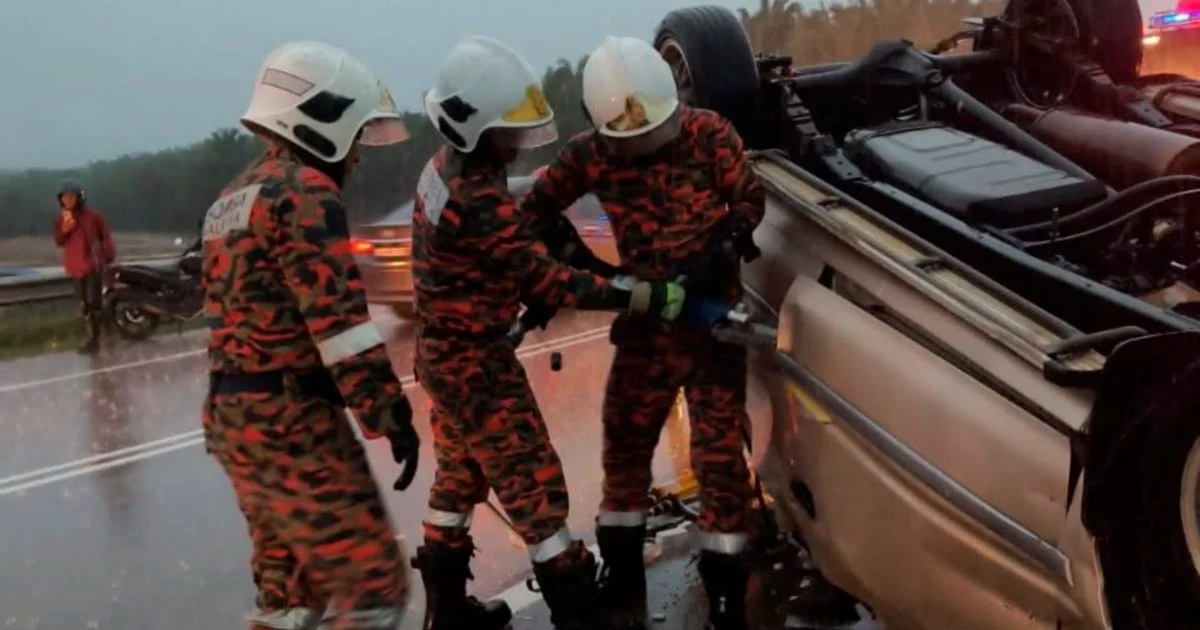
A tragic sequence of events unfolded in Pahang on a single day when two unrelated traffic accidents claimed the lives of four people, including two sisters, in the neighbouring districts of Maran and Pekan. The tragedies, separated by less than 60 minutes, underscore the persistent road safety challenges facing drivers on Malaysian highways and the devastating human cost of traffic incidents that continue to plague the nation's transport networks.
The first accident occurred in Maran, while a second collision happened in Pekan shortly thereafter. The proximity of these incidents in both time and geography added to the shock of what transpired, drawing immediate attention from emergency responders across the district. The two sisters who died in the crashes represented only part of the overall casualty toll, with two additional fatalities recorded across the two separate incidents.
Road traffic fatalities remain a significant public health challenge across Malaysia, and Pahang has frequently featured among states with elevated accident statistics. The consecutive nature of these Maran and Pekan accidents within a compressed timeframe illustrates how quickly circumstances can deteriorate on the road, particularly during peak travel periods or when adverse conditions emerge. Investigations into both incidents would typically focus on factors such as vehicle maintenance, driver behaviour, speed, visibility conditions, and whether weather or road infrastructure played contributory roles.
For families affected by these tragedies, the loss extends far beyond statistical representation in accident reports. The death of two sisters in separate crashes within the same hour compounds the grief experienced by their relatives and loved ones, raising painful questions about the circumstances that led to both vehicles being involved in fatal collisions on the same day. Community responses to such incidents often highlight the emotional toll that road accidents inflict on Malaysian society.
The Maran and Pekan districts, while distinct areas within Pahang, share certain transportation characteristics that may influence accident patterns. Both regions experience traffic flows along key routes connecting communities and commercial centres. Understanding the specific conditions present during these incidents—whether involving highway stretches, urban roads, or residential areas—helps transport authorities and safety advocates identify intervention points for reducing future casualties.
Malaysia's road safety landscape has been the subject of ongoing national concern, with various government agencies, NGOs, and private sector organisations working to reduce fatalities through enforcement, public awareness campaigns, and infrastructure improvements. The recurring nature of multi-casualty incidents across different states demonstrates that despite these efforts, significant work remains to change driving behaviours and address systemic vulnerabilities in road design and maintenance. Each tragedy in Maran and Pekan serves as a reminder of the consequences of inattention or recklessness behind the wheel.
The emergency response mechanisms across Pahang's districts were activated following both accidents, with ambulances and fire and rescue teams attending to scenes in Maran and Pekan. Such coordinated responses are critical in attempting to minimise casualties, though in cases where fatalities occur, the focus shifts to investigation and support for grieving families. The speed with which both incidents unfolded within the same hour suggests that rescue operations likely overlapped or occurred in rapid succession.
For Malaysian drivers and transport safety advocates, the Maran and Pekan accidents carry lessons about the importance of defensive driving practices, vehicle maintenance, and adherence to speed limits regardless of route familiarity or time pressure. Regional publications frequently cover such incidents to raise awareness among Southeast Asian audiences about the prevalence of road trauma and the preventable nature of many collisions. Pahang, as a state with significant intercity traffic, faces particular challenges in managing safety across diverse road networks serving both locals and through-traffic.
The deaths of the two sisters and the two other victims in these Pahang accidents reflect broader patterns seen across Malaysia and the region, where road crashes disproportionately affect young and economically productive populations. Families and communities depend on these individuals, and their loss carries ripple effects extending well beyond the immediate tragedy. Workplace absenteeism, lost income, and long-term psychological impacts affect those connected to the deceased.
Investigations by the Royal Malaysia Police and other relevant authorities would typically examine vehicle condition reports, witness statements, traffic camera footage if available, and medical examiner findings to reconstruct events leading to both the Maran and Pekan collisions. Public disclosure of findings from such investigations helps establish whether specific patterns emerge—such as mechanical failure, impaired driving, or road design deficiencies—that might inform preventive measures. The short timespan between the two accidents raises questions about whether unique conditions on that particular day contributed to elevated risk.
Malaysian authorities and regional partners continue exploring how technology, legislative reform, and community engagement can collectively reduce road fatalities. The incidents in Maran and Pekan add to the evidence base highlighting why comprehensive approaches—combining enforcement, education, engineering, and emergency services coordination—remain essential. For Pahang residents and regular travellers through the state, these tragedies serve as sobering reminders of road dangers and the importance of prioritising safety over speed or convenience.

