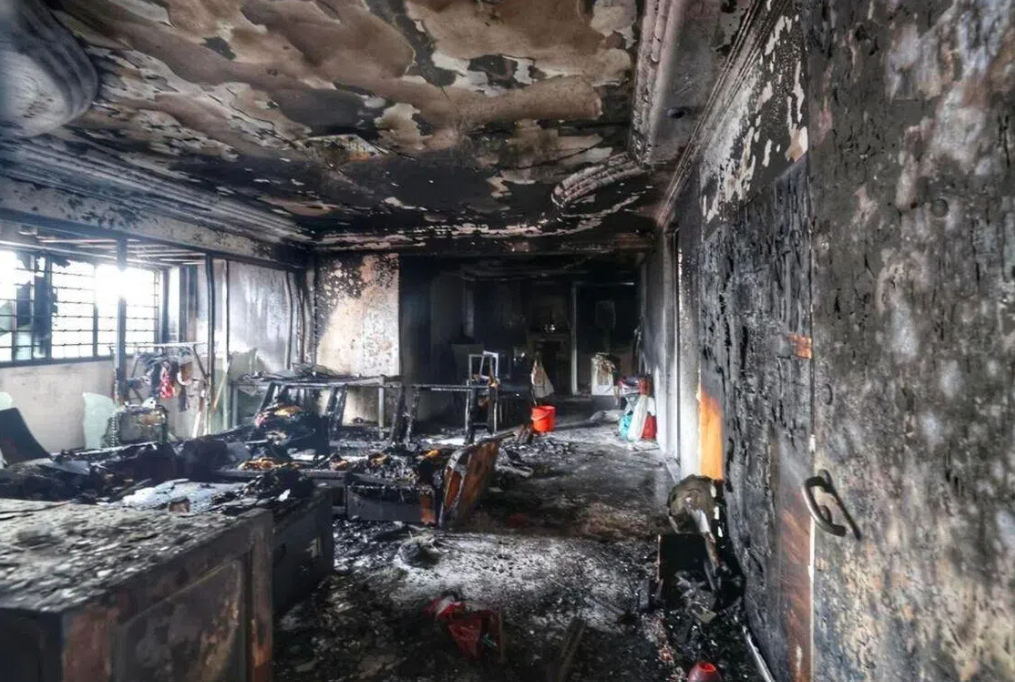
A pre-dawn fire at Block 842 Jurong West Street 81 in Singapore led to a dramatic rescue operation after flames engulfed a residential unit on the 13th floor, leaving two residents requiring hospitalisation and forcing the evacuation of approximately 40 nearby households as a safety precaution. The Singapore Civil Defence Force (SCDF) received the emergency call at around 3.35 am on June 17 and arrived to find the living room of the affected unit fully ablaze, with thick smoke filling the interior spaces.
Firefighters encountered hazardous conditions upon entering the smoke-logged unit, necessitating coordinated efforts to locate and extract the occupants while simultaneously combating the spreading flames. The SCDF deployed water jets to suppress the blaze and ultimately extinguished it, preventing the fire from spreading to adjacent units—a critical factor that likely saved lives given the high-density residential setting. Preliminary investigations conducted by the SCDF point to an electrical fault originating within the living room as the most probable cause of the ignition, a finding consistent with the growing trend of electrically-triggered fires in residential buildings across the region.
All four members of the affected household were transported to Singapore General Hospital for treatment, indicating that the rescue operation succeeded in protecting the entire family unit. The two individuals specifically rescued by SCDF personnel underwent medical evaluation, though the precise nature and severity of their injuries remain undisclosed. Neighbouring residents, particularly those on adjacent floors, were also evacuated out of an abundance of caution, reflecting standard safety protocols designed to prevent potential spread or secondary incidents such as smoke inhalation affecting nearby occupants.
Accounts from residents present at the scene paint a vivid picture of the chaos and courage displayed during the incident. An 18-year-old student living directly above the fire initially detected the problem while awake and gaming late into the night, noticing smoke seeping into his unit from below. Upon investigation, he found the door to the affected unit extremely hot to the touch, prompting him to conduct an urgent evacuation alert by knocking loudly on nearby doors while simultaneously alerting his own family to leave the building immediately. His swift actions created a chain reaction that may have prevented casualties among the neighbouring residents.
The teenager recounted that a young woman from the burning unit came to his door requesting towels to treat her father's injuries, presenting a clear picture of the physical toll inflicted by the fire: her hair had been singed, her face darkened by soot, and she appeared to be suffering from smoke exposure and minor burns. Another occupant of the same unit exhibited visible signs of more severe burns, with his back and arms displaying the characteristic bright red coloration associated with thermal injuries. These observations underscored the intensity of the flames and the close call the family experienced before firefighters could reach them.
Visual documentation of the scene hours after the fire's suppression revealed the extensive damage inflicted on the residential space. When journalists from Lianhe Zaobao visited the site at approximately 4 pm that day, the walls and ceiling of the unit were heavily blackened by smoke and soot, while the windows had been shattered—likely due to the intense heat or the force of water directed at the flames. The destruction served as a sobering reminder of the destructive power of uncontrolled fire even within a single residential compartment, and highlighted the vulnerability of high-rise residential buildings to such catastrophic incidents.
The incident occurred against a backdrop of rising fire incidents across Singapore, a trend that carries significant implications for building safety standards throughout the region. According to the SCDF's latest annual statistics released in February, the total number of fires experienced a three per cent increase, climbing from 1,990 incidents in 2024 to 2,050 in 2025. More concerning is the residential component of this data: 1,051 of the fires in 2025 occurred within residential buildings, representing approximately half of all fire incidents. This concentration of residential fires suggests that apartment dwellers and HDB residents face disproportionate risk exposure compared to other demographic groups.
Electrical fires represent a particularly preventable category of residential incidents, leading the SCDF to issue comprehensive public guidance aimed at reducing the frequency of electrically-caused fires. The agency strongly advises residents against overloading electrical outlets, a common practice in space-constrained urban apartments where multiple high-powered devices compete for limited socket capacity. Additionally, switching off appliances when not in active use represents a fundamental habit that can substantially reduce the risk of dormant electrical equipment becoming ignition sources through fault conditions or component degradation.
Product safety certification requirements form another crucial layer of fire prevention strategy promoted by the SCDF. The agency emphasises the importance of using only appliances and electrical plugs that bear the Safety Mark—a certification credential issued by Singapore's Consumer Product Safety Office—thereby ensuring that devices meet established safety standards and undergo proper testing before reaching consumers. This certification requirement provides a baseline level of protection against defective or substandard electrical products that might otherwise pose hidden fire hazards within residential units.
Charging practices for batteries and electronic devices have emerged as a specific concern in contemporary residential fire prevention efforts. The SCDF explicitly warns against leaving batteries and devices plugged in to charge during overnight periods or for extended durations, as prolonged charging can generate excessive heat within the device's battery management systems and potentially trigger thermal runaway conditions. This recommendation reflects evolving understanding of the mechanisms by which modern portable electronics—smartphones, tablets, laptops, and power banks—can spontaneously ignite when subjected to abnormal charging cycles or when internal battery defects go undetected.
For Malaysian residents and those throughout Southeast Asia, the Jurong West incident offers valuable lessons applicable to urban housing contexts. Public housing projects like Malaysia's own residential complexes, private condominiums, and shophouses share similar structural characteristics with Singapore's HDB flats, creating comparable fire risk profiles. The electrical fire hazard identified in this incident mirrors challenges that building managers and residents across the region must address proactively, as aging electrical infrastructure in older buildings combined with increasing numbers of high-power devices per unit creates cumulative stress on building systems designed for lower electrical loads.
The incident also highlights the critical importance of community awareness and neighbour vigilance in high-density residential settings where professional emergency responders, despite rapid response times, may face delays in reaching units on upper floors during the critical early minutes of a fire's development. The teenager's alertness and decisive action undoubtedly contributed to minimising potential loss of life, suggesting that community-based fire awareness programmes—focused on teaching residents to recognise early warning signs and respond appropriately—represent a vital complement to formal fire prevention and suppression systems.
Looking forward, the rising trend in Singapore's residential fire incidents suggests that fire prevention initiatives must move beyond reactive responses and emergency management toward comprehensive, proactive strategies encompassing product standards, building code enforcement, electrical infrastructure maintenance, and sustained public education campaigns. For the wider Southeast Asian region grappling with similar urbanisation patterns and increasing residential density, the lessons from Singapore's experience provide a roadmap for identifying and addressing emerging fire risks before they manifest in life-threatening incidents within our own communities.