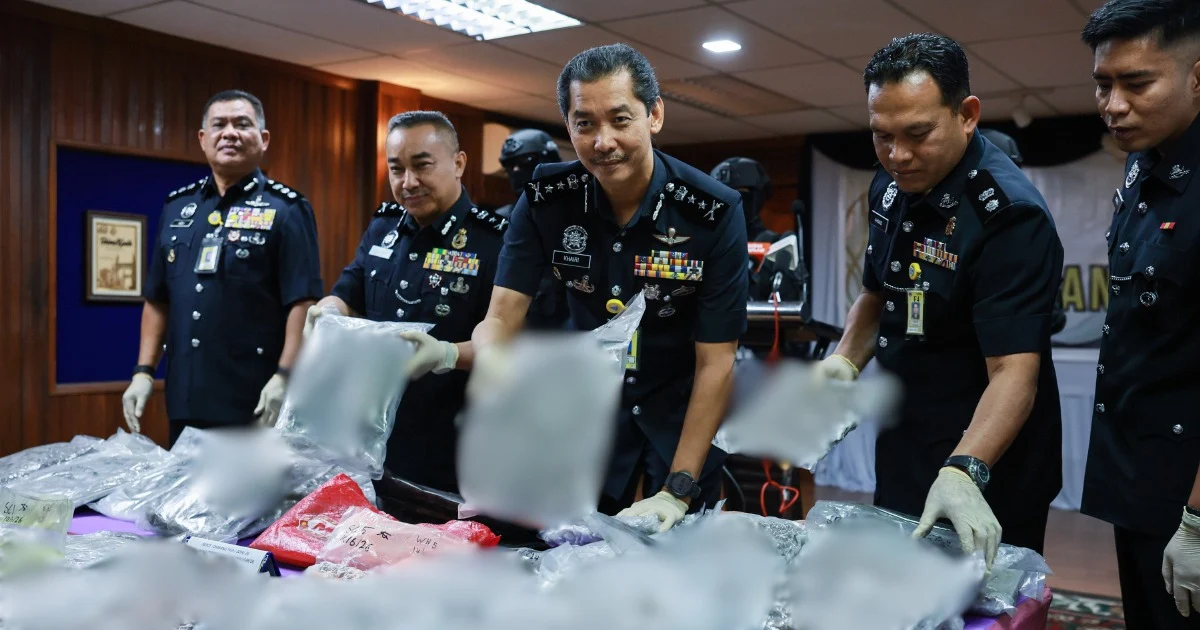
Police in Kuala Terengganu have made a significant drugs-related arrest following an operation that uncovered a major trafficking hub operating from a residential address. Two brothers are now in custody on suspicion of orchestrating a substantial drug storage and distribution facility at their property in Kampung Duyong Besar, with the seized substances valued at RM1.76 million.
The operation highlights the ongoing vulnerability of residential neighbourhoods to exploitation by drug trafficking networks seeking secure locations for their operations. Law enforcement authorities have stepped up surveillance and community intelligence gathering across Terengganu as part of a broader campaign to dismantle organised drug distribution systems in the state.
The use of family homes as storage facilities represents a particularly concerning trend in Southeast Asian drug trafficking, where operatives leverage private residences to evade detection while maintaining proximity to distribution networks. This domestic storage model carries significant public health implications for surrounding communities, given the potency and volume of substances often concealed in such locations.
Terengganu has emerged as a critical trafficking corridor connecting production sources in the Golden Triangle region to consumer markets in the Klang Valley and other populated urban centres. The proximity of the state's ports and road networks to major cities makes it an attractive hub for organised syndicates moving contraband throughout Malaysia and into Singapore and beyond.
The apprehension represents one component of the Royal Malaysia Police's expanded narcotics enforcement strategy, which emphasises both street-level disruption and investigation of supply chain infrastructure. Intelligence-led policing combined with community reporting has proven increasingly effective in identifying such operational nodes before larger quantities can be distributed into circulation.
For residents in affected areas, the discovery underscores the potential for criminal activities to be concealed within ordinary-looking domestic settings. Local authorities often conduct awareness campaigns to educate neighbours about suspicious indicators including unusual visitor patterns, frequent overnight deliveries, and heightened security measures inconsistent with typical residential behaviour.
The Terengganu Police Commercial Crime Investigation Department, alongside federal narcotics specialists, will likely pursue extended investigations to identify the broader network serviced by this storage facility. Supply chain analysis typically aims to establish connections with source suppliers, distributors, and end-users, enabling coordinated enforcement action across multiple jurisdictions.
Drug trafficking charges carry severe penalties under Malaysia's Dangerous Drugs Act, with sentencing structures scaled to substance type and quantity. Given the substantial value of seized material, the two brothers face potential lengthy custodial sentences if prosecution evidence proves their involvement in trafficking rather than mere possession.
The arrest also reflects law enforcement's continuing focus on dismantling organised crime networks in Terengganu, a state that has experienced fluctuating but persistent challenges related to narcotics distribution. The Perikatan Nasional state government has prioritised drug suppression alongside other public safety initiatives, allocating additional resources to regional police operations.
Community vigilance remains integral to disrupting such operations, with hotlines encouraging residents to report suspicious activities at private residences. The balance between public security and privacy protection requires careful calibration, but most Malaysian communities support proactive enforcement addressing visible trafficking indicators in their neighbourhoods.
Successful prosecutions depend on rigorous chain-of-custody protocols and forensic confirmation of substance identity and purity. The RM1.76 million valuation reflects street-level distribution pricing rather than wholesale acquisition costs, suggesting the seized inventory represented several months of intended retail distribution.
The operation contributes to broader statistics documenting the Bukit Aman Narcotics Criminal Investigation Division's ongoing campaign against organised drug syndicates. Year-to-date seizures and arrest numbers help establish enforcement trends, though observers note that successful interdiction often displaces rather than eliminates trafficking activity unless accompanied by demand-reduction and public health interventions.

