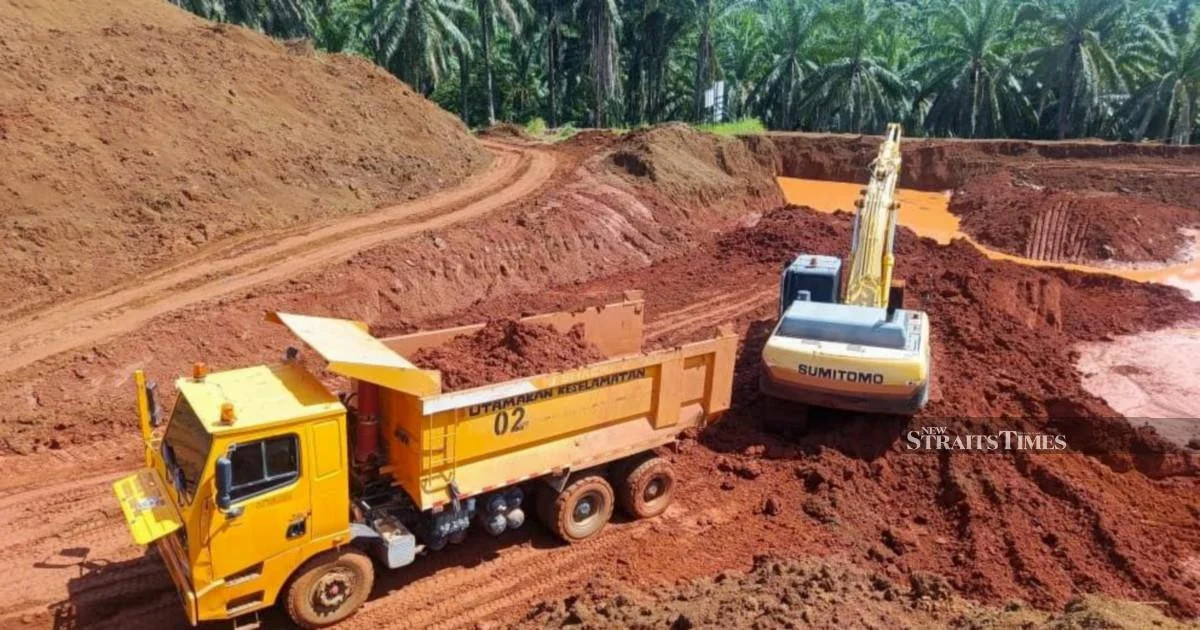
Enforcement officers conducting operations in Marang, Terengganu, have apprehended two individuals connected to the unlawful movement of silica sand, marking another significant seizure in the state's ongoing battle against environmental and mineral extraction violations. The arrests, made on a recent day, represent a concentrated effort by authorities to dismantle operations that circumvent Malaysia's strict regulations governing the extraction and trading of natural resources. The suspects remain in custody as investigations proceed into the wider network potentially involved in the scheme.
The machinery and equipment confiscated during the raid carries a total assessed value of RM1.8 million, underscoring the substantial financial scale of such unauthorised operations. Equipment used for processing and transferring silica sand typically includes heavy machinery, conveyance systems, and storage facilities—all of which represent significant capital investment for illegal operators. The seizure effectively dismantles the operational capacity of this particular site and prevents further environmental damage that unregulated sand extraction and processing can inflict on local ecosystems.
Silica sand holds considerable commercial value across Southeast Asia, serving as a critical raw material for the glass manufacturing industry, foundries, construction materials, and increasingly, advanced technological applications. The high demand creates strong economic incentives for illegal operators to bypass licensing requirements and environmental safeguards. In Malaysia, silica sand extraction is regulated to prevent landscape degradation, water pollution, and disruption to agricultural and residential areas. Unlicensed operations typically operate with minimal environmental controls, causing substantial ecological harm.
Terengganu's coastal and riverine geography makes it particularly vulnerable to illicit sand mining and transfer operations. The state's natural deposits have attracted both legitimate commercial interests and opportunistic illegal operators seeking to capitalise on unrestricted market demand. Previous enforcement actions in the state have revealed sophisticated distribution networks, suggesting that individual arrests often represent only visible elements of larger, more complex smuggling and trading systems.
The involvement of organised groups in illegal sand extraction and transfer across Malaysia and the broader region has grown more sophisticated in recent years. Operators employ various tactics to evade detection, including transferring material during night hours, using unmarked vehicles, and routing shipments through multiple intermediaries. The coordination required to manage such operations—involving equipment procurement, site selection, transport logistics, and market connections—indicates involvement beyond opportunistic individuals.
Malaysian enforcement agencies have progressively strengthened coordination in combating natural resource crimes. The arrests in Marang reflect broader initiatives across multiple federal and state agencies to intensify monitoring of high-risk areas and known smuggling routes. Intelligence gathering, surveillance technology, and cooperation with customs and port authorities have enhanced detection rates, though enforcement officials acknowledge that resource constraints limit their capacity to monitor all suspicious activity comprehensively.
For regional context, silica sand smuggling extends beyond Malaysian borders, with evidence suggesting transnational networks involving Vietnam, Thailand, and other Southeast Asian nations. The ASEAN region collectively experiences substantial illicit mining and mineral trafficking, creating enforcement challenges that transcend national jurisdictions. Shared regulatory frameworks and enhanced bilateral cooperation remain priorities, though implementation remains inconsistent across the region.
The RM1.8 million equipment seizure carries significant financial impact for illegal operators, whose profit margins depend partly on minimising capital losses through detection avoidance. Successful enforcement actions that result in asset seizure create deterrent effects, though repeat offences indicate that potential profits can outweigh perceived risks for some individuals. Authorities recognise that sustained prosecution and asset forfeiture represent more effective long-term deterrents than isolated seizures.
Environmental consequences of illegal silica sand extraction warrant particular attention. Unregulated operations damage riverbanks and coastal zones, alter water flow patterns, reduce agricultural productivity, and contaminate groundwater supplies. Communities near illegal extraction sites frequently experience infrastructure damage, reduced water quality, and ecological degradation affecting fisheries and livelihoods. The environmental remediation costs, typically borne by government agencies and affected communities rather than perpetrators, represent substantial hidden expenses of such violations.
The investigation into the Marang operation will likely reveal supply chains, distribution networks, and end-market buyers. Authorities typically focus not only on initial extraction and transfer stages but also on identifying commercial and industrial customers who knowingly or negligently purchase illegally sourced materials. Expanding accountability upstream in the supply chain provides more comprehensive market deterrence than targeting only extraction points.
Terengganu authorities have indicated commitment to expanding enforcement operations and implementing community-based monitoring programs. Village informant networks and reporting mechanisms have proven valuable in detecting illegal activities in remote extraction areas. Public awareness campaigns emphasising environmental and legal consequences of supporting illegal sand operations complement enforcement efforts.
The arrests underscore the persistent challenge of managing natural resource extraction across Malaysia while preventing environmental degradation and revenue loss. Sustainable development objectives require balancing legitimate commercial interests with rigorous environmental and legal safeguards. Enhanced technology for monitoring extraction sites, combined with community engagement and international cooperation, will likely characterise future enforcement strategies in combating mineral trafficking throughout Southeast Asia.

