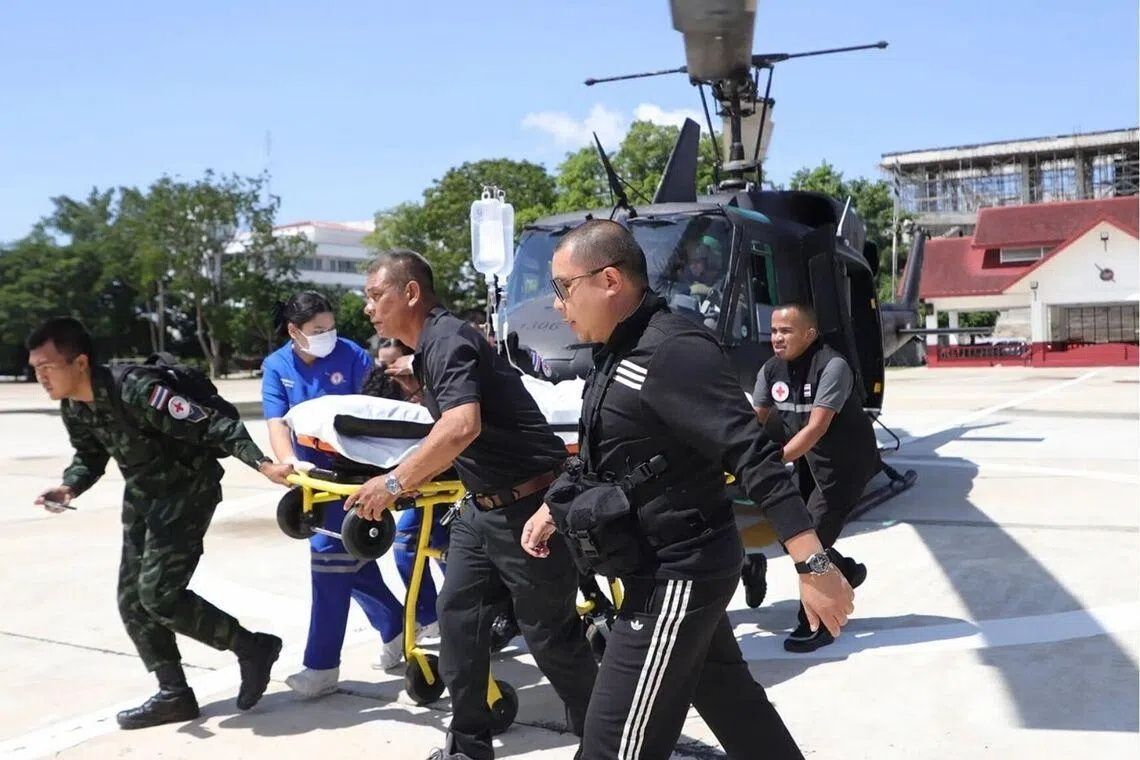
Thailand's volatile southern border region experienced a day of coordinated violence on Friday when two separate bomb attacks targeted police units in quick succession, leaving 11 officers injured across Yala and Pattani provinces. The incidents highlighted the persistent security threats facing law enforcement in one of Southeast Asia's most unstable areas and raised fresh questions about the effectiveness of military and police operations in the deep south.
The first attack struck at 8.10am on June 19 along the Ban Pulo Saniyae–Ban Sakai road in Ban Rae sub-district, Thanto district, Yala province. Border patrol officers assigned to a teacher protection unit became the target of what authorities described as a deliberate bombing by organised attackers. The explosion was devastating enough to cause six officers to sustain injuries, though the severity varied considerably. The incident immediately triggered emergency medical responses, with wounded personnel being transported to Thanto Hospital as the first point of care.
Two officers suffered particularly grave injuries that demanded urgent intervention. Corporal Kittisak Saksang received shrapnel wounds to the face, requiring specialist treatment for trauma injuries, while Corporal Poraphat Wongruaydee sustained chest injuries that rendered him largely immobile, despite retaining consciousness. The gravity of Wongruaydee's condition became apparent when medical assessments revealed internal bleeding in the pleural cavity surrounding the lungs. Both men were rapidly airlifted by helicopter to Yala Hospital, where Wongruaydee underwent emergency surgery to drain accumulated blood and repair damaged lung tissue. The incident prompted an urgent public call for blood donations of all types to support ongoing medical treatment and maintain hospital supplies for potential further casualties.
Meanwhile, forensic teams and explosive ordnance disposal specialists descended on the Yala attack site to gather physical evidence and ensure the perimeter remained secure from secondary devices. The methodical investigation would prove crucial to identifying the perpetrators and understanding the tactical methods employed. Thai security forces responded by heightening surveillance and checkpoint activity throughout the affected areas, a standard defensive posture adopted following such incidents.
Barely three hours later, the security situation deteriorated further when a second bomb detonated at 11.30am in Pattani province. The target this time was the Pattani Police Special Operations unit operating near Ban Khuan Yi in Pado sub-district, Mayo district. Officers returning from a security checkpoint operation became the focus of the attack, suggesting the perpetrators possessed intelligence about police movements and scheduled activities. Five sergeants—Anuchit, Bunyawat, Wisitphon, Aphisit and Sumit—sustained injuries, primarily experiencing chest tightness consistent with blast trauma from the explosion. All five were transported to Mayo Hospital for treatment, and while their injuries appeared less immediately life-threatening than those in the Yala incident, they nonetheless required professional medical oversight.
The back-to-back nature of these attacks points to a level of coordination or at minimum tactical awareness among anti-government elements operating in the region. The timing, targeting of mobile police units, and apparent intelligence about security checkpoint deployments suggest sophisticated operational planning. Such indicators often reflect the work of experienced militant groups rather than opportunistic or spontaneous violence.
Thailand's southern provinces have endured nearly two decades of ongoing conflict rooted in historical grievances, religious tensions, and political separatism. The Yala and Pattani provinces, both Muslim-majority areas in the predominantly Buddhist nation, have witnessed sporadic but persistent violence that has claimed thousands of lives since the insurgency intensified in 2004. Despite military presence, counter-insurgency operations, and dialogue initiatives, the underlying causes remain unresolved, creating an environment where periodic attacks remain tragically plausible.
For Malaysia, these incidents carry particular relevance given the porous border and shared ethnic and religious demographics in Kedah, Perlis, and Kelantan. Cross-border spillover effects, including weapons trafficking and militant recruitment, have long concerned Malaysian security agencies. The coordinated nature of these attacks demonstrates that groups capable of mounting simultaneous operations across multiple locations pose challenges that require sustained regional security cooperation.
Authorities announced that investigation teams had cordoned off both attack sites and were expediting efforts to identify and apprehend those responsible. However, tracking down perpetrators in these provinces has historically proven difficult, particularly when local populations harbour sympathies toward anti-government causes or fear retaliation for cooperation with authorities. The investigation would likely extend beyond immediate forensic analysis to include intelligence gathering, interrogation of informants, and monitoring of suspected militant networks.
The attacks underscore a fundamental challenge facing Thailand's security establishment: the difficulty of protecting dispersed police and military personnel operating across wide territories with limited resources and incomplete intelligence. Teacher protection units and security checkpoint officers represent frontline personnel bearing disproportionate risk. Friday's incidents, resulting in one seriously wounded officer requiring emergency surgery and ten others sustaining injuries, represent a significant toll that will likely prompt tactical reassessment and potentially expanded protective measures for field operations.
While Thai authorities worked to contain the immediate crisis and pursue leads, the broader strategic picture remains sobering. Absent fundamental political progress on southern Thailand's underlying issues, sporadic violence is likely to persist, maintaining pressure on security forces and civilian populations alike.

