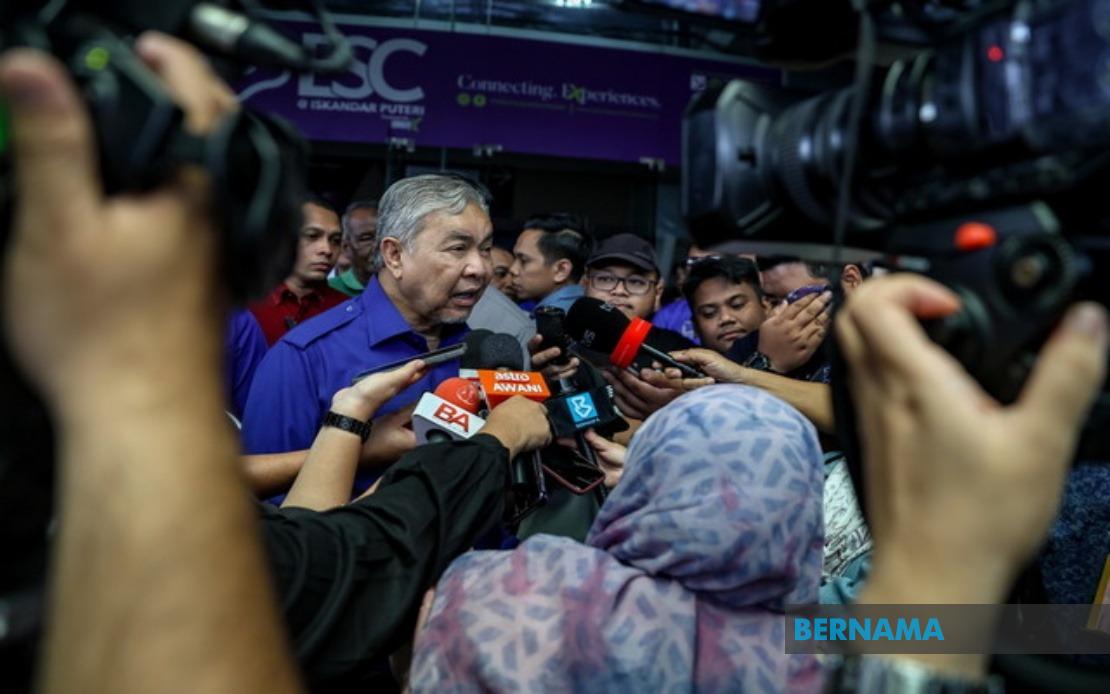
Deputy Prime Minister Datuk Seri Dr Ahmad Zahid Hamidi has signalled that the long-anticipated Technical and Vocational Education and Training (TVET) Commission will finally materialise before the calendar year closes, marking a significant overhaul of vocational education governance in Malaysia. Speaking at the Johor Darul Ta'zim TVET MARA Roadshow in Iskandar Puteri on July 5, Ahmad Zahid outlined a timeline that hinges on the completion of stakeholder consultations and subsequent Cabinet approval, followed by parliamentary legislation.
The establishment of this new commission represents a structural reorganisation aimed at dismantling the current National TVET Council and creating a more robust institutional framework for technical and vocational training across the nation. Ahmad Zahid, who doubles as Rural and Regional Development Minister and chairs the National TVET Council, explained that the shift aligns Malaysia with governance models employed by developed nations that maintain dedicated TVET bodies with genuine regulatory muscle. This architectural change reflects growing recognition that Malaysia's vocational sector requires stronger institutional anchoring to compete regionally and globally.
Currently, Ahmad Zahid disclosed that extensive engagement sessions are taking place with various stakeholders—a process essential before advancing the initiative further through governmental channels. These consultations presumably involve industry representatives, educational institutions, employer federations, and labour unions, ensuring that the new commission's mandate reflects consensus across Malaysia's vocational training ecosystem. The Deputy Prime Minister emphasised that while policy approval has already been secured at an earlier stage, the bureaucratic machinery for tabling the legislation in both the Dewan Rakyat and Dewan Negara remains in motion, constrained by the need for meticulous legal review.
The functional scope of the incoming TVET Commission extends beyond mere policy formulation, a point Ahmad Zahid stressed when comparing it to international precedents. Unlike advisory bodies that merely recommend directions, this commission will bear direct responsibility for implementing and enforcing the policies it establishes—a meaningful distinction that could accelerate coherence across Malaysia's fragmented vocational training landscape. Such enforcement capacity is particularly significant for a country where coordination gaps between federal, state, and private vocational providers have historically hampered sector-wide standardisation and quality assurance.
For Malaysian educators and industry stakeholders invested in vocational pathways, this institutional reconfiguration carries tangible implications. A properly empowered TVET Commission could streamline certification standards, facilitate better alignment between training outputs and labour market demands, and improve pathways for students transitioning from secondary school into skilled trades. Southeast Asian observers watching Malaysia's vocational education evolution should note that such institutional strengthening may influence regional benchmarking and competitive positioning within ASEAN's knowledge economy.
Ahmad Zahid's remarks occurred against the backdrop of a separate concern he raised regarding voter demographics in Johor, where the implementation of Undi18 has expanded the electoral base significantly. The Deputy Prime Minister noted that voters aged 40 and below, including those newly enfranchised at 18, now constitute approximately 52 per cent of Johor's total electorate—a demographic shift with profound political implications for state-level governance and development priorities.
This youthful voter composition prompted Ahmad Zahid, speaking in his capacity as Barisan Nasional chairman, to articulate confidence that younger voters maintain strong affinity with Johor Menteri Besar Datuk Onn Hafiz Ghazi. The remarks suggest strategic positioning ahead of potential electoral contests, with the coalition emphasising generational continuity and portraying the Menteri Besar as a leader capable of resonating with younger demographics whose concerns span education quality, employment opportunities, and economic development trajectories.
The convergence of these two topics—institutional TVET reform and youthful electoral engagement—reveals an underlying policy narrative: Malaysia's government is simultaneously constructing stronger vocational education infrastructure while recognising that younger voters, now wielding unprecedented electoral influence, will scrutinise how effectively such infrastructure translates into tangible career pathways and economic mobility. The TVET Commission, once operational, will operate within this politically conscious environment where vocational education outcomes directly affect youth satisfaction and support for governing coalitions.
For Malaysia's education policymakers and industry partners, the year-end deadline Ahmad Zahid mentioned should be treated as a significant checkpoint. Successful establishment of the TVET Commission would represent substantive progress toward creating a more integrated and responsive vocational training system capable of addressing skills shortages in high-demand sectors. Conversely, any delays or weakening of the commission's mandated enforcement powers would perpetuate existing coordination challenges and undermine efforts to position Malaysia competitively within Southeast Asia's increasingly skills-focused economy.
The technical groundwork appears substantially advanced, with Ahmad Zahid confirming that policy parameters have already secured governmental endorsement. What remains are the legislative procedures and stakeholder alignment processes—procedural hurdles that, while sometimes protracted in Malaysian governance, rarely derail initiatives enjoying ministerial backing and Cabinet-level support. Industry observers should monitor parliamentary schedules in coming months to gauge whether the tabling of TVET Commission legislation proceeds according to the Deputy Prime Minister's stated timeline, as any slippage would signal competing governmental priorities or unresolved consensus among stakeholders.

