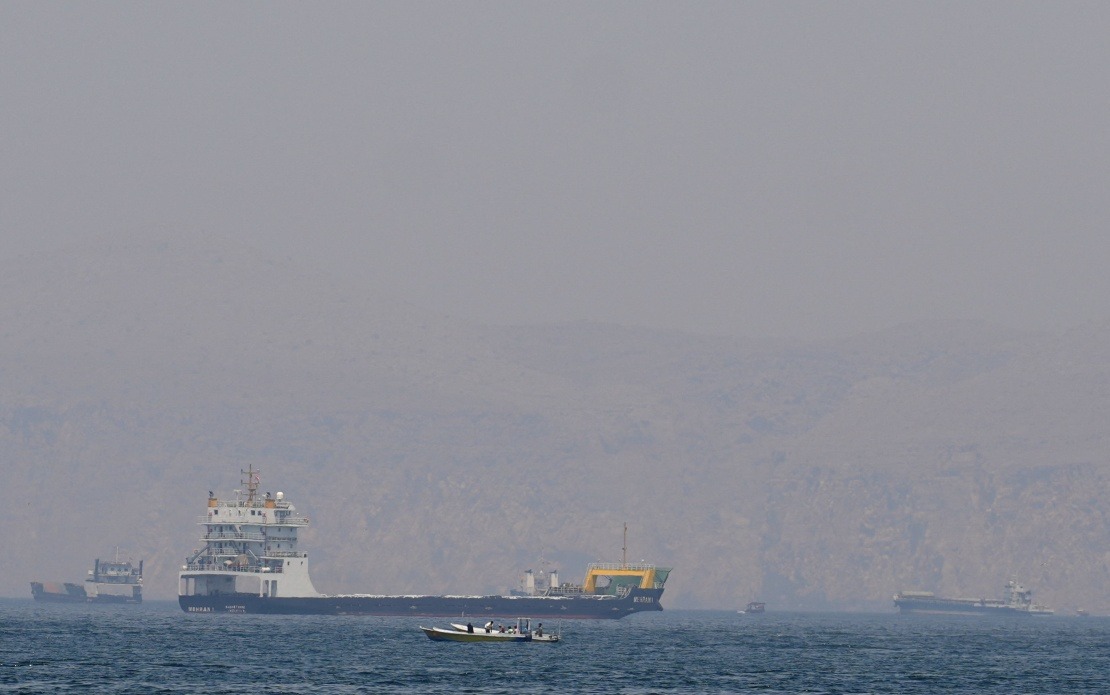
US President Donald Trump has declared a moratorium on maritime tolls in the Strait of Hormuz for the next 60 days, but signalled that Washington may introduce its own charges once this ceasefire period expires, marking a significant escalation in rhetoric over one of the world's most strategically vital shipping corridors. The American leader's statement, issued via his Truth Social platform on Saturday, effectively drew a line in the sand regarding control over the waterway while simultaneously preparing the ground for future unilateral action that could reshape regional geopolitical dynamics and global energy security.
Trump's conditional approach to the Strait reflects a calculated negotiating stance that combines short-term restraint with explicit warnings about long-term costs. The president framed any future American charges as compensation for what he termed "services rendered as the guardian angel" to West Asian nations, characterising US military presence as a protective service that warrants financial reimbursement. This language strategically positions Washington as a security guarantor rather than an aggressor, attempting to legitimise potential toll collection as a reasonable cost-recovery mechanism for past and future expenses should negotiations fail to produce a comprehensive final agreement.
The timing of Trump's declaration comes against a backdrop of heightened tensions following Iran's Khatam al-Anbiya Central Headquarters announcement that it would close the Strait of Hormuz, citing alleged American violations of ceasefire commitments and Israeli breaches regarding Lebanese ceasefire arrangements. This Iranian move represented a significant escalatory gesture from Tehran, threatening to weaponise control of the waterway through which roughly one-third of all globally traded petroleum passes annually, thereby holding immense leverage over international energy markets and the economies of Japan, South Korea, China, and other Asia-Pacific nations heavily dependent on Middle Eastern oil imports.
The strategic importance of this dispute cannot be overstated for Malaysian policymakers and businesses. Malaysia's energy security depends substantially on stable maritime corridors and predictable transit costs. Any disruption to Strait of Hormuz traffic or implementation of arbitrary tolls would directly impact domestic fuel prices, shipping costs for Malaysian-traded goods, and the operational expenses of Malaysian companies engaged in international commerce. Furthermore, Malaysia's position as a major Southeast Asian trading hub means that regional shipping efficiency directly influences economic competitiveness across the broader region.
US Central Command swiftly rejected Iran's closure claims, with spokesperson Captain Tim Hawkins asserting to Axios that American military forces maintain a constant vigilant presence to enforce all agreement terms and that maritime traffic continues flowing without obstruction. CENTCOM's emphatic statement that "Iran does not control the Strait of Hormuz" directly countered Tehran's assertion of unilateral closure authority, establishing a clear American position that Washington maintains responsibility for safeguarding the waterway's operational status. This positioning allows the United States to present itself as the guarantor of global maritime freedom while simultaneously laying groundwork for future toll demands framed as legitimate security services.
The 60-day ceasefire window represents a critical negotiation period during which multiple parties will be testing resolve and attempting to establish precedents for longer-term arrangements. The brevity of this timeframe suggests both sides recognise the urgency of reaching a comprehensive deal while simultaneously preparing contingency positions should diplomacy fail. For regional observers including Malaysia, this compressed timeline creates uncertainty about whether interim arrangements will stabilise into durable frameworks or whether the Strait will remain a flashpoint for unilateral actions by powerful external actors.
Trump's invocation of "reimbursement of costs" introduces a novel framing device for what would effectively constitute an American toll collection system. By characterising fees as compensation for security provision rather than straightforward taxation or exploitation, the administration attempts to create linguistic and conceptual distance from accusations of economic coercion. However, for nations dependent on Strait transit and lacking military capabilities to guarantee their own security, the distinction between a security fee and an imposed toll carries limited practical meaning, as both mechanisms generate the same economic burden and undermine maritime cost predictability.
The broader implications for Southeast Asia extend beyond energy security to encompass fundamental questions about maritime law, freedom of navigation, and the precedent set by major powers unilaterally imposing charges on international waterways. Malaysia and neighbouring nations have historically advocated for international maritime norms based on predictability, non-discrimination, and respect for established conventions. American toll collection in the Strait of Hormuz could establish problematic precedents that other powers might invoke to justify similar arrangements elsewhere, potentially destabilising maritime corridors critical to Southeast Asian commerce.
Iran's response to Trump's 60-day ultimatum will likely shape the immediate trajectory of negotiations and determine whether this period facilitates genuine diplomatic progress or devolves into further tit-for-tat escalation. Tehran's technical capability to disrupt traffic through submarine deployments, naval mines, or anti-shipping missile systems means its compliance cannot be assumed, despite American military superiority. The balance between Tehran's willingness to accept American security oversight and its national dignity regarding foreign military presence in its territorial waters will fundamentally determine whether the 60-day window produces lasting arrangements or merely postpones inevitable confrontation.
For Malaysian enterprises engaged in energy trading, shipping, and petrochemicals, the current situation demands careful contingency planning regarding supply chain resilience and cost structures. Companies should monitor developments closely and consider diversifying supply sources and transportation routes where feasible, while policymakers might explore coordinated regional approaches to protecting maritime freedoms through organisations like ASEAN and international maritime bodies. The precedent established during these negotiations will shape maritime commerce for years to come, making careful attention to developments essential for maintaining Southeast Asian economic interests.
The fundamental tension underlying Trump's position reflects the broader challenge of maintaining international maritime stability when hegemonic powers view strategic chokepoints as legitimate instruments of national policy. The next 60 days will test whether negotiated settlements can accommodate both American security interests and regional stability, or whether unilateral assertion of control becomes the default pattern for managing critical global infrastructure.

