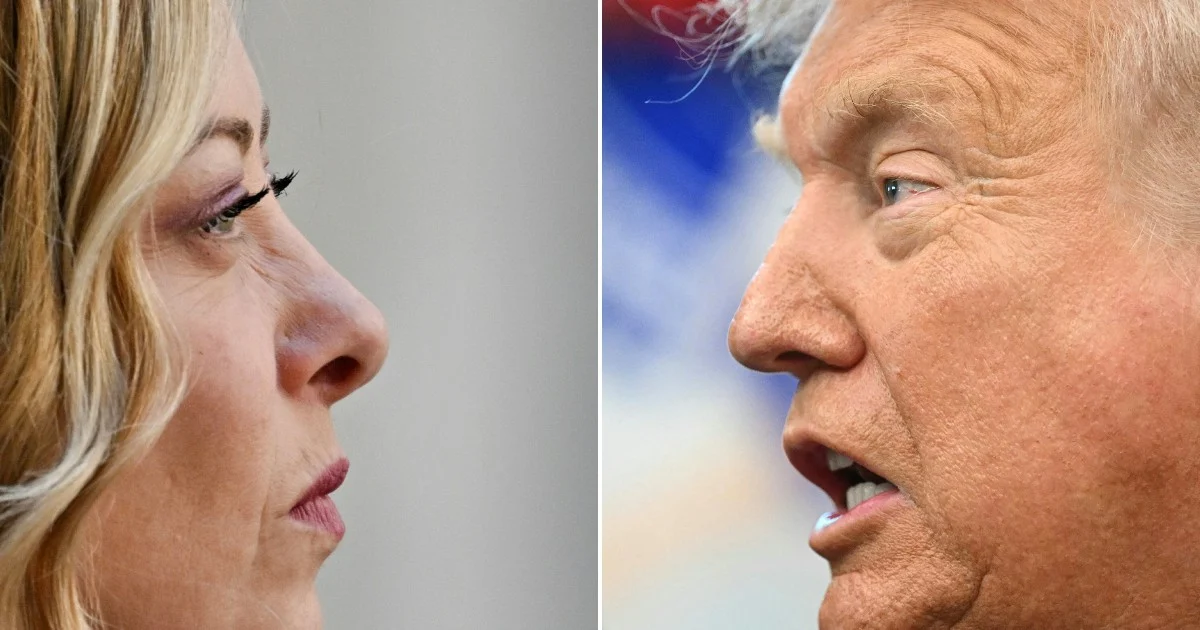
The diplomatic friction between Washington and Rome has intensified as US President Donald Trump publicly accused Italian Prime Minister Giorgia Meloni of making repeated efforts to obtain photographs alongside him, marking an unusual escalation in tensions between two NATO allies. Trump's Saturday remarks represent a significant shift toward open confrontation with one of Western Europe's prominent conservative leaders, introducing personal elements into what had previously remained subdued policy disagreements within the Group of Seven framework.
The photograph dispute, seemingly trivial on its surface, appears rooted in deeper strategic divisions emerging within the G7's collective approach to critical international issues. Trump's decision to amplify this grievance publicly signals frustration extending beyond the photographic incident itself, suggesting underlying tensions over Italy's foreign policy positions that have accumulated over recent weeks. The deliberate nature of Trump's public airing of the disagreement represents a departure from typical diplomatic protocol, where such matters are ordinarily handled through private channels rather than media statements.
The connection Trump drew between the photograph controversy and substantive policy disputes involving Iran presents the more significant dimension of the escalating confrontation. The incoming US administration has signalled its intention to adopt a harder line on Iranian activities in the Middle East, reversing the diplomatic engagement favored by the previous White House occupant. Italy, maintaining its own diplomatic relationships and economic interests in the region, may have advocated for a more measured approach to Iran policy within G7 discussions, creating friction with Trump's more confrontational worldview.
NATO alliance dynamics further complicate the relationship between the two leaders. Italy's role within the collective defence framework remains essential, yet Trump has repeatedly criticized NATO member contributions and questioned the organisation's strategic value. Meloni's government, while broadly committed to NATO, must balance its alliance obligations with domestic political considerations and economic relationships that extend beyond the Western alliance. This balancing act creates opportunities for misunderstandings or perceived slights that Trump may interpret as insufficient enthusiasm for his policy preferences.
The timing of Trump's escalatory remarks warrants consideration within the broader context of recent G7 developments. International summits typically involve extensive photograph opportunities, and prime ministers routinely seek bilateral imagery opportunities for domestic political consumption. The significance Trump attaches to such routine diplomatic practices suggests heightened sensitivity to how Italy's leadership is portrayed relative to American interests. Whether Meloni's photographic requests exceeded normal diplomatic frequency remains unclear, but Trump's public emphasis on the matter transforms a procedural issue into a symbolic dispute.
For Malaysia and Southeast Asian readers, this transatlantic dispute carries implications beyond European affairs. The G7's internal cohesion affects its global positions on trade, technology standards, and regional security arrangements that extend into Asian markets and geopolitical competitions. When Western allies publicly air grievances through media channels rather than resolving them privately, it signals weakening diplomatic discipline that creates uncertainty for countries navigating the international system. Southeast Asian nations dependent on Western market access and security partnerships benefit from G7 unity and suffer from visible ruptures.
The Iran dimension particularly resonates across Asia. Middle Eastern instability directly affects regional shipping, energy prices, and investment security affecting Malaysian and Southeast Asian economies. If the G7 fractures over Iran policy, with Italy and other Europeans pursuing diplomatic channels while Washington adopts confrontational measures, the resulting strategic confusion complicates responses by countries like Malaysia that maintain diverse international partnerships. A divided Western position on Iran reduces the coherence of global pressure and increases unpredictability in Middle Eastern affairs.
Meloni's political standing within Italy also factors into this equation. The Italian Prime Minister leads a center-right coalition and maintains considerable domestic popularity, giving her domestic political space to resist American pressure on policy matters. However, being publicly criticized by a returning US president creates uncomfortable positions domestically, potentially strengthening nationalist voices arguing that Italy should reduce its NATO commitments or pursue independent foreign policies. Trump's strategy of public pressure may prove counterproductive if it provokes Italian public opinion to rally around their leader.
The broader Trump administration approach to allied relationships appears increasingly transactional, prioritizing specific policy concessions and loyalty demonstrations over maintaining stable partnership frameworks. This represents a significant departure from post-World War II alliance management norms emphasizing mutual respect and discrete conflict resolution. For countries like Malaysia observing these dynamics, the message is clear: friendship with Washington increasingly requires visible deference rather than quiet partnership based on shared interests.
Weeks ahead will reveal whether this dispute constitutes a temporary flare-up or signals deeper fractures within the G7. If Trump continues personalizing policy disputes and publicly criticizing allied leaders, the psychological foundations of Western alliance cohesion will suffer lasting damage. Italy and other European nations may accelerate efforts toward greater strategic autonomy, potentially creating openings for non-Western powers to expand influence in Europe while the transatlantic relationship undergoes strain.

