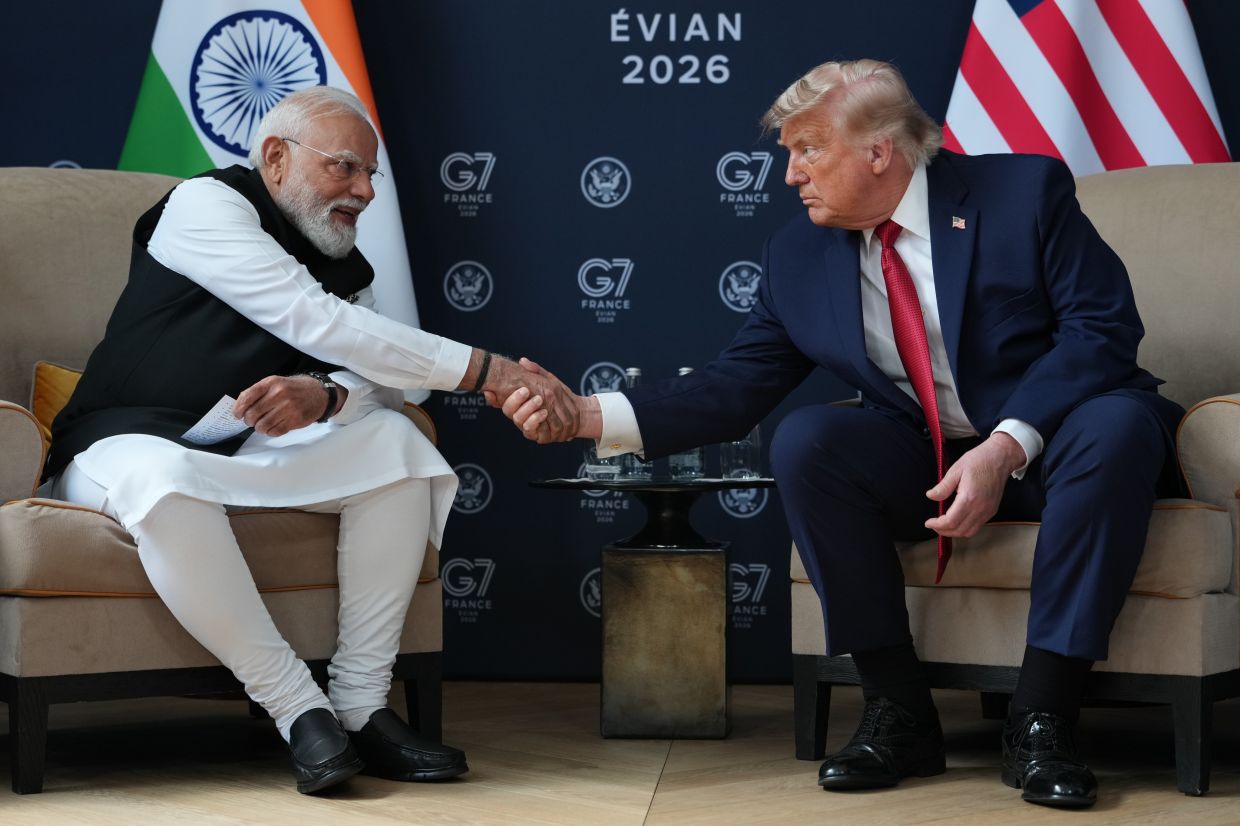
Donald Trump has declined to offer condolences or express regret over the deaths of three Indian sailors killed in a recent United States military strike on a commercial vessel, instead describing deaths at sea as an inevitable consequence of maritime work. Speaking to the media following his bilateral meeting with Prime Minister Narendra Modi—their first formal engagement in 16 months—Trump said Washington and New Delhi would continue collaborating on the matter while offering the dismissive observation that such incidents "have been happening throughout time". The terse response to one of the most damaging incidents in the India-US relationship in recent years has sparked considerable backlash within India, threatening to complicate ongoing trade negotiations and the broader strategic partnership between the two nations.
The three Indian nationals died last week when American forces launched missile strikes against the Palau-flagged MT Settebello, which the United States military alleged was engaged in sanctions evasion and illicit transport of Iranian oil through the Strait of Hormuz. The US Central Command characterised the attack as enforcement of its blockade on Iranian ports, claiming the vessel had violated maritime restrictions imposed by Washington. Two additional commercial vessels carrying Indian crew members also came under fire during the same period, though those attacks resulted in no reported fatalities. The escalation represented a dramatic shift in how Washington has chosen to enforce its Iran sanctions regime, moving from economic penalties to armed enforcement against merchant vessels in international waters.
Indian External Affairs Minister Subrahmanyam Jaishankar had registered a "strong protest" in direct communication with American officials, yet the State Department's official account of their conversation appeared to double down on Washington's justification rather than acknowledge Indian concerns. The American readout emphasised that "violations of the US blockade and the illicit transport of Iranian oil will not be tolerated", framing the incident primarily through a sanctions-enforcement lens rather than acknowledging the loss of Indian life. This asymmetrical response—prioritising policy enforcement over diplomatic sensitivity—revealed the depth of tension underlying the public facade of strategic partnership that Trump and Modi attempted to present at their joint appearance.
The incident has generated significant public anger across India, with citizens visibly expressing their frustration through acts of protest that underscore the political risks Modi faces in maintaining close alignment with Washington. Video footage circulated showing auto rickshaw drivers in New Delhi tearing down posters from a United States embassy campaign that had displayed Trump's image alongside "Happy Birthday America" slogans as part of broader American diplomatic outreach. Such public displays of discontent, captured on social media and widely shared, suggest that ordinary Indians view the handling of their nationals' deaths as incompatible with the respect owed between strategic partners. The symbolism of destroying American promotional materials bearing Trump's likeness sent a pointed message about how some segments of Indian society perceive American priorities in the relationship.
Opposition politicians in India have seized on the incident to challenge Modi's government, with Congress leader Rahul Gandhi posting blistering criticism on social media that accused the Prime Minister of being "compromised" and acting as an "obedient servant" to American interests. Gandhi's language was deliberately provocative, suggesting that a truly sovereign government would have taken a firmer stance in response to the deaths of its citizens. Such criticism, while politically motivated, reflects a genuine anxiety within India about the asymmetry of the bilateral relationship and whether Modi's government is sacrificing national dignity for strategic proximity to Washington. The opposition's willingness to weaponise the incident illustrates how the sailor deaths have become entangled with domestic political debates about India's foreign policy orientation.
Trump's characterisation of the maritime deaths as an unavoidable occupational hazard stands in sharp contrast to his effusive praise for Modi during their meeting, where he described the Indian leader as a "tough trader" and "great guy" while emphasising the closeness of their personal relationship. Trump stated that he and Modi "cannot be closer" and that the two nations enjoy unprecedented strategic alignment, yet such warmth rings hollow when juxtaposed against his casual dismissal of the deaths of Indian sailors. The disconnect between Trump's relationship-focused rhetoric and his apparent indifference to Indian casualties suggests that, from Washington's perspective, strategic cooperation and sanctions enforcement take precedence over the diplomatic niceties typically observed when allied nations suffer loss of life.
The bilateral relationship has been positioned as one of Washington's priority partnerships in the Indo-Pacific region, with India representing a crucial counterbalance to Chinese influence and a vital economic partner. The two leaders last met in February 2025 in Washington, where they initiated discussions toward a comprehensive bilateral trade agreement that would make India one of the first nations to enter formal trade negotiations with the Trump administration. Such discussions carry significant implications for Malaysia and other Southeast Asian economies, as a major India-US trade deal could reshape regional supply chains, investment flows, and economic partnerships. However, the current tensions threaten to derail these negotiations or, at minimum, inject additional complexity into discussions that are already said to be proceeding slowly.
US Trade Representative negotiations on an interim trade agreement remain ongoing, with progress slower than initially anticipated. Secretary of State Marco Rubio visited India separately to reinforce messaging about American strategic commitment, characterising the country as among America's "most important strategic partners" and attending regional security forums to emphasise Washington's presence in the Indo-Pacific. Such diplomatic choreography suggests that despite the MT Settebello incident, Washington views the India relationship as too strategically valuable to abandon, yet the visible tensions indicate that the relationship now carries costs that both sides must manage more carefully. For Malaysia and the broader ASEAN community, the strains in the India-US partnership create both risks and opportunities, as competing regional powers jostle for influence and leverage.
Trump indicated plans to visit India in the future, suggesting that personal diplomacy will remain central to managing the relationship despite the current friction. His decision to focus on bilateral bonhomie rather than address the substantive concerns raised by Indian casualties reflects a transactional approach to international relations that prioritises strategic outcomes over diplomatic convention. The incident reveals how maritime law enforcement, sanctions regimes, and regional security strategies increasingly intersect in ways that generate unintended consequences for civilian populations and create diplomatic friction between nations that otherwise share broad strategic interests. For observers across Southeast Asia, the India-US relationship dynamics bear watching, as they will shape the broader competitive environment in which smaller regional powers must navigate great power competition.

