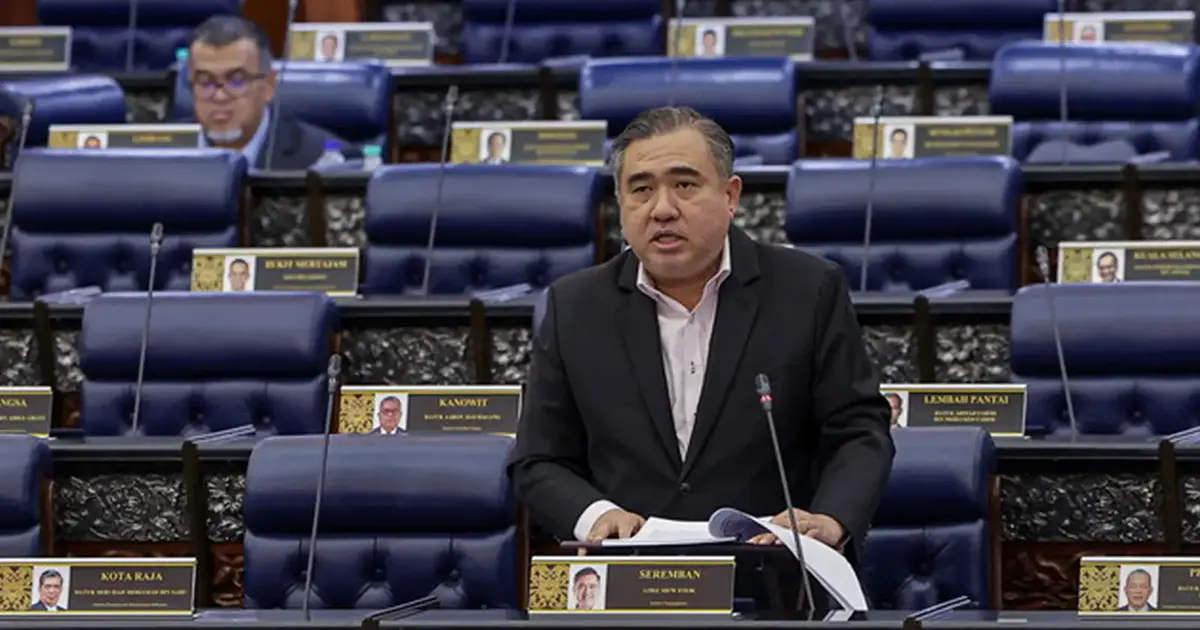
Transport Minister Loke has pushed back against criticism of newly elevated traffic fine ceilings, characterizing the move as a deterrent rooted in public education rather than a revenue-raising exercise aimed at penalizing road users. His remarks come amid public concern over tighter enforcement following recent adjustments to the framework governing traffic violations in Malaysia.
The minister's position underscores a nuanced approach to road safety governance that balances enforcement with leniency. Rather than treating the revised ceiling as a blanket punitive measure, Loke has emphasised that the Road Transport Department (JPJ) retains considerable discretion when determining appropriate penalties for specific breaches. This flexibility allows enforcement officers to calibrate fines based on the severity and circumstances of individual violations, meaning that not every motorist who commits a traffic offence will face the maximum possible compound.
A critical element of the revised framework is the early-payment incentive scheme, which offers defaulters a 50 per cent reduction if they settle their compounds promptly. This mechanism serves multiple policy objectives simultaneously: it encourages rapid compliance, reduces administrative burden on the judicial system, and provides genuine financial relief to those who acknowledge their violation and rectify their behaviour swiftly. For many Malaysian motorists, this discount structure could substantially lower their financial exposure, transforming what might otherwise feel like a punitive measure into a more accessible deterrent.
Loke's framing reflects a broader international trend in traffic enforcement philosophy, where modern approaches prioritise behaviour modification over pure revenue collection. The distinction matters significantly for public perception and compliance outcomes. When drivers understand that enforcement mechanisms exist primarily to improve road safety and reduce accidents rather than to extract fines, they tend to respond more positively to regulatory frameworks. Educational messaging becomes more effective when accompanied by proportionate consequences rather than what appears to be arbitrary financial penalties.
The discretionary power retained by JPJ proves particularly important in a Malaysian context, where enforcement circumstances can vary dramatically across urban, suburban, and rural areas. An urban driver who momentarily exceeds speed limits in heavy traffic faces fundamentally different risk profiles than someone speeding on a rural highway. Officers trained to apply discretion can differentiate between negligent behaviour and genuine mistakes, creating a system that feels fairer to the driving public while still maintaining robust deterrence against genuinely dangerous conduct.
Understanding the rationale behind higher compound ceilings requires examining how traffic enforcement has evolved. Previous regimes with lower maximum fines often failed to deter repeat offenders or serious violators, as the financial consequences simply lacked sufficient weight. By establishing higher ceilings, authorities create meaningful incentive structures without requiring every violation to result in maximum penalties. The ceiling becomes a tool for proportionate justice rather than a de facto punishment floor.
The early-payment discount mechanism also reflects practical wisdom about human behaviour and financial hardship. Many Malaysians live paycheck-to-paycheck, and a substantial traffic fine can create genuine financial distress. By offering immediate relief for prompt settlement, the system acknowledges economic realities while still maintaining enforcement integrity. Someone who pays within days rather than weeks demonstrates sufficient contrition and responsiveness to warrant meaningful discount, creating a positive feedback loop that encourages rapid compliance across the population.
Loke's emphasis on education over punishment resonates with contemporary road safety philosophy adopted across Southeast Asia and beyond. Countries that have shifted toward educational-focused enforcement frameworks have often seen improvements in both compliance rates and road safety outcomes. When motorists believe authorities are genuinely concerned with protecting them rather than filling government coffers, voluntary compliance increases and dangerous behaviours decline more substantially than when enforcement appears solely revenue-driven.
For Malaysian motorists and transport stakeholders, the clarity Loke provides offers important reassurance about the system's underlying logic. The framework is neither a blanket penalty nor an arbitrary cash grab but rather a calibrated approach to safety enforcement that permits proportionate responses to actual violations. A parking offence differs fundamentally from reckless speeding, and the system now allows that difference to be reflected appropriately in financial consequences.
The transport ministry's communication strategy—explicitly positioning higher ceilings as educational tools—also serves to legitimise the enforcement framework within public discourse. When government officials clearly articulate the policy rationale, public acceptance typically increases, and the deterrent effect of enforcement improves. This transparency about intention and mechanism helps build trust in the regulatory system, which ultimately strengthens compliance across society.
Moving forward, the success of this revised framework will depend significantly on consistent application of discretionary authority and transparent communication from JPJ regarding how and why specific compounds are imposed. If enforcement proves genuinely proportionate and the 50 per cent discount is reliably available for early payment, the system stands to improve road safety outcomes while avoiding the perception of arbitrary or excessive penalty imposition. Conversely, if discretion proves inconsistently applied or early-payment discounts prove difficult to access, public confidence will erode regardless of official policy statements.
For Malaysian drivers, the practical takeaway remains straightforward: observe traffic regulations to avoid compounds entirely, but understand that the system offers meaningful pathways to reducing financial consequences through prompt settlement if violations do occur. The transport ministry's educational emphasis suggests a regulatory environment designed around encouragement and behaviour change rather than pure punishment, though individual driver compliance ultimately remains the most effective strategy.

