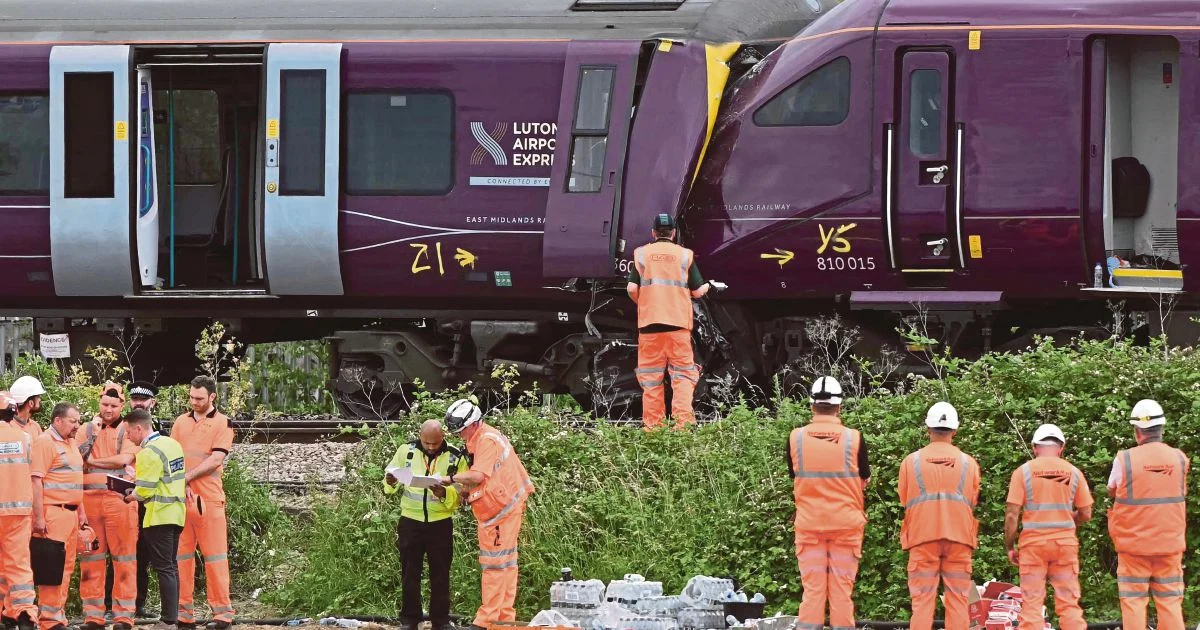
A significant transportation disaster unfolded in the English Midlands when two trains collided near Bedford, claiming the life of one driver and sending dozens of passengers to hospital for treatment. The incident, which occurred north of London, immediately triggered a comprehensive investigation by the UK's dedicated accident investigation unit as emergency responders attended to the injured across multiple medical facilities in the region.
The collision resulted in a substantial number of casualties requiring immediate medical attention, with 28 individuals hospitalized across local healthcare facilities. Among those receiving treatment, nine passengers sustained injuries classified as critical, signalling the severity of the impact and raising serious questions about safety protocols at the point of impact. The remaining injured passengers are being monitored and treated for injuries ranging from moderate to minor, depending on their proximity to the point of contact between the two services.
UK accident investigators descended on the site over the weekend to conduct a detailed forensic examination of the collision scene. Their work will involve reconstructing the sequence of events leading up to the crash, examining track conditions, signalling systems, and the mechanical integrity of both trains involved. The investigation represents a standard procedure for such serious rail incidents in Britain, where transport safety is overseen by rigorous regulatory frameworks and independent examination protocols.
The incident raises important questions about rail safety infrastructure across busy commuter corridors. Bedford sits within a major transport corridor connecting London to the East Midlands and beyond, handling significant daily passenger volumes. Any disruption to services in this region has cascading effects on regional connectivity and highlights the critical importance of maintaining robust safety systems on heavily-used routes.
For Malaysian observers of international transport safety, such incidents underscore the interconnected challenges facing all developed rail networks. While Malaysia's own rail infrastructure has undergone substantial modernization in recent years, the UK experience demonstrates that even mature, well-resourced transport systems remain vulnerable to collisions and accidents without constant vigilance. The investigation process itself offers lessons in how systematic examination of incidents can reveal systemic weaknesses requiring remedial action.
The human cost of transport accidents extends beyond immediate injuries and fatalities. Families of those affected face days of uncertainty and anxiety, while entire communities experience disruption to their daily routines and transportation patterns. The loss of a train driver particularly resonates within the rail industry, where operators form the critical human link in the safety chain. Such tragedies often prompt reflection within transportation sectors about working conditions, fatigue management, and the pressures faced by frontline personnel.
Britain's rail system, operated through a franchised model combining private operators with regulatory oversight, faces continuing scrutiny regarding safety investment and maintenance standards. The incident will likely prompt reviews of whether all required safety protocols were followed and whether infrastructure upgrades are necessary on the affected route. Regulatory bodies will examine whether the collision represents an isolated incident or symptomatic of broader systemic issues requiring attention.
The investigation's findings will be crucial for determining whether the collision resulted from equipment failure, signalling malfunction, human error, track maintenance deficiencies, or a combination of factors. Each potential cause carries different implications for future prevention strategies. Track geometry, train braking systems, driver response protocols, and communications systems will all fall under scrutiny as investigators piece together what led to the impact.
For regional rail operators across Southeast Asia, including Malaysian rail services, such incidents from developed nations offer valuable comparative data. While UK infrastructure operates within different regulatory, financial, and technological contexts, the underlying principles of collision prevention and emergency response remain universally applicable. The systematic investigation approach employed by British authorities provides a framework that other nations can adapt and learn from.
The immediate aftermath of the collision will see rail operators implementing enhanced safety measures on the affected line while the investigation proceeds. Service resumptions will occur gradually, contingent on track repairs and safety certifications. Passengers may experience anxiety resuming journeys on the route, necessitating operator communication strategies to rebuild confidence in the system.
As the investigation progresses over coming weeks and months, transport authorities will release preliminary findings that may indicate early conclusions about causation. These preliminary reports typically generate discussion within railway professional communities and among transport safety advocates regarding whether existing regulations require strengthening. The final investigation report, typically released after several months, will contain detailed recommendations to prevent similar incidents occurring on other sections of the rail network.
The Bedford collision represents a stark reminder that rail transport, despite being statistically among the safest transport modes, remains subject to catastrophic incidents when systems fail. The comprehensive investigation now underway will ultimately serve not only to determine what happened in this specific case but to identify improvements preventing future tragedies across the broader transport network.

