Malaysia's Deputy Prime Minister Datuk Seri Dr Ahmad Zahid Hamidi has underscored the profound significance of the Tokoh Maal Hijrah awards, arguing that the honours bestowed upon this year's recipients should energize the country's Muslim population to pursue greater heights of personal and collective achievement. Speaking in the aftermath of the national-level Maal Hijrah celebration held at Masjid Putra in Putrajaya, Ahmad Zahid positioned the awards not merely as ceremonial recognition but as powerful catalysts for spiritual and intellectual renewal across Malaysian society.
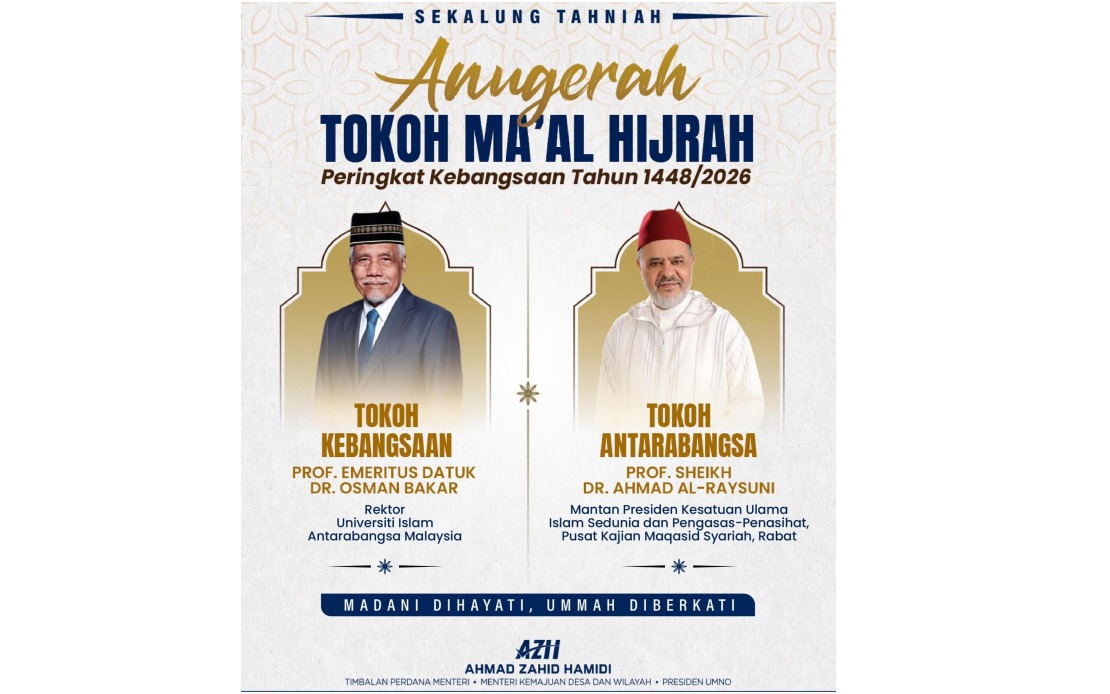
The Deputy Prime Minister extended his felicitations to Prof Emeritus Datuk Dr Osman Bakar, who claimed the National Tokoh Maal Hijrah Award, and Prof Sheikh Dr Ahmad Al-Raysuni of Morocco, the recipient of the International Tokoh Maal Hijrah Award. Ahmad Zahid lauded their exemplary contributions to strengthening Muslim communities, advancing scholarly discourse, and propagating Islamic teachings that embody mercy, wisdom and tangible benefits for broader society. His remarks reflected an appreciation for the intellectual and social dimensions of their work, suggesting that their recognition represented more than individual accomplishment but a validation of approaches that marry Islamic principles with contemporary communal needs.
Central to Ahmad Zahid's message was an exhortation for Malaysian Muslims to embrace a trajectory centred on knowledge acquisition, community engagement, and substantive participation in the development of the ummah. The call extended beyond religious and spiritual dimensions, implicitly connecting Islamic scholarship and values to national development and the advancement of Islamic civilization globally. This framing positioned Muslim intellectual and social contributions as integral to both Malaysia's progress and the broader Islamic world's trajectory, suggesting that personal excellence and communal service are interconnected pursuits rather than separate endeavours.
Deputy Prime Minister Datuk Seri Fadillah Yusof similarly emphasized the inspirational potential of the awards, contending that the recognition should motivate all Malaysians—not merely Muslims—to sustain their dedication to serving society and nation. Fadillah's broadening of the audience for the awards' message reflected a recognition that while the Tokoh Maal Hijrah honours specifically celebrate Islamic excellence, their underlying principles of service, sacrifice and principled development hold resonance across Malaysia's pluralistic society. This inclusive framing demonstrated diplomatic sensitivity to Malaysia's multicultural context whilst maintaining the awards' Islamic-centred purpose.
Fadillah articulated a deeper understanding of the Maal Hijrah concept, moving beyond its historical dimensions to extract contemporary principles. He characterized Prophet Muhammad's hijrah not as a mere episode in Islamic history but as an enduring philosophical framework encoding values of sacrifice, collective unity, steadfastness and commitment to constructive transformation. By re-positioning the hijrah as a perpetual guide rather than a past event, Fadillah suggested that Muslims in present-day Malaysia should interpret the Prophet's migration as a template for their own contemporary migrations—whether intellectual, social or spiritual—towards excellence and positive societal contribution.
The Deputy Prime Minister developed this philosophical approach by linking the hijrah's foundational values to Malaysia's national aspirations. He advocated for the transformation of hijrah principles into practical commitments to building a society characterized by progress, material prosperity and ethical foundations. This articulation bridged the spiritual and the pragmatic, suggesting that Islamic values and national development are mutually reinforcing rather than competing objectives. Fadillah's call for collective effort to strengthen Islamic faith, enhance social cohesion and multiply beneficial acts represented an integrated vision of religious observance and national prosperity working in tandem.
The presentation ceremony itself, conducted by Sultan Nazrin Shah of Perak, conveyed institutional and royal endorsement of the awards' significance. The bestowal of cash prizes, trophies and certificates by a reigning sultan elevated the honours beyond professional or academic recognition, situating them within Malaysia's constitutional framework of royal patronage of Islam. This dimension underscored that the Tokoh Maal Hijrah awards carry not only administrative recognition but constitutional and spiritual legitimacy within Malaysia's governance structure, particularly given the Sultan's role as protector of Islam in his state and contributor to Malaysia's collective Islamic affairs through the Conference of Rulers.
For Malaysia's broader Muslim population, the awards and accompanying statements from senior government figures signalled official encouragement for intellectual engagement, scholarly pursuits and community-oriented endeavours grounded in Islamic principles. The recognition of an international recipient alongside a Malaysian scholar reflected Malaysia's positioning as an active participant in global Islamic discourse, suggesting that intellectual contributions need not be geographically bounded to merit recognition and that Malaysia welcomes engagement with international Islamic thought leadership. Prof Ahmad Al-Raysuni's selection as an international laureate indicated openness to Islamic jurisprudence and scholarship from beyond Malaysia's borders, enriching the local intellectual ecosystem.
The emphasis placed by both Deputy Prime Ministers on the inspirational dimensions of these awards carries particular resonance for Malaysian youth and emerging scholars contemplating their life trajectories. By elevating recognition of those who have devoted themselves to knowledge and community service, the government implicitly encouraged young Malaysians to consider similar paths, suggesting that scholarly and communal contributions constitute a valued and honourable form of national service. This messaging may influence educational choices, career aspirations and civic engagement patterns among Malaysia's younger generations, particularly within Muslim communities.
The Tokoh Maal Hijrah awards thus function as more than ceremonial occasions; they represent moments of collective reflection about values, purpose and aspiration within Malaysia's Muslim-majority society. By framing the awards through the lens of hijrah—migration and transformation—both Ahmad Zahid and Fadillah encouraged all Malaysians to contemplate their own journeys towards greater learning, integrity and contribution. The awards themselves become visible manifestations of a national commitment to recognizing and rewarding excellence grounded in Islamic principles, while simultaneously serving as public reminders of the virtues the government seeks to cultivate across Malaysian society.