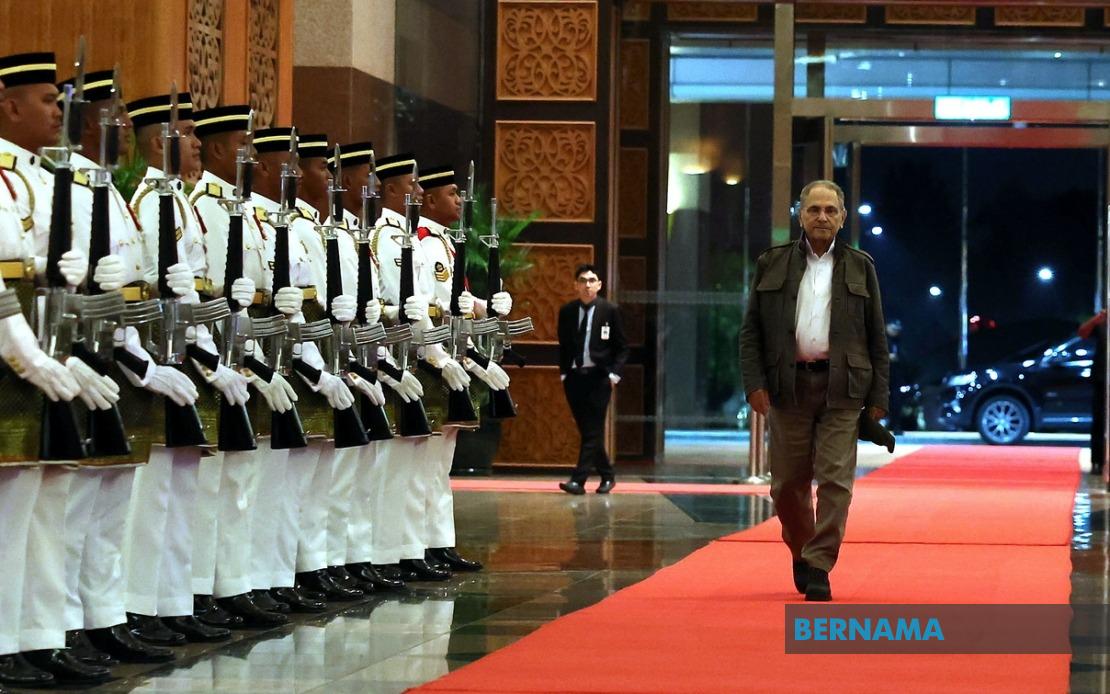
Timor-Leste's President Jose Ramos-Horta boarded a flight from Kuala Lumpur International Airport in the pre-dawn hours of June 17, bringing to a close a five-day visit aimed at reinforcing diplomatic bonds and advancing collaborative initiatives between the two Southeast Asian neighbours. The Nobel Peace Prize winner and his accompanying delegation departed at 2.15 am, having spent the preceding days engaged in high-level discussions with Malaysian political and business leaders on matters ranging from trade expansion to infrastructure development.
The visit represented a significant moment for bilateral relations, with Ramos-Horta offering his assessment that ties between Timor-Leste and Malaysia have reached an "exceptionally good" level. This characterisation underscores the warming of relations between the two countries, particularly as Timor-Leste navigates its nascent years as Southeast Asia's newest full ASEAN member. The Nobel laureate took particular occasion to acknowledge Malaysia's steadfast backing of his nation's regional integration, a support that proved instrumental during the latter's chairmanship of the bloc.
Throughout his stay, Ramos-Horta participated in a dialogue forum titled "A Changing World, Enduring Values," where he reflected on Malaysia's standing in global affairs. He singled out the country's progress in maintaining security, advancing democratic institutions, and achieving economic growth as exemplary models worthy of regional emulation. Such public acknowledgement carries weight in diplomatic circles, signalling to Malaysian audiences and the broader international community that Timor-Leste's leadership values the partnership and recognises Malaysia's contributions to regional stability and development.
Among the president's major expressions of gratitude was Malaysia's crucial role in supporting Timor-Leste's path to full ASEAN membership, a milestone achieved on October 26, 2025. This backing extended beyond mere diplomatic gestures; it reflected Malaysia's commitment to an inclusive regional architecture that brings all Southeast Asian nations into the fold. For Timor-Leste, a country still building state capacity after decades of conflict and occupation, this multilateral membership opens doors to technical assistance, trade partnerships, and security cooperation that would otherwise remain inaccessible.
Looking ahead, Ramos-Horta expressed confidence in Timor-Leste's readiness to host the ASEAN summit in 2029, an undertaking that will require substantial investment in infrastructure and institutional frameworks. The country is reportedly accelerating projects to meet this timeline, a commitment that reflects both ambition and a determination to showcase regional leadership credentials. For Malaysia, such hosting responsibilities represent opportunities for technical knowledge-sharing and capacity-building, areas in which the nation has substantial expertise to offer.
Economic opportunity formed a central thread of discussions during the visit, with Ramos-Horta making a direct pitch to Malaysian business interests. He highlighted Timor-Leste's infrastructure sector as a frontier for investment, emphasising competitive advantages that include a relatively low national debt burden and a well-capitalised sovereign wealth fund. The backing of multilateral financial institutions adds another layer of confidence for potential investors seeking to mitigate risk. This overture reflects pragmatic economic diplomacy, positioning Timor-Leste as an emerging market with genuine prospects for return on investment, rather than as a struggling post-conflict state requiring charitable assistance.
Prime Minister Datuk Seri Anwar Ibrahim hosted a luncheon at the Seri Perdana Complex to honour the visiting leader, providing a setting for in-depth discussions on broadening economic collaboration. The bilateral agenda encompassed trade expansion, foreign direct investment flows, and notably, human capital development through educational and technical training initiatives. Such exchanges signal recognition that Southeast Asian integration requires building people-to-people linkages and ensuring that workforces across the region possess compatible skills and qualifications.
The current trade relationship, while modest in absolute terms, points to significant untapped potential. Bilateral commerce totalled USD18.72 million in 2024, with Malaysian exports comprising USD18.37 million and imports from Timor-Leste a mere USD0.35 million. The disparity reflects both the structural realities of economic development—Malaysia's more diversified and advanced manufacturing base—and the nascent state of commercial integration between the two nations. Growth in these figures would signify successful penetration of Timorese markets by Malaysian companies and corresponding development of Timor-Leste's export capacity, outcomes that both governments clearly view as desirable.
For Malaysia, hosting a presidential visit carries diplomatic resonance beyond the immediate bilateral context. Timor-Leste's recent ASEAN accession fundamentally altered the regional balance, adding a 200,000-strong population and strategic territorial claims to South China Sea maritime issues. By cultivating strong relations with Dili, Malaysia strengthens its position within the bloc and contributes to the kind of intra-regional cohesion that becomes increasingly valuable as geopolitical tensions rise across the Indo-Pacific. The visit demonstrates that Malaysia views itself as a mentor and partner in Timor-Leste's regional integration journey.
Ramos-Horta's characterisation of Malaysia's role in supporting Timor-Leste since before 2002 independence—including peacekeeping efforts in 1999—places the relationship within a longer historical arc. The acknowledgement of Malaysia's contribution to stabilising Timor-Leste during its transition to sovereignty establishes a foundation narrative emphasising partnership rooted in genuine goodwill rather than strategic calculation alone. Such historical framing matters in Southeast Asian diplomacy, where nations often draw on shared experiences of post-colonial development and peace-building to construct enduring relationships.
The guard of honour provided upon Ramos-Horta's early-morning departure—comprising officers and personnel from the First Battalion Royal Ranger Regiment—represented ceremonial recognition appropriate to a visiting head of state. These formal courtesies, though seemingly routine, serve important signalling functions in diplomatic protocol, communicating to both the departing dignitary and watching regional powers that Malaysia accords the visitor appropriate respect and recognition of Timor-Leste's status as a peer nation within ASEAN's framework.
Moving forward, the relationships and commitments forged during this five-day visit will likely shape bilateral trajectories across multiple sectors. Infrastructure investment flows may expand, educational exchanges may deepen, and trade patterns may gradually shift as Malaysian investors identify opportunities and Timorese exporters develop competitive advantages. The visit also positioned both nations to work in tandem on broader regional questions, from maritime security to economic integration initiatives, in ways that benefit their respective development aspirations and reinforce ASEAN's collective standing.