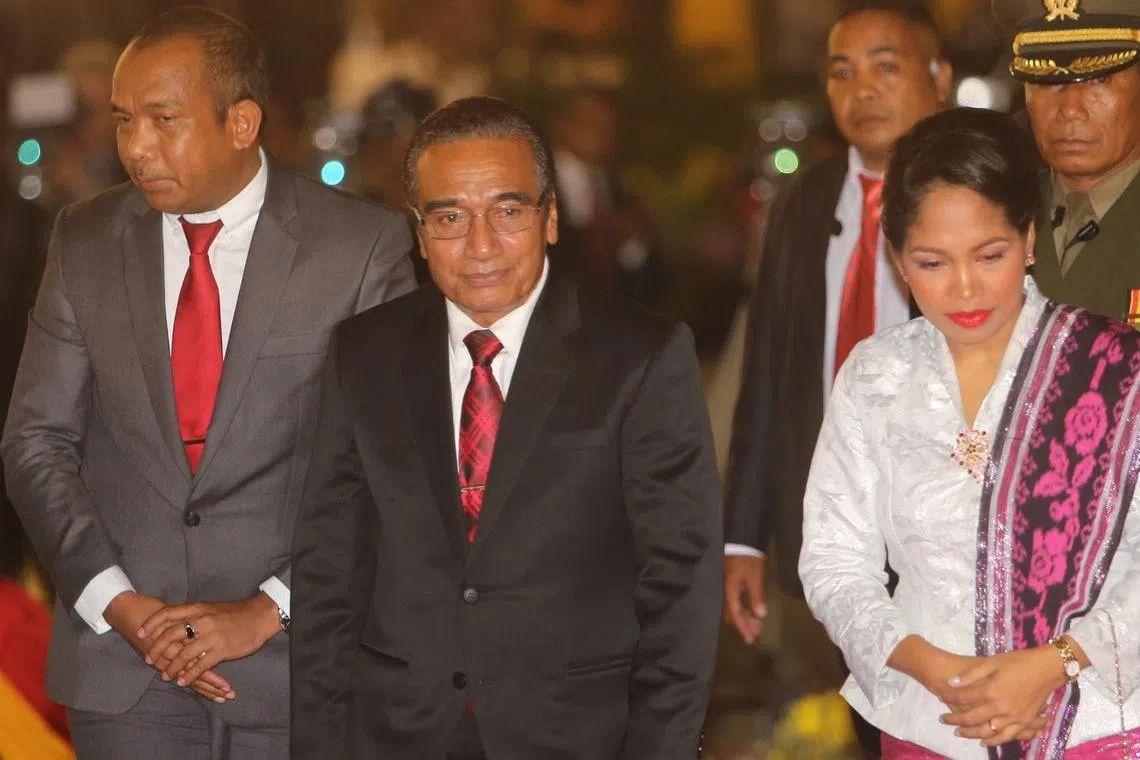
Timor-Leste entered a period of national mourning on June 22 after Francisco "Lu-Olo" Guterres, the nation's former president and a towering figure in its struggle for sovereignty, passed away at a Malaysian hospital over the weekend at the age of 71. The death marks the end of an era for the small Southeast Asian democracy, which has long relied on the symbolic and political presence of leaders forged in the crucible of its independence movement. Government officials immediately ordered flags lowered to half-mast across all public installations, from government headquarters to diplomatic missions abroad, underscoring the weight of his passing in the national consciousness.
Guterres's seven-decade life trajectory embodied the modern history of Timor-Leste itself. His involvement in the nation's political and military struggle spanned decades, beginning long before the territory achieved independence from Indonesia in 2002 after a quarter-century of occupation marked by widespread violence and suffering. He transitioned from armed resistance into civilian leadership, eventually rising to the presidency in 2017 with a commanding mandate of over 57 percent of the popular vote. His election represented a symbolic affirmation from the Timorese people of his contributions to the nation-building project and his enduring relevance to a generation that had lived through colonial rule and conflict.
Guterres served as the sixth president of Timor-Leste during the 2017-2022 term, a period when the young nation continued consolidating democratic institutions and addressing the lingering legacies of occupation. His presidency occurred at a delicate moment in the country's development, requiring navigation of domestic political tensions, international relationships, and pressing development needs. The experience he brought to office—gained through decades of engagement with the nation's leadership structures—proved invaluable during these formative years of the republic.
The transition of power in 2022 demonstrated the maturity of Timorese democracy, despite being one of Asia's youngest republics. Though Guterres sought a second term, he was defeated in a presidential runoff by Jose Ramos-Horta, a Nobel laureate who also had deep roots in the independence movement. Rather than becoming a source of enduring rancor, the electoral outcome reflected the healthy alternation of power among liberation-era figures. Ramos-Horta's statement following Guterres's death acknowledged this shared history, describing him as a "great patriot" and characterizing his loss as "a great loss for the nation," language that transcended electoral competition and recognized their common struggle.
The Revolutionary Front for an Independent East Timor (Fretilin), the political party that Guterres had previously led, also expressed its grief at losing one of its founding architects. The party played a central role in mobilizing resistance during the Indonesian occupation and continues to shape Timorese politics today. Guterres's long association with Fretilin meant that his death resonated particularly strongly within the movement, which depended on his moral authority and organizational experience throughout successive electoral cycles.
Family members indicated that Guterres's body would return to Dili, the capital, on Tuesday, though detailed funeral arrangements remained under consideration at the time of his passing. His brother Domingos Guterres provided this information to journalists, while the broader family issued a statement requesting privacy during their bereavement. The family expressed gratitude for public tributes while seeking space to grieve what they characterized as the loss of someone "beloved" by many Timorese citizens.
Beyond the borders of Timor-Leste, regional leaders took note of the passing. Prime Minister Datuk Seri Anwar Ibrahim of Malaysia, whose country's healthcare facilities had hosted Guterres during his final illness, conveyed official condolences and acknowledged the significance of his departure. Anwar's statement emphasized that Malaysia would remember Guterres "with respect and affection," reflecting the diplomatic warmth that characterizes the relationship between Kuala Lumpur and Dili, two Southeast Asian neighbors separated by maritime boundaries but connected through shared regional interests and ASEAN membership.
Guterres's death arrives at a moment when Timor-Leste continues addressing fundamental challenges of state-building and development. The nation remains one of the region's least developed, with heavy dependence on petroleum revenues and ongoing struggles with poverty, education, and healthcare infrastructure. The passing of such a recognized national symbol, someone who embodied the continuity between liberation struggle and state institutions, inevitably prompts reflection on questions of leadership succession and national direction in a country still navigating its post-conflict transition.
The life and legacy of Francisco Guterres encapsulate the arc of Timorese independence itself—from armed resistance through political struggle to electoral democracy. His funeral will likely draw attention from regional and international figures who recognize his historical significance beyond Timor-Leste's borders. For a nation that has built much of its identity around the achievements and sacrifice of its independence generation, the loss of such a prominent figure represents not merely a personal tragedy but a broader reckoning with generational transition and the evolving nature of national leadership.

