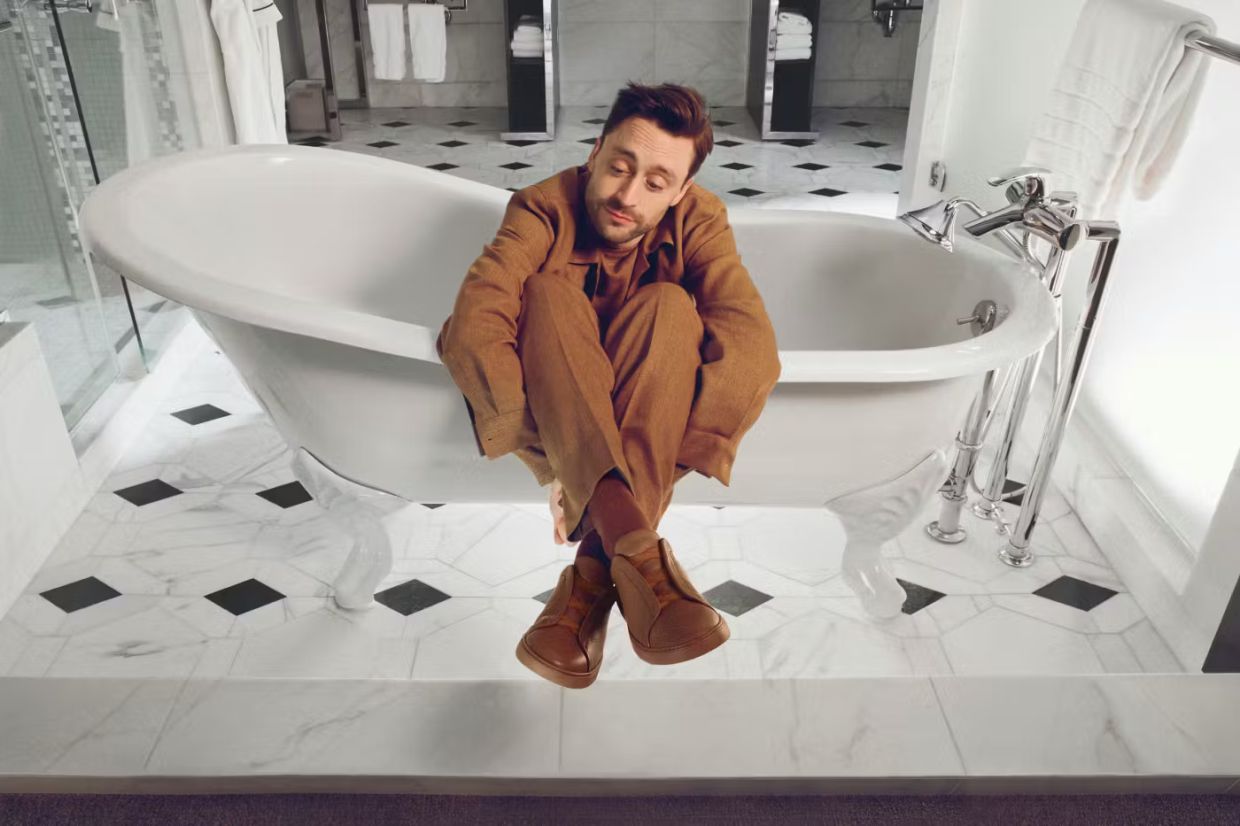
The dress sneaker represents one of contemporary menswear's most polarising innovations: a hybrid shoe that grafts the sturdy rubber sole of athletic footwear onto a refined leather upper. Whether viewed as an ingenious solution or a stylistic contradiction, this footwear category has undeniably secured a place in modern masculine wardrobes, signalling a broader cultural shift towards comfort and informality in professional settings.
The emergence of dress sneakers traces directly to three converging social forces. The institutionalisation of casual Friday meant offices gradually loosened their sartorial expectations, while the wealth-signalling ethos known as stealth wealth encouraged affluent professionals to express status through subtle, understated pieces rather than ostentatious logos. Simultaneously, comfort dressing—the elevation of ease as a legitimate aesthetic priority—gained cultural legitimacy. Unlike previous hybrid footwear experiments that merely blurred the line between shoe categories, dress sneakers achieved something extraordinary: they succeeded in transitioning from novelty to necessity.
High-profile adoption cemented the trend's credibility. Democratic Congressman Hakeem Jeffries wore them to the Oval Office while meeting President Joe Biden, signalling political acceptability at the highest level. Actor and producer Ben Stiller paired them with formal attire at the New York Film Festival and court-side at Madison Square Garden, while actor Kieran Culkin wore Cole Haan versions in his role as Roman Roy on television. Apple's Tim Cook posed in Zegna Triple Stitch dress sneakers for a magazine cover, lending the imprimatur of Silicon Valley's most influential executive.
The footwear's social penetration now extends to institutions built on formality. Private clubs historically bound by rigid dress codes—establishments where traditional sneakers remain strictly prohibited—have nonetheless expanded their policies to accommodate white-soled leather shoes. This institutional flexibility represents a capitulation of sorts: the shoe's respectable styling makes it impossible to exclude without appearing aesthetically reactionary. The compromise exemplifies contemporary masculine style: comfort and professionalism coexisting rather than competing.
The symbolism embedded in dress sneakers communicates a carefully calibrated message. The wearer projects seriousness and dedication to their profession whilst simultaneously suggesting versatility and intellectual vitality—the ability to transition from boardroom strategy to court-side recreation without wardrobe adjustment. More subtly, it conveys a rejection of outdated formality: the wearer respects professional norms but refuses to be imprisoned by arbitrary dress codes that conflate stiffness with respectability. This positioning has proven especially powerful among younger executives and technology leaders seeking to demonstrate progressive values.
The historical context makes this achievement remarkable. Throughout the twentieth century, menswear remained largely bifurcated: hard leather dress shoes, predominantly in black calfskin, dominated professional environments, whilst sneakers inhabited entirely separate recreational and casual spheres. When loafers gradually infiltrated offices during the late 1960s, they marked the boundary of acceptable casualisation. Full sneaker acceptance seemed inconceivable. That fundamental separation persisted until the millennium's turn.
Menswear historian Derek Guy attributes the dress sneaker's invention to Common Projects' Achilles Low, launched in 2004. These Italian-manufactured minimal low-tops featured no obvious branding and carried premium pricing—design decisions that paradoxically enhanced their prestige by positioning them as luxury goods rather than athletic wear. The high cost created natural exclusivity, separating dress sneakers from mass-market alternatives and establishing them as status symbols for the discerning. This positioning proved crucial: the category attracted affluent professionals willing to pay substantially for understated quality.
Market expansion followed predictably. Heritage brands like Allen Edmonds and Wolf & Shepherd introduced interpretations at accessible price points, whilst luxury conglomerates including Tom Ford, Loro Piana, and Cole Haan created premium variations. Even NBA Hall of Famer Steve Nash lent credibility by wearing Wolf & Shepherd versions during basketball play, suggesting the shoes functioned not merely as visual statements but as genuinely functional footwear. The category's trajectory accelerated through sports broadcasting, where ESPN commentators normalised them as professional attire, followed by Silicon Valley adoption as a status signal among tech entrepreneurs.
From technology capitals, dress sneakers naturally migrated to financial centres, where bankers and investors embraced them enthusiastically. The choice signalled alignment with startup culture's meritocratic ethos and rejection of Wall Street's traditional formality. Yet this association with venture capital and technology wealth now presents complications. As social media companies face increasing scrutiny regarding addictive design practices and algorithmic manipulation—concerns increasingly litigated in courts—the cultural meaning of dress sneakers may be shifting. The shoe's strongest endorsers, once celebrated visionaries, now face reputational challenges.
Multiple interpretations explain the potential decline in dress sneaker enthusiasm. Post-pandemic, professionals may simply be reassessing aesthetic choices made during unprecedented disruption, consciously moving away from symbolic markers of recent chaos. Alternatively, mounting unemployment anxieties and economic uncertainty may prompt professionals to project more traditional seriousness, suggesting that excessively casual footwear reads as insufficiently committed during precarious times. More fundamentally, the dress sneaker may represent an inherent contradiction finally visible: attempting to simultaneously signal formality and informality, seriousness and playfulness, creates philosophical incoherence rather than sophisticated compromise.
The trajectory of dress sneakers ultimately mirrors broader patterns in contemporary style. Hybrid approaches often succeed initially by offering apparent solutions to genuine tensions—in this case, the collision between professional expectation and personal comfort. Yet such compromises frequently prove temporary, revealing themselves as transitional rather than permanent. The shoe communicates contradiction at its core: it is neither genuinely formal nor authentically casual. In menswear, as in wider culture, sustained credibility ultimately demands commitment rather than ambivalence. Whether dress sneakers persist depends on whether professionals genuinely value the ambiguity they represent or whether future fashion trends demand clearer, more decisive positioning.

