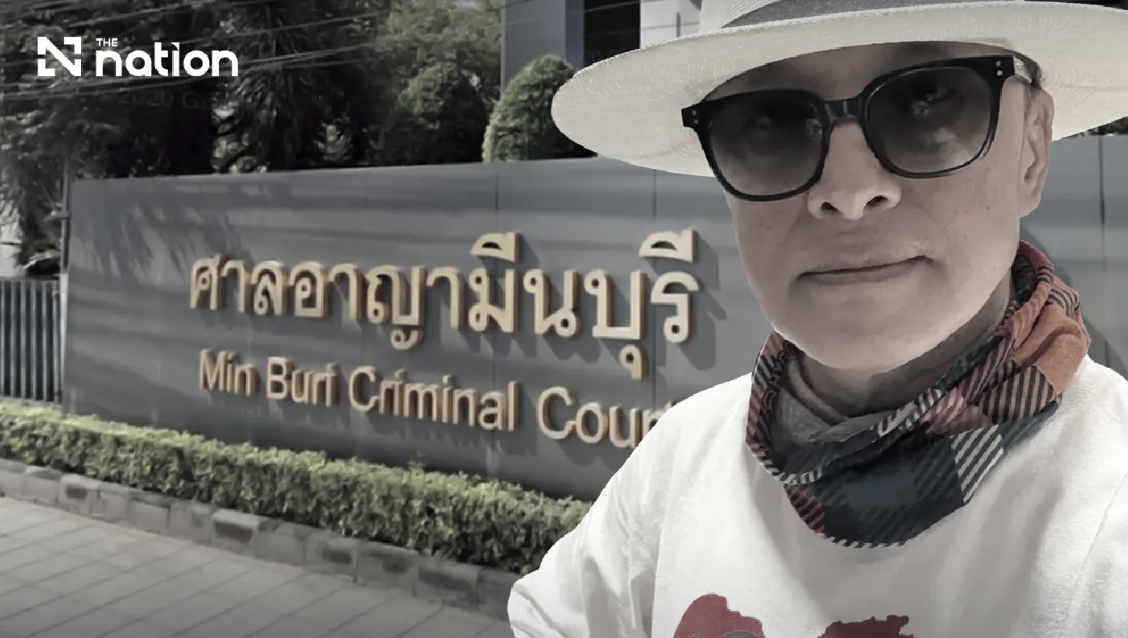
A Bangkok criminal court handed down a two-year prison sentence on Wednesday to Manasawin Nantasen, popularly known as Tik Shiro, following his conviction for drink-driving that resulted in the deaths of two people. The 64-year-old performer, who rose to international recognition during the late 1980s and 1990s for his distinctive stage persona featuring leather jackets, fedora hats, and dynamic choreography reminiscent of Michael Jackson, became the subject of intense public scrutiny following the tragic October 2024 incident in Bangkok.
The collision occurred when Manasawin's vehicle struck a stationary motorcycle on a Bangkok bridge, killing a 28-year-old woman who was on the bike and critically injuring her 21-year-old brother. The younger sibling subsequently succumbed to his injuries while hospitalised, transforming what could have been classified as a single fatality into a double tragedy. The circumstances surrounding the crash drew widespread attention not only because of the victim count but also because the accused held celebrity status in a nation where high-profile individuals have historically faced questions about unequal application of the law.
Manasawin's career trajectory reflected the broader entertainment landscape of Southeast Asia during the 1980s and 1990s, when Western pop influences merged with local performance traditions. His visual style and dance techniques earned him the sobriquet of Thailand's answer to the King of Pop, enabling him to capture audiences across multiple generations and establish himself as a cultural fixture in Thai entertainment. This prominence made the subsequent legal proceedings even more newsworthy, as public opinion became divided between those sympathetic to the star's apparent contrition and those demanding accountability regardless of celebrity status.
In its sentencing, the Bangkok court acknowledged several mitigating factors that influenced the judicial decision. The court statement noted that Manasawin had surrendered voluntarily and provided cooperative testimony during the proceedings, demonstrating what legal observers might interpret as acceptance of responsibility. Furthermore, the defendant attended the funeral services of both victims and agreed to financial compensation for the bereaved families, actions the court recognised as indicative of genuine remorse rather than mere legal posturing designed to minimise consequences.
Despite these mitigating circumstances, the court did not overlook the severity of the offence. The revocation of Manasawin's driving licence represented a permanent consequence that would extend beyond his incarceration period, effectively preventing him from operating any motor vehicle in Thailand for the remainder of his life. This sanction underscored the judiciary's determination to impose lasting consequences that reflected the gravity of causing death through reckless behaviour while intoxicated.
The case gained additional resonance in Thailand because of a viral video that emerged from the accident scene, showing the entertainer kneeling in visible distress. The footage circulated extensively across Thai social media platforms, generating considerable national discourse about celebrity accountability and whether famous individuals genuinely face the same legal consequences as ordinary citizens. Public reaction was mixed, with some observers viewing the image as authentic evidence of remorse, while others interpreted it as a calculated attempt at damage control.
The timing of this conviction acquires further significance when considered alongside concurrent developments in Thai celebrity legal matters. On the same Wednesday that the court announced Manasawin's sentence, rock musician Sek Loso was released from prison after serving marginally over one year for drug possession and illegal firearms charges. His early release prompted renewed speculation among Thai society regarding disparities in sentencing and whether famous figures receive preferential treatment within the justice system, regardless of whether they ultimately receive custodial sentences.
These recent cases have intensified an ongoing debate within Thailand about judicial consistency and the principle of equal protection under law. The country has experienced several high-profile incidents where wealthy or connected individuals appeared to escape accountability or received minimal consequences for serious crimes. The most notorious example remains the 2012 case of Vorayuth Yoovidhya, heir to the Red Bull fortune, who was accused of driving his Ferrari into a Bangkok police officer in a wealthy neighbourhood, killing the officer immediately. Despite a formal investigation, authorities never brought charges against Yoovidhya, a decision that generated considerable public outrage and shaped perceptions about elite impunity in Thai society.
Another illustrative case involved the son of former Pheu Thai Member of Parliament Chalerm Yubamrung, who allegedly discharged a firearm at another man in a crowded Bangkok nightclub following an altercation in 2001. Despite the serious nature of the alleged offence and numerous witnesses, the defendant was ultimately acquitted based on insufficient evidence, a legal outcome that many Thais interpreted as reflecting political and social influence rather than genuine evidentiary gaps.
These precedents and parallel cases have created a public perception that Thailand's legal system operates on two tiers, one for ordinary citizens and another for those possessing wealth, fame, or political connections. The Manasawin conviction, while resulting in imprisonment, does not definitively resolve this perception problem because commentators note that celebrity defendants in comparable cases have received lighter treatment or avoided prosecution altogether. The sentence therefore represents a partial but not complete departure from Thailand's historical pattern of differential justice based on social status.
For Malaysian and broader Southeast Asian observers, the case illuminates persistent challenges facing entertainment industry regulation and criminal accountability across the region. Many Southeast Asian nations grapple with similar questions about whether legal systems can function equitably when celebrities possess disproportionate influence and resources. The Manasawin case suggests that public pressure and viral publicity can occasionally force judicial proceedings to proceed against famous defendants, though questions remain about whether sentences would be identical if the accused lacked celebrity status or whether the outcome reflects genuine legal consistency or performative justice designed to satisfy public sentiment.

