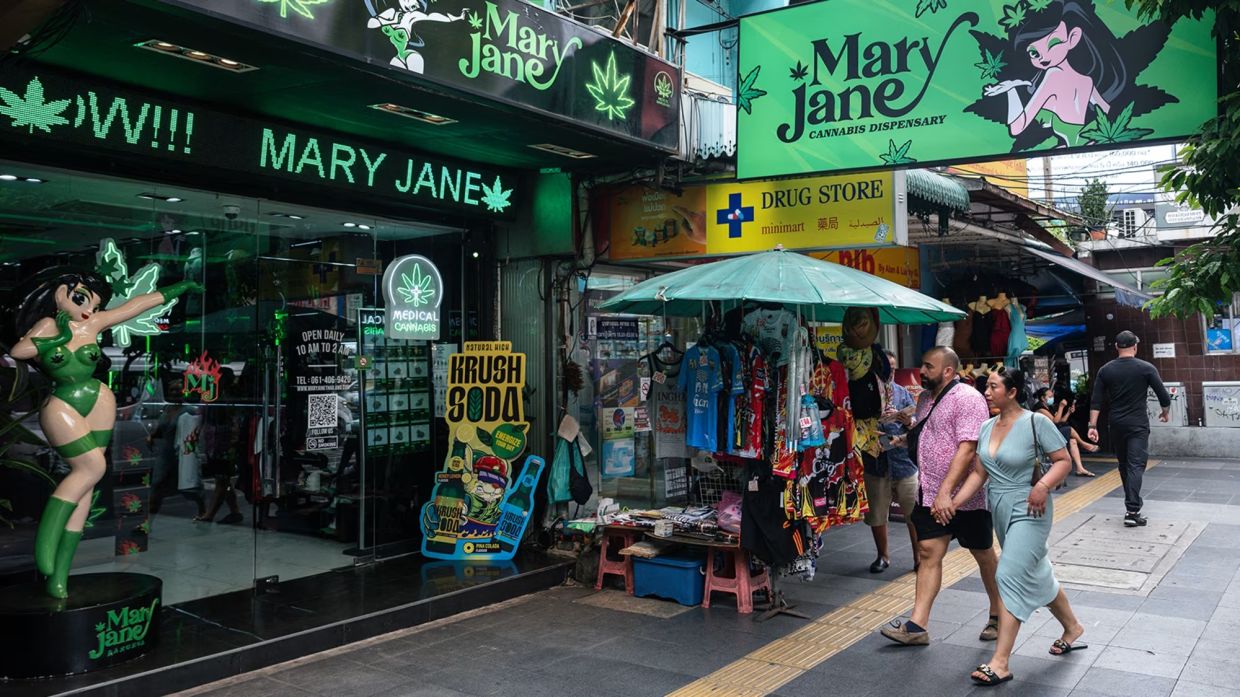
Thailand's approach to cannabis regulation has become a focal point of tension between public health authorities and the nation's fledgling legal cannabis industry, prompting the House Public Health Committee to convene high-stakes negotiations over whether the substance should be reclassified as a controlled narcotic. The committee meeting, presided over by Sakoltee Phattiyakul on June 18, gathered stakeholders with fundamentally opposing visions for the country's cannabis framework. The question at hand strikes at the heart of Thailand's struggle to manage a liberalisation process that has created unintended consequences across enforcement, economic, and public health domains.
When Thailand decriminalised cannabis in June 2022, the decision positioned the kingdom as a regional pioneer in drug policy reform and attracted international attention from investors and researchers. Yet three years into the experiment, the regulatory architecture has proven inadequate to manage the flood of market activity, unlicensed cultivation, and informal sales that have flourished in the gaps between existing laws. The current framework, which classifies cannabis flowers as a controlled herb under the Protection and Promotion of Thai Traditional Medicine Wisdom Act 1999, has created a peculiar situation where cannabis can be sold legally in certain contexts while remaining subject to criminal penalties in others. Dr Tewan Thaneerat, deputy director-general of the Department of Thai Traditional and Alternative Medicine, acknowledged during the meeting that concerns have persisted since the initial liberalisation, noting that even the June 2025 regulations addressing research, sales, processing and exports have failed to close systemic loopholes.
The medical establishment and public health advocates have coalesced around a position that cannabis should temporarily return to the narcotics list pending completion of a comprehensive cannabis law. Ekkapop Sittiwantana, representing the People's Party on the committee, articulated this strategy as a circuit-breaker mechanism to halt the proliferation of unregistered cultivation and direct informal sales while proper legislative frameworks are drafted. Assoc Prof Dr Smith Srisont, speaking for a network of medical professionals, academics and civil society organisations focused on drug-related harms, extended this argument by pointing to empirical evidence of cannabis availability's public health impact, particularly among young people. He highlighted a critical regulatory weakness: while cannabis extracts containing more than 0.2 percent THC remain classified as narcotics, the flower itself escapes that classification despite its psychoactive properties. This technical distinction has enabled operators to exploit the gap, allowing other plant parts to exist outside criminal controls when cultivated, effectively creating a patchwork system where enforcement becomes arbitrary and inconsistent.
The Food and Drug Administration offered a more measured assessment during the proceedings, emphasising that herbal medicines derived from cannabis remain subject to rigorous oversight through its licensing system covering production sites, processing plants, imports, and certified retail locations. The agency reported that initial testing of cannabis-based products showed most met label standards and quality requirements. However, FDA representatives candidly acknowledged that the fundamental problem lies not with licensed operators but with sales channels that have never entered the legal system, indicating that bureaucratic control mechanisms cannot address an issue rooted in the informal economy's competitive advantage over regulated businesses. This admission revealed the underlying failure of Thailand's regulatory approach: the government created a legal pathway for cannabis commerce but failed to make it sufficiently attractive or accessible compared to unlicensed alternatives.
Cannabis operators and their advocacy networks presented a starkly different narrative during the committee meeting, one emphasising economic vulnerability and institutional dysfunction rather than regulatory gaps. The Thai Cannabis Future Network argued that legitimate businesses attempting to operate within legal frameworks face existential threats from black market competition, illegal imports and the inherent instability that accompanies incomplete legislation. Beyond market pressures, they raised troubling allegations regarding official demands for improper benefits linked to cannabis licences and problems with medical prescriptions that are simultaneously too expensive for farmers to obtain yet allegedly subject to informal trading outside healthcare contexts. These claims suggest that regulatory capture and corruption may be undercutting the legitimacy of the legal system itself, creating perverse incentives that drive actors toward informal channels despite theoretical legal options. The network's broader argument—that cannabis possesses economic and traditional value beyond conventional medical applications—reflects a growing consciousness among some stakeholders that Thailand's cannabis sector could contribute to rural development and agricultural diversification if properly structured.
The dispute over cannabis regulation fundamentally reflects Thailand's broader challenge in balancing development objectives against public health protection. Farmers who converted cultivation land to cannabis following the 2022 liberalisation now face an uncertain future if the substance returns to the narcotics list, potentially destroying investments they made under then-legal circumstances. Conversely, the evidence of widespread uncontrolled access raises legitimate public health concerns, particularly regarding youth exposure and the adequacy of dosing controls and consumption restrictions. Committee chairman Sakoltee's directive to compile comprehensive lists of licensed cannabis shops in Bangkok and FDA-certified products suggests the authorities lack even basic visibility into the legal market's actual scope and distribution, a troubling gap for a substance that requires careful monitoring. His subsequent emphasis on rules preventing cannabis retail locations near schools indicates growing concern about youth access patterns.
The Public Health Ministry's delayed cannabis law, which has been undergoing Cabinet review and public hearings expected to conclude in late July, represents the government's attempt to construct a permanent regulatory architecture to replace the current ad-hoc approach. The draft bill presumably addresses questions about permitted cultivation, retail distribution, product standards, advertising restrictions, and enforcement mechanisms that the existing framework leaves dangerously unspecified. Yet the law's journey through Thailand's political system has already demonstrated the legislative process's vulnerability to political disruption—the draft submitted under a previous government never reached Parliament before dissolution, suggesting that cannabis regulation remains politically contentious enough to become a casualty of broader governmental transitions. The committee's indication that it stands ready to consider alternative legislative proposals alongside the Public Health Ministry's bill suggests parliament may ultimately pursue a compromise approach rather than the medical establishment's preferred immediate reclassification.
Thailand's cannabis policy crossroads carries implications extending beyond its borders. As a regional economic power and cultural influence centre, Thailand's approach will likely shape cannabis policy discussions across Southeast Asia, where several neighbours have indicated interest in potential liberalisation. The kingdom's experience demonstrating how incomplete regulation enables black market proliferation, how regulatory gaps create enforcement confusion, and how stakeholder conflicts can paralyse policymaking offers cautionary lessons for potential reformers in the region. Simultaneously, the apparent dysfunction in Thailand's own cannabis market—where legal operators claim they cannot compete with unlicensed competitors while alleging official corruption—raises uncomfortable questions about whether liberalisation without robust institutional capacity and genuine commitment to enforcement merely replaces criminal markets with dysfunctional legal ones that serve neither public health nor legitimate economic interests.

