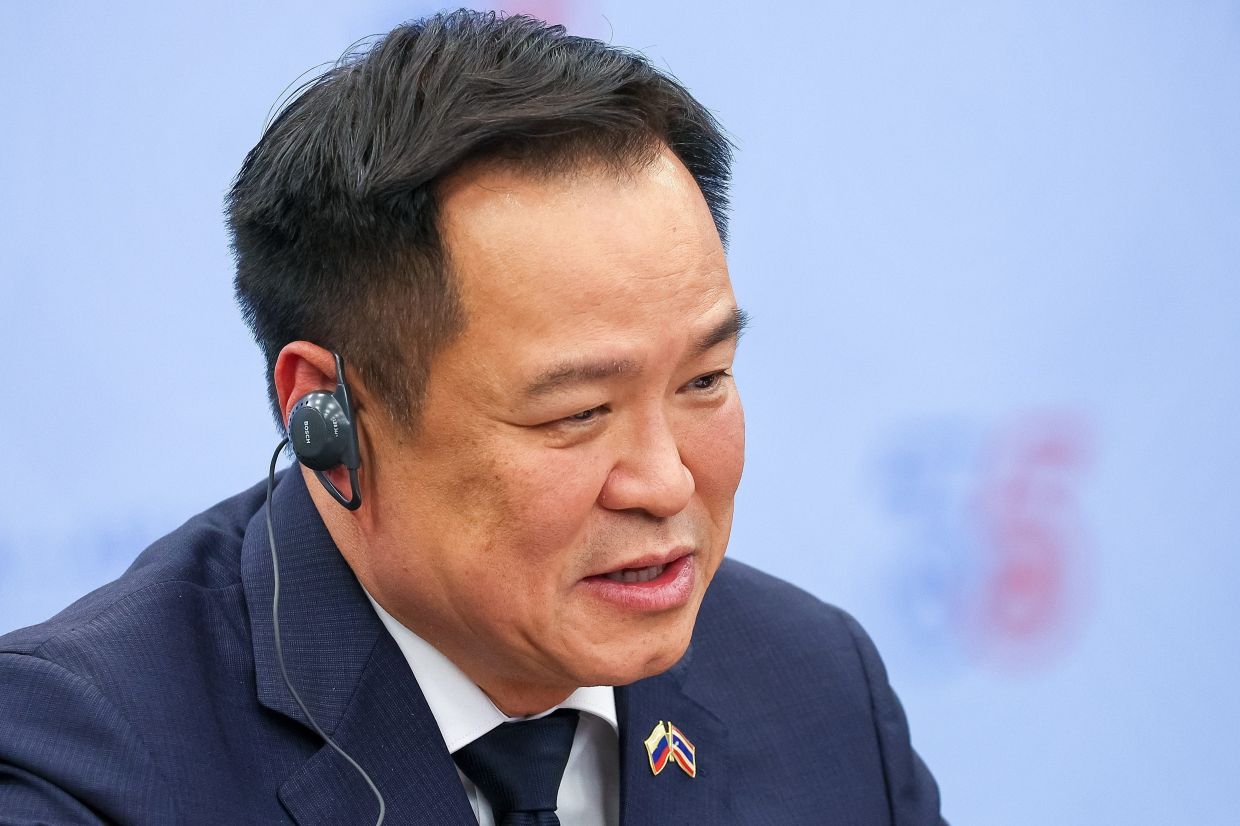
A hundred days into his tenure as Thailand's 32nd prime minister, Anutin Charnvirakul has largely succeeded in keeping the kingdom's political ship steady whilst navigating an unexpected international storm. Sworn in on March 20 following his coalition's victory in the February 2026 general election, the 59-year-old leader has tackled an immediate energy crisis and delivered popular household subsidies. Yet beneath these visible accomplishments lies a more sobering reality: the government has shown little appetite for the structural economic reforms that experts believe Thailand urgently requires to compete in Southeast Asia.
The honeymoon period thrust upon Anutin's administration came with immediate trials. Within weeks of taking office, the February 28 United States-Israel military operations against Iran sent shockwaves through global energy markets. Oil exports from the Middle East faltered, triggering supply chain disruptions that reverberated across Southeast Asia. Thai petrol stations faced panic buying as motorists feared shortages and price spikes. The crisis deepened as fighting in the region spooked shipping through the Strait of Hormuz, pushing crude prices above US$100 a barrel for an extended stretch and laying bare how vulnerable economies like Thailand remain to geopolitical upheavals beyond their borders.
The government's response demonstrated pragmatic crisis management. By deploying the national Oil Fuel Fund to subsidise fuel prices, reducing borrowing costs for farmers and manufacturers, and instructing coal-fired power stations to operate at maximum capacity, Anutin's team managed to cushion the initial impact. Diversification efforts saw imports from the United States, Malaysia and Brunei increase to offset Middle Eastern supplies. Political science researcher Mathis Lohatepanont from the University of Michigan observed that the administration had "weathered the initial storm" and "managed to avoid further instability" despite early supply disruptions. Crucially for political survival, the streets remained calm—no mass protests erupted, a notable achievement given Thailand's history of street-level political activism.
Beyond crisis response, Anutin delivered tangible wins on his coalition's electoral promises. His Bhumjaithai Party had captured the most parliamentary seats by championing nationalist rhetoric and adopting a hardline stance toward Cambodia's territorial claims. As prime minister, Anutin has maintained this posture, keeping military forces at the forefront of border defence and unilaterally terminating a 2001 maritime boundary agreement with Phnom Penh—a move that escalated the dispute to United Nations arbitration. This decisiveness resonated with his political base and broader Thai public sentiment.
The second quick win came through the "Thais Help Thais Plus" subsidy scheme launched on June 1. Under this programme, approximately 30 million eligible citizens aged 18 and older can purchase selected goods from participating retailers at just 40 per cent of the ticket price, with government covering the remainder. With 176 billion baht (US$5.27 billion) allocated to the initiative, the scheme offers immediate relief to households squeezed by inflation and stagnant wages. It represents exactly the kind of short-term, politically attractive intervention that generates goodwill heading into the crucial first hundred days of any government.
Yet analysts and academic observers distinguish sharply between managing crises and engineering economic transformation. Chulalongkorn University's Puangthong Pawakapan acknowledged that whilst the subsidy scheme addresses immediate cost-of-living pressures, it "does absolutely nothing to solve the underlying economic crisis." The scheme, she and others emphasised, provides temporary relief rather than durable solutions. Lohatepanont concurred, noting that "it is too early to assess the Anutin government's success on longer-term structural policies." Visible day-to-day competence, in other words, should not be mistaken for strategic economic direction.
Thailand's macroeconomic situation demands precisely such strategic direction. The nation has failed to achieve annual economic growth exceeding three per cent over the past five years—a troubling stagnation for a middle-income nation competing with more dynamic regional peers. The International Monetary Fund forecasts Thailand's gross domestic product will expand by just 1.5 per cent in 2026, making it the slowest-growing major economy in Southeast Asia. Vietnam is projected at 7.1 per cent growth, Cambodia at four per cent, and even Myanmar, embroiled in civil conflict, at three per cent. Anutin's administration confronts these headwinds against a backdrop of ageing demographics and soaring household debt, structural impediments that require sustained policy innovation rather than cyclical stimulus cheques.
The prime minister has articulated ambitions to develop new economic engines through digital technology, artificial intelligence and renewable energy. Yet these statements remain aspirational. "Its energies have gone into routine administration and day-to-day management rather than into any initiative aimed at meaningful economic or political change," observed Stithorn Thananithichot, a political scientist at Chulalongkorn University. The absence of a credible roadmap translates into a continued drift that previous Thai governments have failed to correct. Thailand's history of military coups and short-lived administrations over the past two decades has fractured policy continuity, allowing structural economic problems to crystallise and compound.
Constitutional reform represents perhaps the starkest test of Anutin's willingness to pursue substantive change. In a referendum held alongside February's election, nearly 60 per cent of voters—approximately 20 million Thais—signalled support for revising the 2017 Constitution, widely regarded as fundamentally undemocratic given its drafting under Prayut Chan-o-cha, the general who seized power in the 2014 coup. The magnitude of public endorsement was unmistakable. Yet momentum has stalled dramatically. Stithorn notes pointedly that "a government that intended to reform would have signalled at least one substantive structural commitment at the outset; this one did not, and that absence is by design rather than a matter of time." The silence on constitutional reform suggests the Anutin government views the democratic mandate for change as advisory rather than binding.
Questions have equally surfaced regarding cabinet appointments, hinting at a preference for continuity and incremental adjustment over transformative leadership. The composition of the administration may signal whether Anutin intends to elevate reform advocates or select figures comfortable with incremental tinkering. As Thailand enters the second phase of Anutin's tenure, the coming months will clarify whether his government represents a genuine pivot toward long-overdue structural renewal or merely another chapter in Thailand's exhausting cycle of crisis management followed by strategic drift. For Malaysian and other Southeast Asian observers, Thailand's trajectory matters: a thriving, innovative Thailand benefits the entire region, whilst continued stagnation invites brain drain and competitive disadvantage that affects the broader community.

