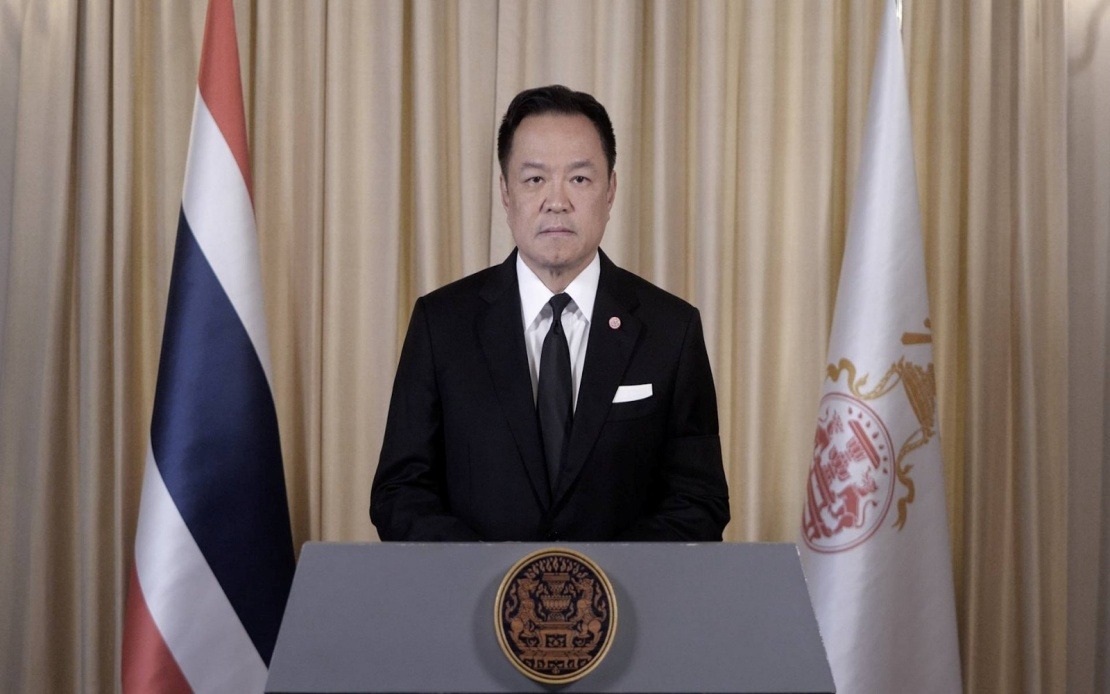
Thailand's government has signalled optimism about the reported ceasefire agreement between the United States and Iran, viewing the potential breakthrough as a stabilising force for both the regional and global economy. Prime Minister Anutin Charnvirakul made the comments at Government House on Monday, expressing confidence that resolving West Asian tensions could help alleviate mounting economic pressures facing the kingdom and its trading partners.
Anutin emphasised that Thailand possesses the institutional capacity to weather external shocks and navigate an increasingly volatile geopolitical landscape. Rather than adopting a reactive posture towards international crises, he underscored the government's reliance on comprehensive long-term strategic planning to maintain economic resilience. This forward-looking approach reflects Bangkok's experience managing supply chain disruptions during the pandemic and subsequent global trade volatility.
The Thai Prime Minister framed any diplomatic settlement in West Asia as a positive development with far-reaching implications. He specifically noted that such an agreement would serve as a confidence-building measure capable of addressing multiple interconnected crises affecting the global economy. His measured optimism suggested that while Thailand remains vigilant about external developments, the country is not overly dependent on any single geopolitical outcome.
The backdrop for these comments includes US President Donald Trump's announcement on Sunday that an agreement with Iran had been finalised. Trump indicated that the arrangement would involve reopening the Strait of Hormuz and lifting the American naval blockade that has constrained shipping through one of the world's most strategically important maritime passages. These measures carry significant implications for global energy markets and international commerce.
Deputy Prime Minister and Finance Minister Ekniti Nitithanprapas provided a more explicitly economic perspective on the potential ceasefire. He articulated the direct benefits that could accrue to Thailand should hostilities genuinely cease, emphasising that reduced geopolitical risk would translate into lower energy prices and decreased economic uncertainty. For an energy-importing nation like Thailand, which relies heavily on regional oil and liquefied natural gas supplies, such price moderation would provide meaningful relief to household budgets and manufacturing costs.
Ekniti's outlook reflects broader regional concerns about energy security and price stability. Southeast Asian economies, collectively dependent on imported petroleum products, face significant exposure to disruptions in Middle Eastern supply chains. A sustained ceasefire would remove a major source of price volatility that has complicated economic planning across the region. The Finance Minister suggested that such stability could enable stronger-than-expected economic growth, as businesses and households gain confidence to increase spending and investment.
Yet beneath this optimism lies a more nuanced reality. Ekniti acknowledged that the government intends to maintain its 200-billion-baht energy transition programme regardless of oil price trajectories. This commitment signals that Thai policymakers view energy diversification as a structural imperative rather than merely a response to temporary price spikes. The kingdom's substantial reliance on imported fossil fuels creates a persistent vulnerability that cannot be adequately addressed through market-based solutions alone.
The Finance Minister's position underscores a critical paradox facing developing economies in Southeast Asia. While lower energy prices provide short-term relief to consumers and businesses, they simultaneously reduce the economic incentive for investing in renewable energy infrastructure and technological alternatives. Thailand's insistence on pursuing its energy transition programme demonstrates recognition that long-term energy security and climate resilience require sustained commitment to structural economic transformation, independent of near-term price movements.
From a Malaysian and broader Southeast Asian perspective, the Thai government's cautiously optimistic stance reflects shared regional interests in geopolitical stabilisation. The potential ceasefire touches on multiple dimensions of regional concern: energy security, supply chain stability, inflation management, and confidence in international markets. Any reduction in Middle Eastern tensions would ease pressure on regional shipping routes, lower shipping insurance premiums, and reduce uncertainty in global commodity markets that directly affect Southeast Asian exporters and consumers.
However, the Thai government's emphasis on long-term strategic planning rather than day-to-day crisis reaction offers an important lesson for the region more broadly. While short-term diplomatic breakthroughs may provide temporary relief, structural economic vulnerabilities—such as energy import dependence—require sustained policy commitment and investment. Thailand's energy transition programme exemplifies this recognition that genuine economic resilience cannot rest solely on favourable external conditions.
The timing of these statements, coming as global economic uncertainty persists, reflects the balancing act that Southeast Asian governments must perform. Leaders must acknowledge geopolitical realities and international developments while maintaining domestic confidence in their economic management. Thailand's approach—welcoming positive international developments while maintaining focus on independent strategic planning—suggests a mature recognition of both regional agency and external constraint.
Looking forward, the success of any US-Iran ceasefire will be measured not merely by immediate energy price movements but by its durability and the structural changes it enables across global supply chains. For Thailand and other Southeast Asian economies, the real value of such an agreement would lie in creating breathing room for executing long-term development strategies. In this sense, a sustained ceasefire becomes valuable precisely because it enables—rather than replaces—the patient institutional work of economic transformation that genuine resilience demands.

