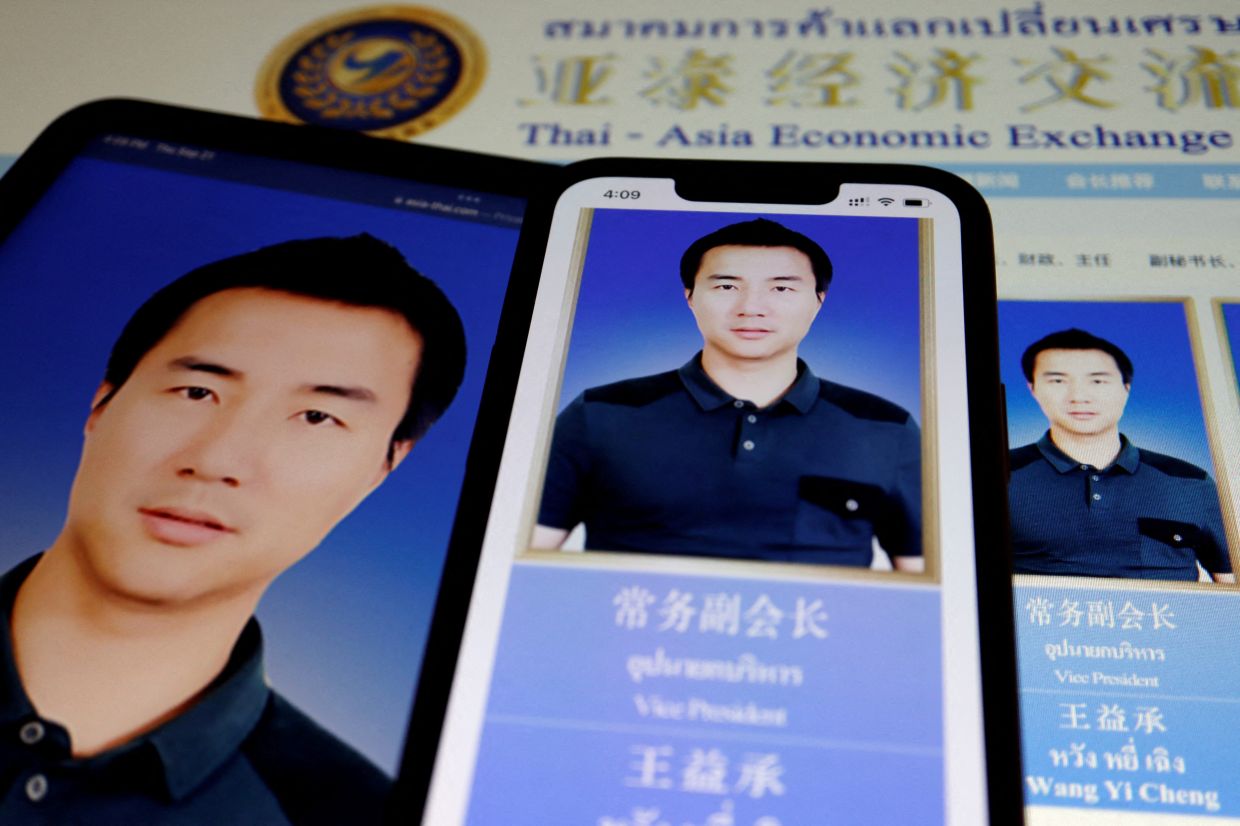
Thai authorities have escalated enforcement action against transnational financial crime by issuing an arrest warrant for Wang Yicheng, a Chinese businessman believed to have orchestrated a sophisticated money-laundering operation centred on illegal cryptocurrency mining. The Department of Special Investigation formally charged Wang in November with theft and violations of the Computer Crimes Act, according to a statement from spokesman Major Woranan Srilam, who confirmed the businessman has likely fled Thailand and is now the subject of an international manhunt.
Wang's case represents a convergence of several illicit financial streams plaguing Southeast Asia. Authorities allege he operated as a central node in a network that channelled proceeds from "pig-butchering" scams—confidence schemes in which victims are deceived into fraudulent cryptocurrency investments—alongside revenue from illegal online gambling operations. The apparatus relied on illegal cryptocurrency mining operations that consumed approximately US$28 million worth of stolen electricity, marking one of the largest energy theft cases investigators have encountered in recent years. This dual approach enabled the network to both generate fresh income through mining and simultaneously obscure the origins of stolen funds through the conversion process.
The investigation gained particular prominence following a 2023 Reuters investigation that traced at least US$9.1 million in scam-linked cryptocurrency flowing into accounts bearing Wang's name between 2021 and 2022. Blockchain analysis firms including TRM Labs identified the source accounts as connected to transnational scam operations, though investigators could not conclusively determine whether Wang personally controlled the accounts or whether his identity had been appropriated for the transactions. The ambiguity highlights a persistent challenge in crypto investigations: the difficulty of establishing direct culpability in an ecosystem designed to obscure beneficial ownership.
Wang's prominence extended beyond the underworld into Thailand's legitimate business establishment. He served as vice president of the Thai-Asia Economic Exchange Trade Association, an organisation ostensibly dedicated to fostering Thai-Chinese commercial partnerships. His position afforded him access to senior Thai police and government officials who served as advisers or supporters of the trade group, creating what authorities now view as a potential shield against investigation. The association subsequently distanced itself from Wang following the Reuters report, claiming background checks had revealed no criminal history and asserting that his personal conduct bore no relation to the organisation's activities.
The scale of victimisation underscores the human cost of such operations. A seventy-one-year-old California resident was defrauded of his entire US$2.7 million life savings after being deceived by a scammer posing as a young woman in an online relationship scenario. His experience exemplifies how pig-butchering schemes exploit psychological vulnerabilities to extract life-altering sums from individuals across continents. The US Department of Justice separately identified Wang as a suspect in digital-asset fraud, leading to the seizure of approximately US$500,000 in cryptocurrency from accounts in his name in June 2023.
Wang's connections to the legitimate technology sector complicate the investigation landscape. Bitmain, a major bitcoin mining equipment manufacturer, disclosed in 2023 that Wang maintained a close commercial relationship with the firm and that it had supplied him with mining hardware through normal commercial channels. This access to industrial-scale mining infrastructure would have substantially amplified the network's capacity for both legitimate and illegitimate operations. Bitmain declined to comment further on the Thai warrant, while the Bangkok-based trade association similarly avoided responding to enquiries about its former vice president.
Thailand's intensified crackdown on such networks reflects broader regional concerns about Chinese-operated criminal syndicates exploiting Southeast Asian infrastructure. In recent months, governments across the region have significantly elevated enforcement operations targeting largely Chinese-managed scam operations, many of which function from industrial compounds staffed partly by human trafficking victims. According to United Nations assessments, these networks generate billions of dollars annually, representing one of the most lucrative criminal enterprises in the region. The DSI's concurrent arrest warrants for four unnamed Chinese nationals and four Myanmar nationals suggest the investigation has uncovered an extended conspiracy rather than an isolated operation.
The case illuminates how cryptocurrency infrastructure can be weaponised by transnational crime syndicates seeking to integrate illicit proceeds into financial systems. Illegal mining operations serve multiple purposes within such networks: they generate ostensibly legitimate income through electricity theft, they provide a mechanism for converting stolen funds into tradeable digital assets, and they create layers of apparent economic activity obscuring the true origins of wealth. This integration of technology-based money laundering with conventional fraud represents an evolving sophistication in organised crime methodology that regulatory agencies across Asia are still developing capacity to counteract.
China's Foreign Ministry responded to enquiries by claiming unfamiliarity with the situation, a position that neither confirms nor denies any diplomatic engagement on Wang's extradition or prosecution. The absence of a coordinated official response suggests potential complications in bilateral law enforcement cooperation, though intelligence sharing between Thai and Chinese agencies may proceed through non-public channels. Wang's reported flight from Thailand indicates he likely possesses significant financial resources and international mobility, potentially positioning him in jurisdictions beyond current enforcement reach.
The implications for Malaysia and other regional economies merit careful consideration. The sophistication and scale of the networks exposed in Thailand's investigation suggest that similar operations likely maintain parallel infrastructure throughout Southeast Asia. Malaysian financial institutions, telecommunications providers, and electricity suppliers may unknowingly be supporting comparable schemes. The DSI's success in tracking the crypto-to-electricity-theft pipeline offers valuable investigative methodology that Malaysian authorities could adapt. Furthermore, the case demonstrates how ostensibly legitimate business associations can provide cover for criminal actors, warranting enhanced due diligence in vetting business leadership and beneficial ownership structures within regional trade organisations.
The Wang case also underscores the vulnerability of cryptocurrency systems to exploitation by organised crime. While digital assets offer genuine benefits for legitimate commerce, the pseudonymous nature of many transactions and the difficulty of tracing funds across blockchain networks create persistent challenges for law enforcement. Malaysian regulators developing cryptocurrency oversight frameworks should integrate lessons from Thailand's investigation, particularly regarding the detection of unusual mining activities and the identification of shell companies used to legitimise criminal proceeds. The arrest warrant for Wang remains active internationally, though his apprehension will ultimately depend upon cooperation between Thai authorities and the jurisdictions where he may currently reside.

