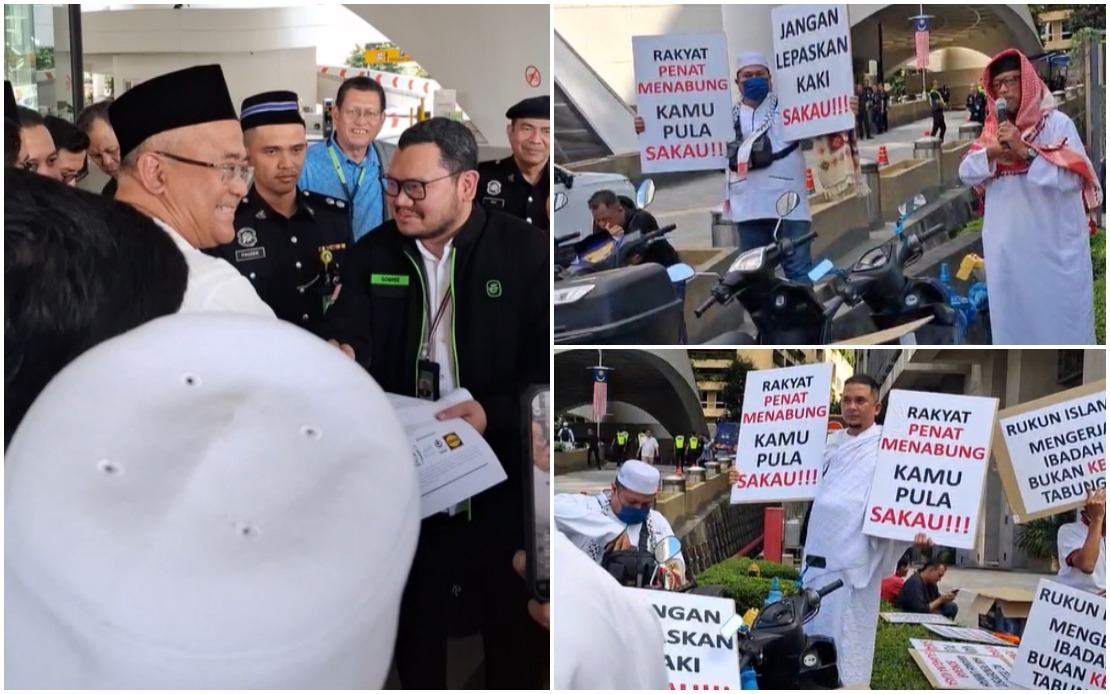
The leadership of the MADANI political coalition has issued a forceful call for the investigations stemming from the Royal Commission of Inquiry into Lembaga Tabung Haji to unfold without interference from any quarter, signalling heightened concern that political considerations might compromise what is fundamentally a matter of public trust in Malaysia's Islamic banking sector. Speaking at a solidarity gathering in Kuala Lumpur, coalition chairman Amir Zuhair Abdull Khalid underscored that the integrity of the probe must be preserved, cautioning all stakeholders against attempts to meddle with the Malaysian Anti-Corruption Commission's ongoing work.
The RCI report, which examined TH's management and governance between 2014 and 2020, has become a flashpoint in Malaysian politics because it raises questions not merely about administrative competence but about the safeguarding of funds entrusted by millions of Muslim depositors across the country. The inquiry uncovered evidence suggesting political interference in board appointments and institutional governance during its investigative period, a matter that extends well beyond routine administrative scrutiny. For the MADANI coalition, ensuring that these findings lead to genuine accountability through the courts rather than being diluted by political wrangling represents a test of the government's commitment to institutional reform and transparency.
Amir Zuhair's message carried a pointed emphasis on respecting established legal processes. He stressed that accusations of wrongdoing cannot be resolved through public debate or political positioning, but only through proper investigation by competent authorities followed by prosecution and judicial determination. This stance reflects concern within reform-minded circles that Malaysia's recent history includes instances where investigations into high-profile cases have been derailed or compromised by political considerations, undermining public confidence in institutions meant to protect the public interest. By calling for the MACC to be left to conduct its work unimpeded, the MADANI coalition is effectively drawing a line against the kind of political interference that the RCI itself identified as a problem within TH's governance structure.
The framing of the issue as transcending ordinary political debate is significant. Amir Zuhair positioned the matter as fundamentally about trust in the stewardship of Islamic financial instruments, a particularly sensitive concern in Malaysia where Tabung Haji has historically served as a savings mechanism for ordinary Muslim Malaysians preparing for the hajj pilgrimage. Losses or mismanagement at this institution represent not merely financial setbacks but breaches of the implicit social contract between the institution and its depositors. This moral dimension helps explain why multiple Islamic civil society organizations have mobilized around the issue, viewing it as affecting the spiritual and financial wellbeing of millions of Malaysians.
The coalition's emphasis on allowing courts to determine guilt or innocence carries an implicit acknowledgment that some individuals connected to TH have already begun mounting denials regarding the RCI's findings. Rather than engage in point-by-point public refutation, Amir Zuhair advocated channeling such disputes through formal legal proceedings where evidence can be tested, witnesses examined, and decisions rendered by impartial judges. This approach, though standard in principle, becomes notable in a Malaysian context where political influence has occasionally interrupted the normal progression from investigation to prosecution to trial.
Multiple Islamic civil society coalitions have put forward a comprehensive 10-point agenda for action stemming from the RCI report. These demands include immediate legal prosecution of wrongdoers, recovery of misappropriated assets, full implementation of the RCI's recommendations for institutional reform, and sustained governance improvements under the MADANI government's watch. The coalition comprises established Islamic organizations including WADAH, IKRAM, HALUAN, and ABIM, indicating that concern about TH governance spans a wide spectrum of the Malaysian Islamic civil society landscape rather than being confined to any single political camp.
The recovery of losses represents a particularly pressing concern for stakeholders. If funds were indeed misappropriated or lost through negligent management, determining the extent of losses and pursuing recovery becomes essential not only for justice but for restitution to affected depositors. The RCI's investigative period encompassed several years during which the institution's financial health may have been compromised, and any legal proceedings will need to establish clear liability for those losses to enable proper remedies.
Implementation of the RCI's reform recommendations touches on the structural changes needed to prevent recurrence of the governance failures documented in the report. These recommendations likely address board composition, oversight mechanisms, financial controls, and procedural safeguards against political interference in institutional decision-making. For the MADANI government, committing to these reforms signals an attempt to differentiate itself from previous administrations regarding institutional accountability, though actual implementation will be scrutinized closely by civil society.
The call for continued governance reforms under the MADANI administration reflects awareness that a single inquiry report, however thorough, does not automatically resolve institutional vulnerabilities. Sustained attention to strengthening TH's governance structure, ensuring that board appointments reflect merit rather than political patronage, and establishing robust internal controls against mismanagement will be necessary over an extended period. For Malaysian observers, the trajectory of TH reforms will provide a concrete test case of whether the present government genuinely prioritizes institutional integrity or whether political considerations remain the ultimate determinant of accountability in sensitive cases.
The timing of these coalition statements also matters within Malaysia's broader political context. With scrutiny intensifying on various state institutions and their financial management practices, the messaging from MADANI-aligned organizations effectively signals that political reform constituencies are watching closely to see whether investigations proceed freely or become subject to political calculation. This public positioning helps establish accountability that, while not directly enforceable, creates political cost for any perceived interference with the MACC's work.
For depositors and their families who have entrusted savings with TH, the commitment to transparent investigation and proper legal process offers at least procedural reassurance that their interests are being advocated for by organized civil society groups. Whether such advocacy translates into meaningful recovery of losses or meaningful institutional reform will determine whether this moment represents a genuine turning point in Malaysian governance or merely another cycle of investigation followed by slow institutional forgetting.

