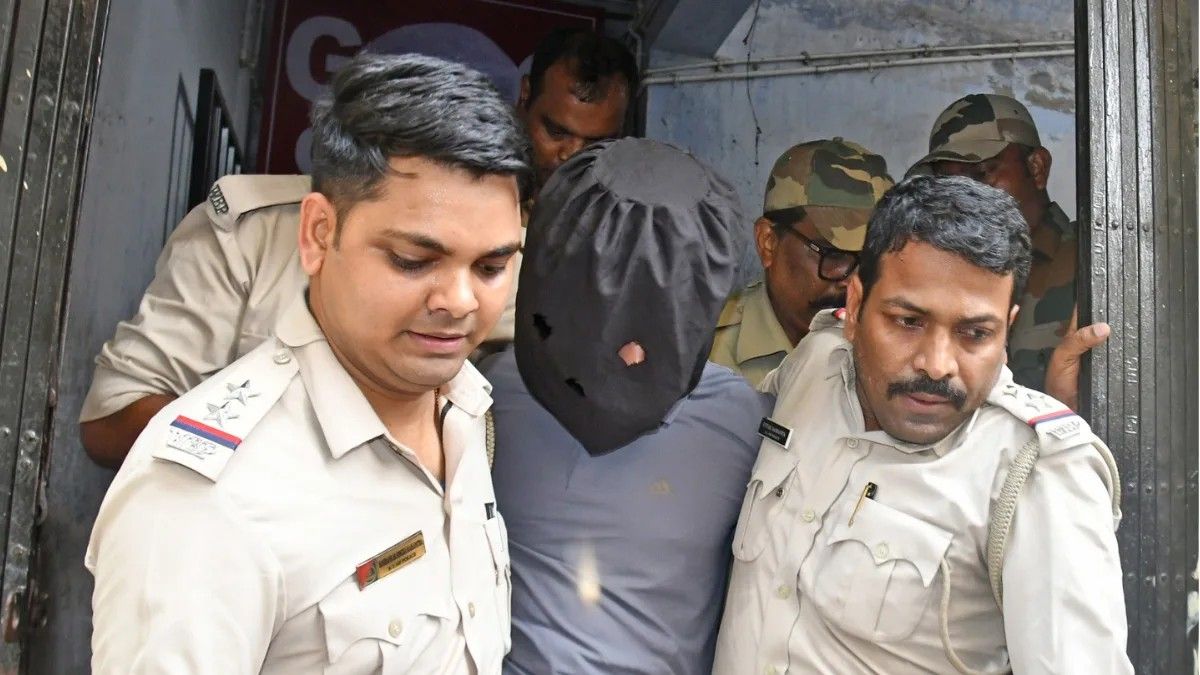
A 24-year-old businessman has been arrested in West Bengal's Bardhaman district on suspicion of involvement with the Jaish-e-Mohammed (JeM) terror group, marking another security flashpoint in a region that gained notoriety for harbouring a sleeper cell of the Jamaat-ul-Mujahidin (JMB) over a decade previously. The Friday arrest of Hamim Mondal comes as investigators allege he maintained encrypted communications with handlers linked to Pakistan's Inter-Services Intelligence, and had begun taking unusual preparatory steps that authorities believe were aimed at targeting senior government personnel in the state.
According to the police account, Mondal operated as a member of a Jaish-e-Mohammed module commanded by an individual named Sajjad Bhat, and had cultivated contacts with militant organisations across South Asian borders. What initially drew law enforcement attention was his recent online procurement of uniforms bearing the insignia of the Central Reserve Police Force (CRPF). Detectives believe these garments formed part of a larger scheme to gain proximity to state Chief Minister Suvendu Adhikari during his security movements, potentially enabling an unspecified attack or assassination attempt. The allegation, if substantiated, would represent a brazen infiltration strategy designed to breach the protective cordon around a high-profile political figure.
The Special Task Force (STF) that conducted the Friday morning raid recovered digital devices from Mondal's possession, including a laptop and mobile phone whose contents allegedly yielded evidence of digital conversations with individuals suspected of working for Pakistani intelligence services. These encrypted communications form what investigators describe as a critical thread linking Mondal to a broader cross-border network. The digital forensic findings appear central to the state police's classification of the case as involving espionage, conspiracy with foreign hostile elements, and recruitment activities aimed at building a local terrorist apparatus on Indian soil.
Mondal was apprehended whilst exercising at a gymnasium located within Renaissance Township, an upscale residential development on Bardhaman's western perimeter. His arrest followed a lead generated from a telephone threat allegedly directed at Minister of State Umesh Rai several days earlier. By tracing the caller's phone number, which pointed to a young woman from the Birbhum district, investigators ultimately established connections to Mondal and uncovered what they characterise as his covert operational activities conducted under the pretence of legitimate civilian business pursuits. The case demonstrates how threat networks can operate camouflaged within ordinary suburban routines and normalcy.
The suspect maintains a pattern of movement between Howrah and Bardhaman, regularly commuting approximately 25 kilometres from his grandmother's residence in Bankra, Howrah, where he was primarily raised after childhood. Three months prior to his arrest, Mondal had leased a three-room apartment at Rohini Tower within the Renaissance Township complex. When negotiating the rental agreement, he used identity documents belonging to his father, Moniruddin Mondal, a private company employee in Kolkata, ostensibly telling the property owner and local intermediaries that the accommodation was needed for his younger siblings. This misdirection about the true purpose of the lease and use of familial documentation suggests deliberate efforts to obscure the rental's actual occupancy and function.
By professional background, Mondal had established a modest labelling and printing business in Pilkhana, Howrah, following completion of his formal education. This entrepreneurial veneer provided conventional economic justification for his movements and financial transactions, characteristics typical of individuals seeking to maintain operational security while engaged in covert activities. The business provided plausible cover for his frequent travel between districts and access to rental accommodation in the township, allowing him to compartmentalise his movements without raising immediate suspicion among casual observers or neighbours.
Neighbours in the Renaissance Township described Mondal in remarkably unremarkable terms. Ashis Mondal, a schoolteacher residing in proximity to the arrested man's flat, characterised him as calm, quiet and soft-spoken—precisely the demeanour that enables individuals engaged in clandestine operations to blend seamlessly into residential environments. Mohammad Ali, a local grocer who facilitated Mondal's initial housing arrangements, maintained cordial relations with him. This ordinariness presented by Mondal stands in sharp contrast to the gravity of charges now lodged against him, underscoring how contemporary terror networks often embed operatives within civilian life rather than maintaining conspicuous militant postures.
Family members have categorically rejected the allegations, with Mondal's grandfather Nasiruddin Mondal and uncle Suman Mondal both asserting his innocence and denying any association with extremist organisations or foreign intelligence agencies. Nasiruddin, a farmer by occupation, expressed bewilderment at the serious nature of accusations levelled against someone he characterised as too young and insufficiently developed to engage in sophisticated terror operations. These familial denials, commonplace in such cases, reflect both the shock of sudden arrest and the substantial stigma associated with terror-related charges within Indian society and especially within minority communities vulnerable to profiling.
The formal charges brought against Mondal reference Sections 61 and 152 of the Bharatiya Nyaya Sanhita (India's recently implemented criminal code), alongside relevant provisions of the Information Technology Act and Immigration Act, reflecting the multi-dimensional nature of the alleged offences spanning conspiracy, terror financing, digital communications misuse, and border-related violations. The police complaint filed by Banasovan Ghosh, a sub-inspector with the STF, constructs an expansive criminal narrative encompassing membership in a cross-border espionage network, participation in terrorist recruitment, weapons procurement, collection of intelligence on prominent officials, honey-trap operations targeting dignitaries, kidnapping plots and assassination planning. These characterisations, whilst grave, remain allegations requiring substantiation through judicial process.
Bardhaman's renewed prominence in terror investigations carries particular significance given the region's previous exposure to militant infiltration. The 2013 blast in the Khagragarh locality that precipitated today's comparison exposed an active JMB sleeper cell operating within the district, demonstrating that Bardhaman harbours specific vulnerabilities to cross-border militant recruitment and operational infrastructure. The twelve-year interval between that incident and Mondal's arrest suggests either continuous dormant networks awaiting reactivation or fresh recruitment efforts by reorganised terror groups seeking to re-establish presence in regions where previous operations achieved operational success, however briefly.
For Malaysian and Southeast Asian observers, the case illustrates the persistent challenge of transnational terror networks utilising South Asian territories as operational bases for recruitment, training and planning against Indian state apparatus. The involvement of Jaish-e-Mohammed, an outfit with historical connections to Kashmir militancy but expanding operational horizons, and the apparent ISI involvement, underscores how terror financing and coordination continue flowing from Pakistan's intelligence establishment. The use of digital platforms and encrypted communications reflects how contemporary militant networks exploit technological sophistication to maintain operational security whilst conducting recruitment and direction across substantial geographical distances.
The investigation's ongoing nature, with Mondal remanded to fourteen days of police custody and subsequently transferred to Kolkata for intensive interrogation, suggests authorities anticipate uncovering broader networks and operational details. The recovery of laptop and documentary materials from his residence may yield additional intelligence concerning recruitment methodologies, financial pathways and operational planning horizons. The case will likely receive close attention from national security agencies across South Asia monitoring the activities of Jaish-e-Mohammed and connected networks seeking to expand operational reach beyond traditional Kashmir-centric focus areas into eastern India's less heavily fortified targets.

