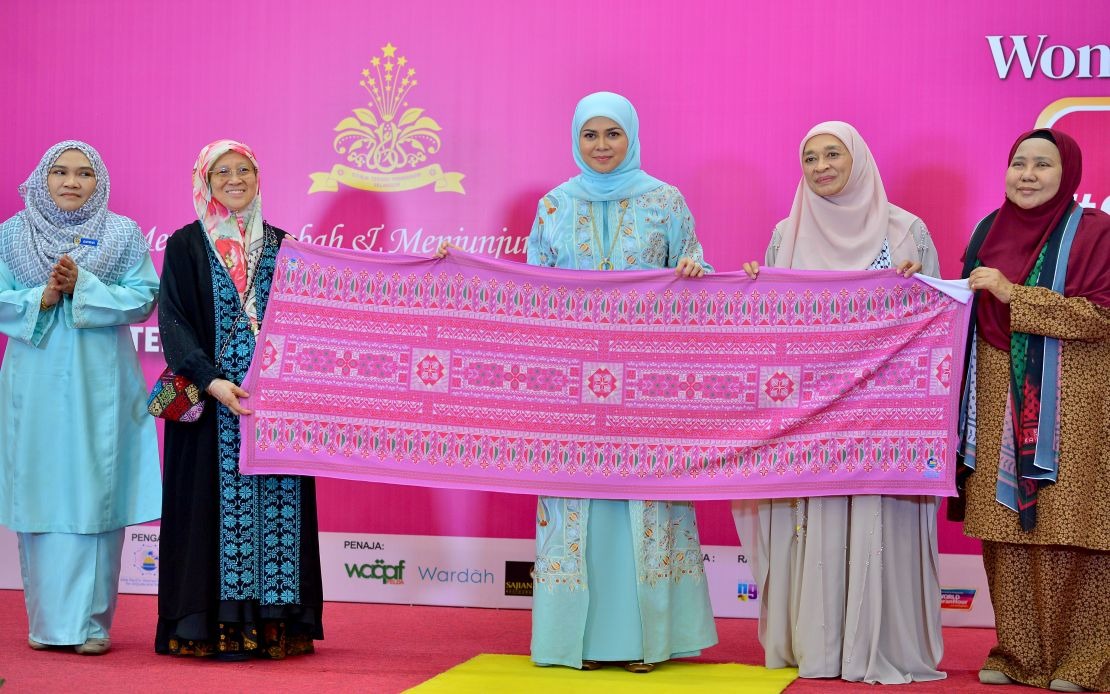
Selangor's Tengku Permaisuri Norashikin officially inaugurated the Women Summit & Women #QuranHour 2026 programme at the Dahlia Auditorium in Sultan Salahuddin Abdul Aziz Shah Mosque in Shah Alam on June 24, underscoring royal patronage for an initiative designed to strengthen women's spiritual and psychological resilience through Islamic scholarship and community engagement across the region.
The event drew approximately 400 participants representing diverse demographics, spanning not only Selangor but also neighbouring Singapore and Indonesia, creating a cross-border platform for collaborative discussion on women's empowerment rooted in Islamic teachings. This gathering assembled under the joint stewardship of Yayasan Warisan Ummah Ikhlas (WUIF) and the Asia Pacific Women's Coalition for Al-Quds and Palestine (ApWCQP), two organisations with complementary missions in spiritual education and community advocacy.
Central to the programme's conceptual framework is the theme "Women of Grit," deliberately constructed to honour the endurance and steadfast commitment of Palestinian women, particularly those in Gaza, who navigate extraordinary circumstances including armed conflict, bereavement, displacement, and infrastructural devastation whilst maintaining commitment to faith, family cohesion, and their children's educational advancement. This thematic anchor provides both moral inspiration and practical psychological grounding for participants seeking to understand resilience through lived examples of perseverance amid profound adversity.
Gharizah Hashim, director of the Women Summit & Women #QuranHour 2026, articulated a nuanced understanding of what "grit" signifies within this context. Rather than equating strength merely with the capacity to endure hardship, the programme conceptualises resilience as a multifaceted capacity encompassing emotional equilibrium, discernment in decision-making, and forward momentum guided by scriptural wisdom. This philosophical positioning distinguishes the initiative from secular resilience training by explicitly anchoring psychological wellbeing within theological frameworks and divine guidance, offering participants a holistic developmental pathway.
Hashim further emphasised that the programme aspires to cultivate a generation of women characterised by purposeful living, compassionate action, and robust spiritual fortitude. The underlying conviction driving this ambition centres on the proposition that systematic engagement with Quranic texts and interpretation equips women with cognitive and emotional tools necessary for navigating contemporary life complexities whilst simultaneously fulfilling roles as familial anchors and societal contributors. This formulation articulates a vision of women's empowerment that bridges personal psychological development with communal responsibility and religious obligation.
The distinguished participation of notable figures amplified the programme's intellectual and educational credibility. Tirmizi Ali, recipient of the 2014 International Quran Recitation Championship, brought competitive excellence and scholarly depth in Quranic recitation traditions. Associate Professor Dr Nora Mat Zin from the International Islamic University Malaysia's Department of Psychiatry contributed professional expertise in mental health and psychological resilience, creating an intersection between medical science and religious scholarship that legitimates the programme's holistic approach to women's wellbeing.
A particularly significant strategic development emerged through Marhaini Yusoff's announcement regarding scalability and geographic expansion. The initiative proposes leveraging the Rumah Ngaji network, an existing infrastructure of community-sponsored, cost-free Quranic learning spaces operating across Malaysia's states, as a delivery mechanism for extending the Women's Summit agenda beyond Shah Alam to provincial communities. This decentralisation strategy represents a shift from singular flagship events toward institutionalised, distributed programming capable of reaching women in less-urbanised regions.
This expansion model carries substantial implications for Malaysia's broader women's development ecosystem. By embedding Quranic education within accessible, locally-sponsored frameworks rather than depending upon centralised venues or requiring participant travel, the initiative removes barriers that typically exclude rural or economically constrained women from participation in professional development and spiritual education programmes. The involvement of Rumah Ngaji representatives from multiple states at the flagship event itself signals organisational commitment to state-level replication and suggests receptiveness among regional stakeholders to locally-adapted iterations.
The regional composition of attendees—including participants from Singapore and Indonesia—indicates that thematic concerns regarding women's resilience, spiritual grounding, and Quranic engagement resonate across Southeast Asian Muslim communities, transcending national boundaries. This cross-border dimension positions the initiative within emergent patterns of regional solidarity and knowledge-sharing among Muslim-majority and Muslim-minority societies, particularly concerning gender, spirituality, and social cohesion in pluralistic contexts.
The programme's framing through the lens of Palestinian women's experiences introduces a geopolitical dimension frequently absent from mainstream Malaysian women's empowerment discourse. By consciously drawing inspirational parallels between Palestinian resilience and the resilience that Malaysian women require in navigating contemporary challenges, the organisers implicitly situate Malaysian women's struggles—whether psychological, economic, social, or familial—within a comparative framework of global Muslim women's experiences and solidarities. This positioning strengthens emotional investment in the programme's outcomes whilst acknowledging interconnected struggles across diaspora and international Muslim communities.
Looking forward, the sustainability and scalability of this initiative will depend substantially upon securing consistent financial support through the Rumah Ngaji sponsorship model, maintaining momentum between annual summit editions, and nurturing networks of locally trained facilitators capable of delivering programming aligned with the flagship event's intellectual and spiritual standards. The royal patronage demonstrated through Tengku Permaisuri Norashikin's attendance provides both legitimacy and institutional visibility necessary for attracting resources and securing policy-level attention, factors essential for translating the 2026 programme's aspirations into enduring structural change within Malaysia's women's development landscape.

