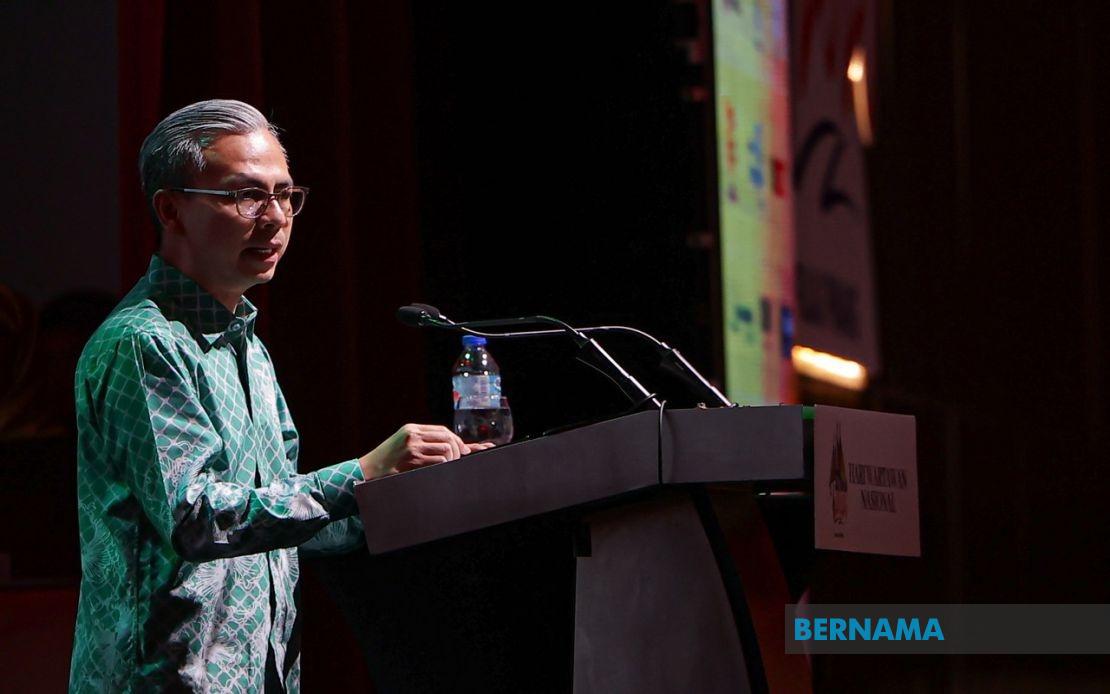
Telekom Malaysia has stepped forward as the new strategic partner of Tabung Kasih@HAWANA, pledging RM500,000 to bolster welfare assistance for journalists and former media workers across the nation. The contribution, unveiled at the National Journalists' Day grand finale in Butterworth, represents a significant corporate commitment to an industry facing mounting financial headwinds. Communications Minister Datuk Fahmi Fadzil announced the partnership at the event, which carried the theme "Media Integrity Strengthens Credibility" and drew attendance from Prime Minister Datuk Seri Anwar Ibrahim and Penang Chief Minister Chow Kon Yeow.
Since its establishment in April 2023, Tabung Kasih@HAWANA has distributed RM2.26 million in financial assistance to 773 media practitioners countrywide, establishing itself as a critical safety net for workers facing hardship. Fahmi's commendation of Telekom Malaysia's initiative reflected broader concerns about the sustainability of Malaysia's media ecosystem, which has been buffeted by structural economic challenges. The minister seized the moment to appeal directly to corporate Malaysia, both government-linked companies and private enterprises, to recognise their stake in maintaining a healthy information environment and to translate that recognition into tangible support.
The timing of this partnership announcement underscores an uncomfortable reality confronting Malaysian media outlets. Advertising expenditure, the traditional lifeblood of news organisations, has contracted dramatically over recent years, shrinking from RM4.5 billion annually to approximately RM2 billion—a reduction of roughly 55 per cent. This collapse in ad revenue reflects shifting consumer behaviour, digital disruption, and the migration of advertising budgets to global tech platforms, leaving domestic media houses scrambling to maintain editorial quality and staff stability. Against this backdrop, Fahmi's plea for companies to redirect media buys toward local publishers takes on urgent practical importance rather than functioning merely as patriotic rhetoric.
Fahmi articulated a multi-layered approach to stabilising the sector. Beyond the immediate welfare support channelled through Tabung Kasih@HAWANA, he highlighted the role of professional development initiatives in ensuring media personnel remain competitive in an evolving landscape. Project Sigma 2.0, a collaboration between Google Malaysia, the Malaysian Media Council, and the Malaysian Press Institute, emerged as a focal point for this skills-building agenda. The initiative focuses specifically on technology and artificial intelligence literacy—domains increasingly critical to newsroom operations and content distribution in the digital age. By facilitating access to training in these areas, stakeholders recognise that media professionals equipped with contemporary technical capabilities can better navigate marketplace pressures and contribute to higher-quality journalism.
The regional dimension added another layer to the day's proceedings. Bernama, Malaysia's national news agency, formalised a Memorandum of Understanding with TATOLI, the national news agency of Timor-Leste. This bilateral arrangement symbolises the potential for deeper cooperation within Southeast Asia's journalism community, creating channels for information exchange and collaborative standards-setting among ASEAN member states. Fahmi positioned the initiative within the context of Timor-Leste's accession to ASEAN as the organisation's 11th member during last year's summit in Kuala Lumpur, emphasising that such media partnerships reinforce the shared values of transparency and regional cohesion that underpin the bloc.
The minister's framing of media cooperation as integral to ASEAN's institutional health reflects an acknowledgement often overlooked in business reporting: news agencies function as nodes in a regional governance infrastructure. When national news organisations exchange reporting, coordinate coverage of regional stories, and establish mutual professional standards, they collectively strengthen the information commons that democratic institutions depend upon. For Malaysia specifically, as a nation with significant geopolitical influence within ASEAN, fostering such ties serves both soft power objectives and practical journalistic needs.
Yet beneath the positive momentum generated by Telekom Malaysia's commitment and the various partnership announcements lies a persistent anxiety within media circles. The advertising revenue crisis is not merely a cash-flow problem remediable through corporate goodwill; it reflects fundamental shifts in how audiences consume information and how advertisers reach consumers. Digital-native competitors, many of them foreign-owned platforms, have captured market share that historically belonged to traditional news organisations. Smaller publications and regional outlets have been particularly hard hit, with some operations folding entirely. Telekom Malaysia's RM500,000 contribution, while welcome, addresses symptoms rather than root causes.
Fahmi's appeal to companies to increase media buying represents a pragmatic, if incomplete, response. Malaysian businesses do have legitimate reasons to advertise through local media—from regulatory compliance considerations to community engagement objectives—yet the economic logic increasingly favours digital and performance-based advertising channels. Persuading corporate decision-makers to deviate from efficiency metrics requires either regulatory incentives, industry-wide coordination among publishers to demonstrate competitive value propositions, or a combination of both. Neither appeared to be on the table at the HAWANA event, though such mechanisms may warrant consideration as policymakers grapple with media sustainability.
The welfare fund dimension of this initiative also merits scrutiny. Tabung Kasih@HAWANA's track record—distributing RM2.26 million to 773 beneficiaries suggests an average assistance package of roughly RM2,900 per person—indicates it functions as a supplement to income rather than a comprehensive social safety net. For media practitioners facing redundancy or prolonged underemployment, such sums provide temporary relief but cannot substitute for structural employment recovery. This reality underscores why the broader economic revitalisation of media companies themselves remains paramount; without stable, well-compensated positions within viable news organisations, even generous welfare funds offer only palliative care.
Telekom Malaysia's positioning as a strategic partner also carries implicit branding benefits for the telecommunications company. Corporate social responsibility initiatives, particularly those aligned with high-profile ministerial interests and national observances, generate positive publicity and stakeholder goodwill. This does not diminish the real benefit that RM500,000 will provide to struggling journalists, but it contextualises the partnership as mutually advantageous rather than purely altruistic. Such arrangements, when transparent and genuinely impactful, represent a workable model for business-media collaboration, though they cannot substitute for systemic reforms in media economics or business models.
Looking forward, the convergence of welfare initiatives, skills development programmes, regional cooperation agreements, and corporate partnership announcements suggests Malaysian policymakers recognise media health as a governance priority. The challenge now lies in translating that recognition into sustained, coordinated action. Whether additional corporations will heed Fahmi's implicit call to emulate Telekom Malaysia remains to be seen, as does whether advertising market psychology can shift meaningfully toward local media. The National Journalists' Day celebration illuminated both the commitment to media support and the underlying vulnerabilities that necessitate such commitment—a duality that will likely define Malaysia's media landscape for years ahead.

