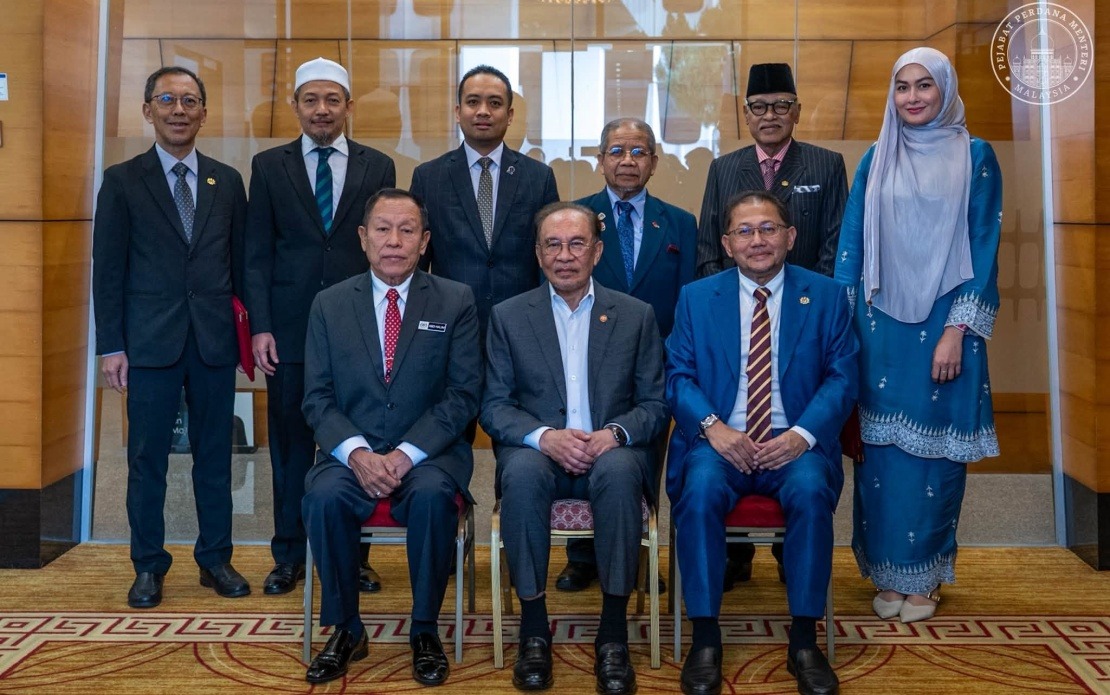
Malaysia's anti-corruption struggle demands a whole-of-nation approach rather than relying on any single institution to shoulder the burden alone, Prime Minister Datuk Seri Anwar Ibrahim declared this week as he formally appointed fresh leadership to two critical oversight bodies tasked with keeping graft in check.
In remarks delivered to Parliament on June 30, Anwar underscored that the Special Committee on Corruption (JKMR) and the Anti-Corruption Advisory Board (LPPR) occupy essential positions within the country's governance architecture. These bodies function as independent validators and critical watchdogs, injecting external scrutiny and impartial judgment into the machinery dedicated to rooting out malfeasance. By maintaining distance from day-to-day enforcement operations, they provide the kind of honest assessment that helps calibrate and sharpen anti-corruption initiatives across the public administration.
The Prime Minister presented formal letters of appointment to the newly selected committee members after securing the necessary consent of the Yang di-Pertuan Agong, a constitutional requirement that underscores the ceremonial yet substantive weight attached to these posts. He took the occasion to galvanize the incoming appointees, encouraging them to deepen their commitment to pushing the anti-corruption agenda forward with renewed energy and clarity of purpose.
Despite the heterogeneous backgrounds from which committee members are drawn—spanning different professions, sectors, and life experiences—Anwar emphasized they converge around a singular mission: fortifying the nation's defences against corruption. This common ground transcends individual differences and party political divisions, reflecting a recognition that graft threatens the legitimacy and effectiveness of government itself, regardless of which faction holds power.
The JKMR operates under the statutory framework of Section 14 of the Malaysian Anti-Corruption Commission Act 2009 (Act 694). Its membership configuration reflects a bipartisan design, with the King selecting representatives from both the Senate and the Dewan Rakyat who represent government and opposition interests alike. This deliberately balanced composition ensures that neither the ruling coalition nor parliamentary minorities can dominate proceedings, creating space for genuine deliberation and constructive tension.
Similarly, the LPPR draws its authority from Section 13 of the same legislation and functions as a reservoir of expertise and moral authority. Its members are selected by the King from among individuals whose careers and conduct have demonstrated uncommon integrity and professional distinction. Rather than appointing sitting politicians or bureaucrats whose decisions might be swayed by administrative loyalty or electoral calculation, the LPPR harnesses the credibility of retired judges, accomplished business leaders, academics, and other respected public figures who can speak with candor.
For Malaysian readers evaluating their government's seriousness about corruption, these institutional arrangements matter considerably. The existence of these bodies signals recognition that anti-corruption work requires checks and balances even within the anti-corruption apparatus itself. No single agency, no matter how well-intentioned, should operate without peer review and external validation. The MACC itself, though professionalised and relatively independent compared to enforcement agencies in many comparable economies, benefits from having both parliamentary and advisory bodies that can question its decisions and recommend adjustments to its approach.
The challenge facing Anwar's government extends beyond appointing capable individuals to these committees, however. Systemic corruption persists when incentive structures reward wrongdoing, when oversight mechanisms lack teeth, or when enforcement remains selective and politically motivated. The new appointees will inherit a difficult mandate: strengthening public confidence in anti-corruption institutions while operating within political constraints that all Malaysian governments face.
Recent regional trends underscore why Malaysia cannot afford complacency. Neighbouring countries have witnessed dramatic corruption scandals that destabilised governments and eroded public trust. Thailand, Indonesia, and the Philippines have each grappled with high-profile cases involving senior officials. By maintaining visible, active oversight committees staffed by credible figures, Malaysia attempts to inoculate itself against the worst outcomes while signalling to investors and citizens that governance standards matter.
The breadth of cooperation Anwar advocates—spanning the MACC's investigative work, Parliament's legislative and scrutiny functions, the private sector's compliance cultures, and civil society's watchdog role—reflects international best practice in anti-corruption strategy. No enforcement agency can succeed without legislative support, corporate responsibility, and an engaged citizenry willing to report irregularities and demand accountability. Countries that treat corruption as solely a law-enforcement problem typically achieve only superficial gains.
For Malaysian businesses navigating compliance requirements and reputational risks, the government's institutional posturing matters. Companies operating in jurisdictions with weak anti-corruption infrastructure face elevated regulatory uncertainty and corruption-related costs. By demonstrating commitment through these committee appointments and their stated cooperation framework, the government provides some reassurance that the rules will be enforced reasonably consistently and that competitive playing fields, however imperfectly, will be maintained.
Looking forward, the real test lies not in appointment ceremonies but in tangible outcomes. Will the newly constituted JKMR and LPPR generate substantive recommendations that the government implements? Will they investigate serious allegations impartially or defer to political sensitivities? Will their independence remain genuine as members inevitably face pressure from various quarters? These questions will determine whether Malaysia's anti-corruption architecture evolves into genuinely effective governance reform or remains a ceremonial facade masking underlying dysfunction.

