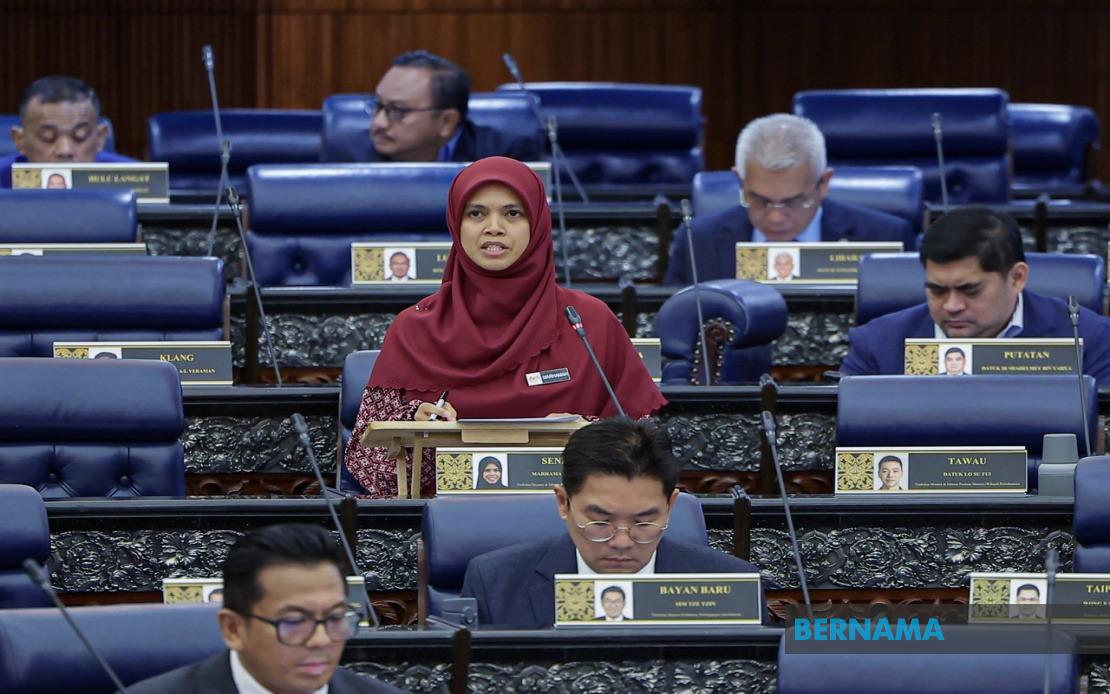
The government and Tabung Haji are preparing to reassess whether more generous subsidies can be extended to lower-income pilgrims as the financial burden of the hajj pilgrimage continues to accelerate. Deputy Minister in the Prime Minister's Department (Religious Affairs) Marhamah Rosli disclosed in parliament that both institutions remain open to the possibility of increasing targeted assistance for B40 category applicants if cost pressures persist in coming years. The commitment, outlined during parliamentary question time on June 22, reflects mounting concerns among policymakers about affordability barriers that threaten to exclude Malaysia's economically vulnerable devotees from fulfilling one of Islam's Five Pillars.
This year's hajj expedition presents a stark illustration of the financial strain affecting Malaysian pilgrims. The genuine cost of undertaking the sacred journey has climbed to RM33,300 per person, a figure that encompasses flights, accommodation in the holy cities, meals, ground transportation, and administrative expenses coordinated through Tabung Haji. Yet applicants classified within the B40 income bracket—individuals and families earning below RM4,850 monthly—currently contribute only RM15,000 toward their pilgrimage, representing a shortfall of RM18,300 that Tabung Haji absorbs through its subsidy mechanism. This substantial intervention underscores the institution's commitment to democratising access to hajj, ensuring that economic circumstance does not become a barrier to religious obligation.
Marhamah explained that the subsidy framework operates within carefully calibrated parameters, drawing funding from investment returns generated by Tabung Haji's portfolio of deposits rather than from government budgetary allocations. This dependency on investment income introduces a degree of caution into policymaking, as administrators must balance their moral obligation to assist disadvantaged pilgrims against their fiduciary responsibility to protect the savings of approximately 9.3 million depositors who have entrusted funds to the institution. The dual mandate creates inherent tension: expanding subsidies could deplete reserves or reduce returns to savers, yet restricting assistance may undermine the core social mission that justifies Tabung Haji's privileged regulatory status and tax advantages. Officials have committed to studying the feasibility of enhanced support mechanisms, suggesting that incremental improvements may be forthcoming as financial conditions permit.
The scale of unmet demand presents perhaps the most daunting structural challenge confronting policymakers. Current registration figures for the hajj programme have swelled to approximately four million aspiring pilgrims, a figure that dwarfs Malaysia's annual allocation of roughly 31,600 spots within the kingdom's internationally negotiated quota. This massive imbalance—with nearly 130 applications competing for every available place—means that individuals registering today face waiting periods potentially stretching several decades before their turn arrives. The bottleneck creates profound inequities within the system, as newly registered applicants must effectively subsidise earlier cohorts who secure departures relatively promptly. This temporal dimension adds urgency to the subsidy debate: as wait times lengthen, additional costs accumulate for those held in extended queues, compounding the financial hardship already borne by lower-income households.
Beyond direct financial assistance, Tabung Haji is pursuing operational improvements designed to enhance the equity and transparency of its queue management systems. Marhamah indicated that the institution is evaluating reforms that would provide preferential treatment for depositors who have demonstrated sustained commitment through consistent savings contributions and accumulated reserves sufficient to cover pilgrimage costs without subsidy reliance. Such modifications would acknowledge the principle of rewarding prudent financial behaviour whilst simultaneously addressing a persistent administrative frustration: the frequency with which selected pilgrims must be replaced when financial constraints force deferrals. By restructuring selection algorithms to prioritise applicants with demonstrated ability to fund their own journeys, Tabung Haji hopes to reduce the cascade of replacement notifications that consume administrative resources and create disappointment for repeatedly passed-over candidates.
The broader context involves Malaysia's aspirations to enhance its competitive position within the global hajj services ecosystem. Authorities have articulated ambitions to position the nation as a benchmark operator in pilgrimage management, a designation that carries both strategic and spiritual significance. Regional competitors, particularly Indonesia which manages vastly larger annual contingents of pilgrims, have invested substantially in logistical innovation and pilgrim support infrastructure. For Malaysia to maintain relevance and prestige within this domain, improvements to both the financial accessibility of hajj and the quality of supporting services remain essential. Marhamah's parliamentary statements reflect this dual focus, emphasising that enhancement of welfare provisions, safety protocols, and service standards represents core governmental priority alongside the subsidy framework.
The hajj programme functions as a significant social policy instrument within Malaysia's Islamic governance architecture, reflecting the nation's constitutional commitment to Islam and the religious aspirations of its Muslim majority population. Successive governments have positioned hajj accessibility as a marker of their Islamic credentials and social consciousness, making political capital investments in subsidy expansion strategically valuable. Yet the fiscal constraints operating on Tabung Haji create genuine limits to what administrators can pledge. The institution must navigate between the demands of social inclusion and the imperatives of financial sustainability, a balancing act that becomes increasingly difficult as global hajj costs continue their upward trajectory driven by Saudi Arabia's expanding infrastructure investments and the competitive pressures of a crowded pilgrimage market.
For Malaysian Muslims contemplating the pilgrimage, these policy considerations carry profound personal significance. The prospect of increased subsidies could accelerate transitions from aspiration toward realisation, particularly for working families whose modest incomes leave insufficient margin for accumulating hajj savings. Current arrangements already represent a substantial public investment in religious observance—the RM18,300 annual subsidy per B40 pilgrim multiplied across several thousand beneficiaries constitutes a considerable commitment of national resources to one religious constituency. Expanding this commitment requires demonstrating fiscal space or redirecting funds from competing priorities, decisions that necessarily involve broader budgetary politics and resource allocation disputes across government.
The timeframe for policy decisions remains fluid. Marhamah indicated that Tabung Haji will examine enhanced assistance possibilities during the coming hajj season planning cycle, suggesting that announcements regarding subsidy increases might materialise within the next 12 to 18 months. Such deliberation processes typically involve consultation with religious scholars, economic analysts, and representatives of various stakeholder communities. The outcome will likely reflect pragmatic calculations regarding investment performance, demographic projections for future applicant cohorts, and political assessments of the electoral and symbolic value of expansion announcements. Whatever decisions emerge will reverberate through Malaysia's lower-income Muslim communities, influencing not merely the economics of pilgrimage but also perceptions of governmental responsiveness to the spiritual aspirations of disadvantaged Malaysians.

