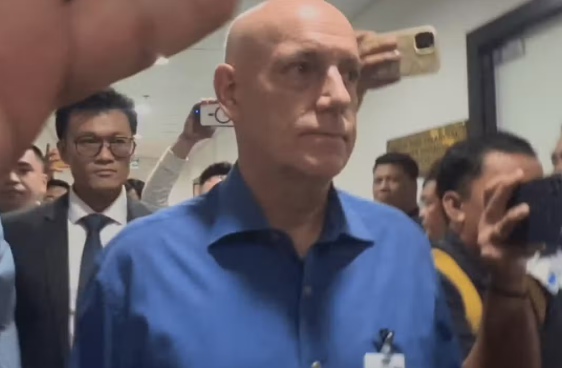
Tab Baldwin, the former head coach of Ateneo de Manila University's men's basketball programme, presented himself at the National Bureau of Investigation's Homicide Division on Tuesday afternoon for questioning regarding the deaths of two student-athletes. The appearance came after Baldwin had failed to show up for two previously scheduled interrogations, creating mounting pressure on the American-born coach as multiple government agencies conduct parallel investigations into the circumstances surrounding the drowning deaths of Rene Baterbonia and Divine Adili during a team activity in Dipaculao, Aurora earlier this month.
Baldwin arrived at the NBI office around 1:45pm accompanied by his legal representative Karl David. The proceedings were still ongoing at the time of reporting, marking the first time the coach had directly engaged with investigators from the bureau rather than having his lawyer appear on his behalf. This direct appearance represents a significant development in the investigation, as Baldwin's previous absences had raised questions about his willingness to cooperate with authorities during what has become a high-profile case attracting considerable public attention across the Philippines.
The coach's initial non-appearance on June 16 was attributed to health concerns, with his legal counsel informing the NBI that Baldwin was not in a suitable condition to attend. This explanation drew scrutiny from observers who questioned whether legitimate medical reasons or other factors were responsible for the absence. The pattern continued when Baldwin again missed his scheduled appointment on June 19, despite simultaneously appearing before representatives from the Philippine National Police-Criminal Investigation and Detection Group that same day, a development that raised eyebrows regarding the prioritization of his attendance before different investigative bodies.
The deaths of Baterbonia and Adili during the team activity have sparked intensive scrutiny of coaching practices, team protocols, and safety measures at elite Philippine educational institutions. Multiple agencies have taken jurisdiction over the investigation, reflecting the seriousness with which authorities are treating the incident. The involvement of both the NBI and the PNP signals that different investigative approaches and expertise are being applied to understand what occurred and whether negligence or other factors contributed to the tragedy.
NBI Director Melvin Matibag has indicated that investigators intend to scrutinize potential inconsistencies between Baldwin's statements provided to the bureau and the testimony he delivered to the CIDG during his appearance on Friday. This comparative analysis represents a standard investigative technique aimed at identifying discrepancies that might illuminate what transpired. The fact that Baldwin is providing accounts to multiple agencies simultaneously underscores the complexity of the investigation and the need for coordinated but independent verification of the facts surrounding the incident.
For Malaysian and Southeast Asian readers, this case resonates beyond Philippine borders as it raises questions about institutional accountability in regional universities and the safety protocols governing student-athlete programmes. Elite coaching figures in basketball, a sport with significant popularity throughout Southeast Asia, operate under considerable pressure to produce winning teams, and this incident highlights the potential consequences when safety considerations may be compromised. The involvement of a foreign coach in a tragedy affecting Philippine student-athletes also touches on broader themes regarding the importation of international coaching expertise and the responsibility that comes with such arrangements.
The investigation's expected conclusion this week will likely provide clarification regarding responsibility and any potential charges. The findings could have implications for how other universities across Southeast Asia evaluate their own team activity protocols and supervising structures. Baldwin's cooperation following the missed appearances may be viewed as either a positive step toward transparency or as a reluctant acknowledgment of legal necessity, depending on how the investigation concludes and what details emerge regarding his previous absences.
The timing of these developments comes as Philippine society grapples with questions about duty of care in educational settings and whether current regulations adequately protect student-athletes during team activities. The case has prompted discussions among parents, educators, and administrators across the region about what safeguards should be mandatory for similar programmes. For the Ateneo community and the families of the deceased students, the investigation's outcome carries profound personal significance while simultaneously serving as a watershed moment for institutional reform within the country's prestigious university athletics ecosystem.
Baldwin's profile as a well-known coaching figure with substantial influence within Philippine basketball circles adds another dimension to public interest in the investigation's progression and conclusions. The interaction between his legal representation and authorities, combined with the convergence of multiple investigative agencies, suggests that the case involves complexities extending beyond simple accident classification. As Southeast Asian sporting institutions increasingly professionalize their athletic programmes and recruit international coaching talent, this incident serves as a sobering reminder of the responsibilities accompanying such arrangements and the paramount importance of maintaining rigorous safety standards alongside competitive aspirations.

